Hyper-personalisation is changing the fitness landscape

fitness workout data and information

Hyper-personalisation in the fitness industry has grown rapidly in recent years and is already reshaping the way we exercise. This is largely due to data and technology increasing and offering information that informs on and impacts our exercise routines. With wearable tech continuing to grow, as we discussed in our 2022 fitness trends report, more and more people are gaining access to an incredible amount of biometric data. Metrics such as quality of sleep, calories burned, heart rate variability, blood oxygen levels and even acclimation to heat and altitude, means each individual can now track their fitness progress with accuracy and ease.

Thanks to apps like Apple Fitness and Samsung Health, the sharing of data from these apps to others has also allowed all health and fitness providers to improve their services with this information. A great example of this is Nutra Check, the calorie counting app that now uses data from your phone and smartwatch, to manage your required calorie intake based on your energy expenditure each and every day.

Accountability for daily steps and exercise has increased massively upon having access to these results each day: with weekly reports on activity, people can now be more aware of their progress, and if they are on track to reach their targets. Digital wellness is continuing to grow with highly personalised experiences. For example, Headspace has been the leading mindfulness app for years with good reason, offering personalised progress, with tracking of time spent meditating, stress and happiness levels, and sleep quality. Apps like Zero, a fasting platform, also offer personalised insights and advanced tracking to help manage sleep quality and boost energy. This data and feedback together, are helping to build your very own wellness ecosystem, and it won’t be long until the likes of Apple put this all into one space for you to check up on yourself with a summary of your information.

Improving Personal Training Offering Through Hyper-Personalisation

Companies like Firstbeat are already using their heart monitoring technology to give personal trainers, and sports coaches, the ability to provide feedback on the effectiveness of their clients’ training, recovery status, fitness level and stress. This information is vital for trainers to understand the progression of their clients, and how they can improve their programme to help reach their goals more efficiently.

Tracking both sleep and recovery means trainers will be able to restructure their workout plans each and every week. If they have a particularly demanding session planned in the evening with their client, but can see they have been highly stressed throughout the day, with a lack of sleep, they can then re-arrange that session to ensure they are not over-working them. This technology from Firstbeat allows trainers to give personal insights to their clients weekly, whilst freeing up more of their own time, allowing them to take on more clients.
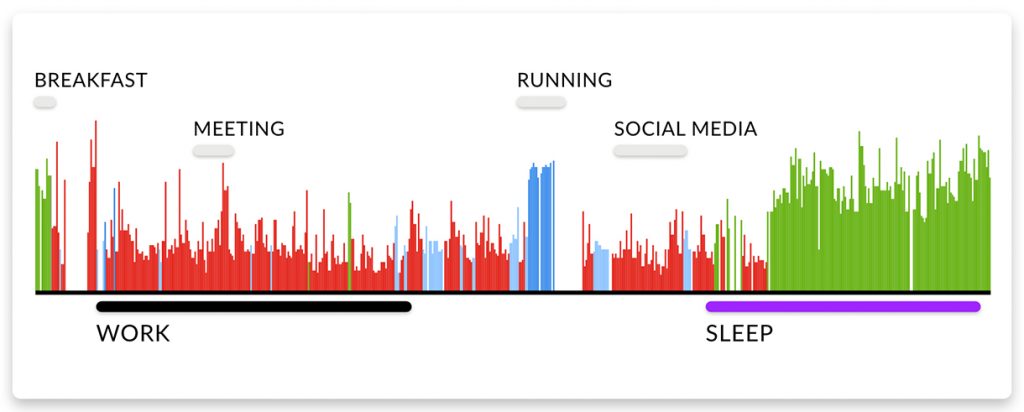
hyper-personalised heart rate data

Improving Fitness Businesses

Fitness operators have also seen substantial changes to their offering, with the digital world of fitness growing rapidly during lockdown. More businesses are now able to offer better-personalized experiences both on site, and online. With access to a broad amount of information on each member, operators can now make personalized suggestions based on their activities and attendance.

Keepme.ai, a retention and marketing platform, has taken this to a whole new level. Using AI and machine learning, Keepme.ai is able to give accurate predictions on when members will be likely to leave, which prospects will be likely to join, and which members are likely to want to purchase personal training sessions.

This data is an opportunity for operators to elevate their business whilst offering a hyper-personalized experience to their members, creating meaningful relationships with their members in the long run, which will only improve their retention.
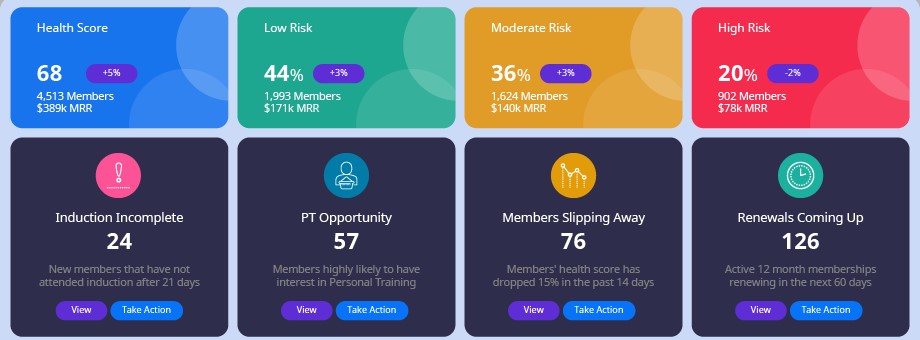
hyper-personalised member information

Overview of hyper-personalisation in the fitness industry

Hyper-personalisation in the fitness industry has been accelerated by lockdown, showing no signs of slowing down. Within the first two months of lockdown, we predicted that digital fitness offerings personalising their customer experience, will be the most likely to succeed during and after the pandemic, written in our feature The Future of Digital Fitness.

It’s safe to say that every area of the fitness industry has benefitted from hyper-personalisation and will continue to do so. The data is there for everyone, and now it’s up to businesses, trainers and individuals to capitalise and reap the rewards of information.

If you have an innovative product or service in the health, fitness and wellness industry and want to see yourself on a future trends report, or looking to grow and make your mark on the industry then get in touch with us. We are experts in consultancy, marketing, PR and advertising, so whether you’re a small business or a multi-million pound turnover one, we can help you. Email us: info@action-group.co.uk

2022 Fitness Trends – Fact or fad? The industry insight

At the start of each year, key industry publications announce their list of health and fitness trends. While there are always curveballs, like the unforeseen 2020 explosion of home gym / home fitness equipment, the reports are geared towards up-and-coming tech, developing trends and the evolving nature of consumer behaviour.

The 2022 fitness trends have recently been announced, and organisations like the American College of Sports Medicine, Fitt Insider and the Global Wellness Institute have weighed in with their expertise. So here’s a brief overview of the key points of interest of these reports.

2022 Fitness Trends

The ACSM reports on trends as identified by health and fitness professionals. This means these are trends amongst the already fit and healthy, things we are already seeing that we can expect to see more of.

Wearable Tech

Their number one fitness trend for 2022 is wearable tech. Wearable tech has been an essential accessory for the everyday athlete and, with market growth, we also see more affordable entry points for such products. Everything from the rise in smartwatches like Garmin, Suunto and Polar, and smart rings like the Oura, to smart insoles that give you a gait analysis and running data like NUURV or Arion.

PTs, along with gyms and leisure centres, are often the introducers of new trends to the masses and as more operators roll out connected fitness options, like TRAKK by Pulse Fitness, wearable tech, like MyZone, and workout apps, like the new My Training Hub by David Lloyd, engagement and usage will likely rise with the general consumer.

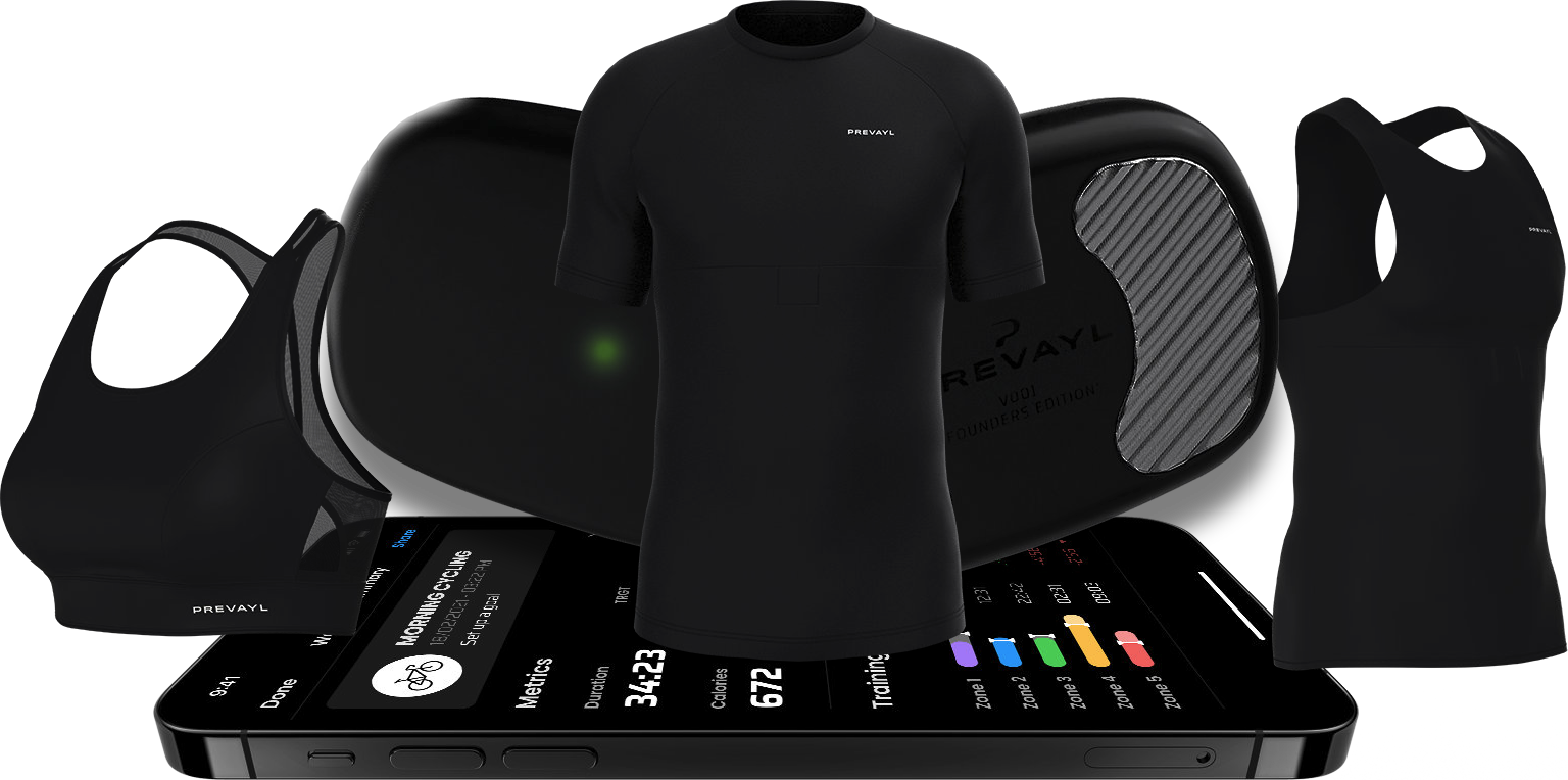
There are also new technologies that are more focused on consumer performance, targeting the ‘everyday athlete’ group. For example, newly launched wearable company Prevayl seeks to affect the consumer in a different way, providing incredibly accurate, live Heart Rate data from a clinical-grade ECG monitor built into its compression top. This also measures core temperature, breathing rate and much more. Could a medically approved version of this technology become the standard across sports, identifying and alerting when athletes are at critical or dangerous levels?

Prevayl – Connected clothing

The Fitt Insider report also identifies emerging trends – which are mainly tech-based – but a lot of those referenced, VR, for example, are still quite niche. It’s definitely a growth market but will these trends ever enter the true mainstream? Because for every VR headset user, there will be a parkrun enthusiast who just wants to get out and jog, unshackled by technology. While not everyone will opt for VR headsets, technology is a growth market we cannot get away from… there’s even tech to help us disconnect from the world. While adoption may be slow, even parkrun is timed..

When cross-referenced with the Global Wellness Institute’s report, it’s interesting to see that the global physical activity market was valued at $738.1 billion in 2020 and that $49.5 billion of that was spent on fitness tech. Whilst $49.5B is a lot of money, it also goes to show that there’s a huge proportion being spent in more traditional ways. 

Home Gyms

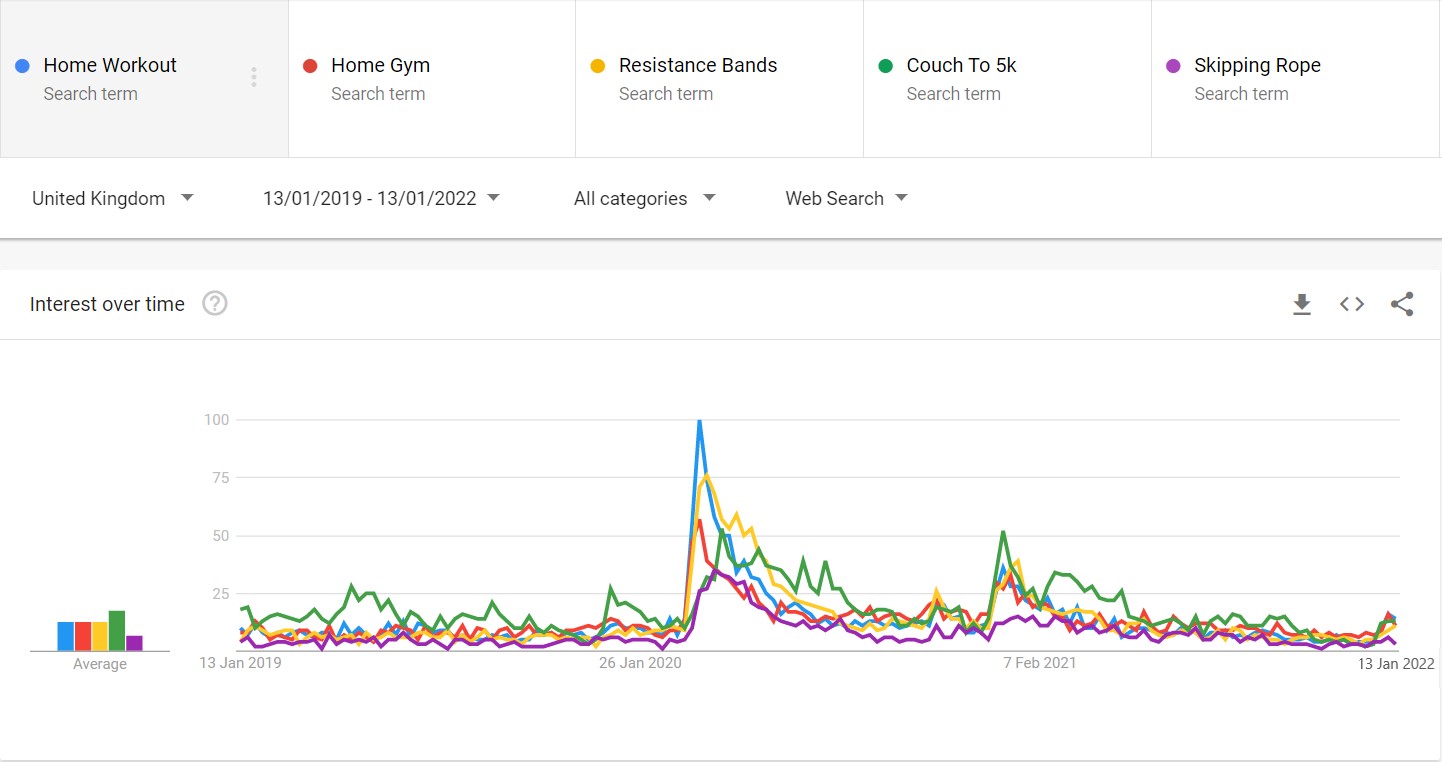
The number two fitness trend for 2022 is home gyms. As the Covid-19 pandemic hit, gyms were forced to close and people were thrust into the world of working in, and working out, from home. As we can see from the graph below, the spikes in searches for home gym equipment exploded around the times of the lockdown announcements, however they tapered drastically as gyms and fitness facilities were able to reopen.

Home gym search terms – peaking during UK lockdown announcements

While some people may have found their groove working out from home, we believe many thrive off the community, facilities, luxuries and in-person classes and trainers that are so compelling, and unable to be replicated at home. With joint ventures of big box gyms and local boutiques, increasing numbers of people are able to enjoy the boutique fitness experience in their local gym.

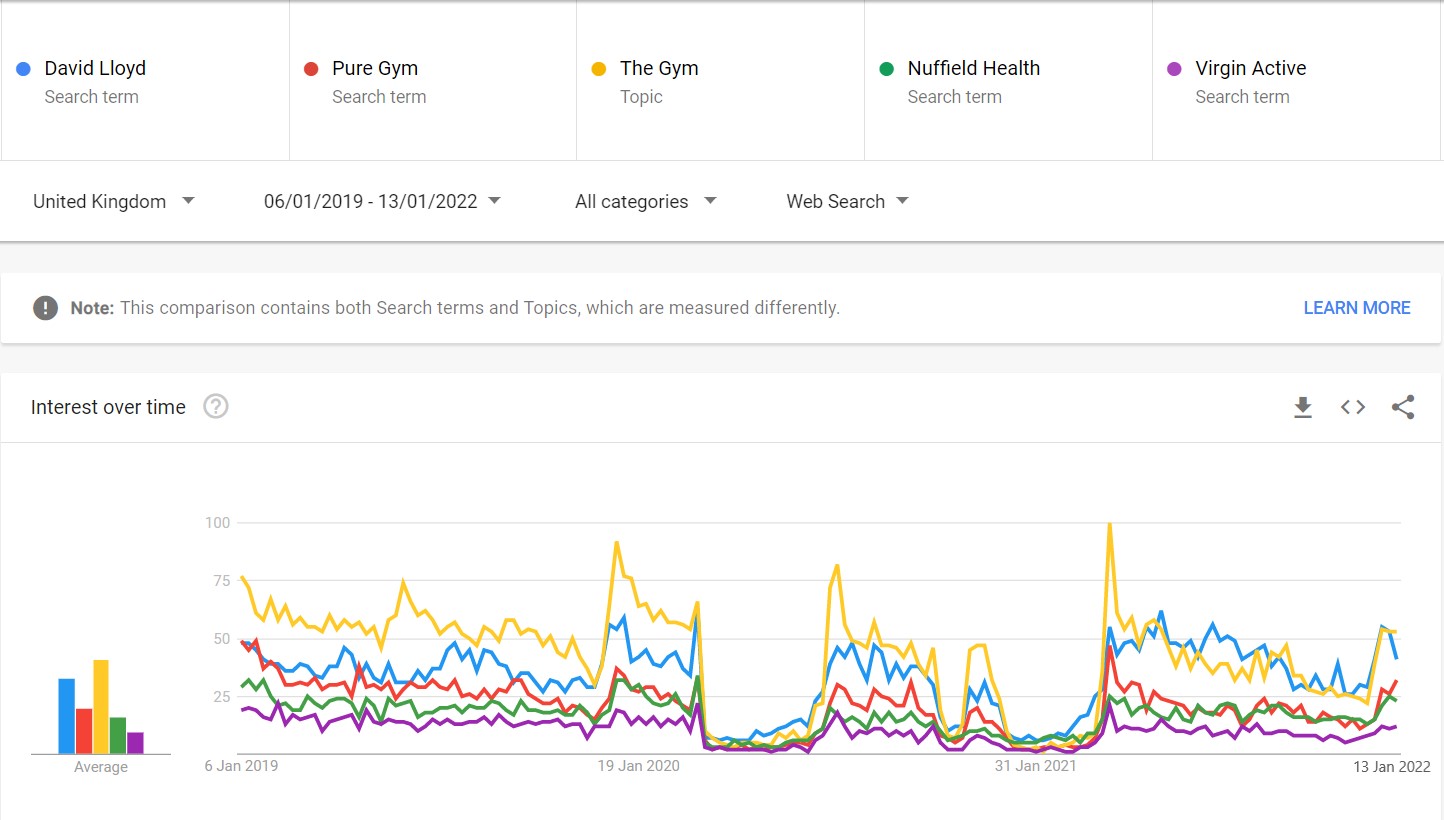
It is worth noting the huge spike of people searching for various gyms around the times of re-opening announcements and the trough in searches during times of lockdown.

Gym searches in the UK – troughs occurring during lockdowns

Exercise for weight loss – a 2022 fitness trend?

Interestingly ‘exercise for weight loss’ appeared number five on the 2022 ACSM fitness trends list. But hasn’t this existed as a reason for people to join the gym since they first opened? We’re not sure this is a trend, but what might have caused this spike is people realising the effects of their weight on their health.

Multiple studies have highlighted a linear correlation between BMI and risks of severe Covid-19 infection. As BMI increases the risk of hospital admissions and death increased linearly. In these unprecedented times, have people begun to realise the effect their weight has on their health, and ability to fight off infections and viruses?

We have since seen the launch of the Government “Better Health” campaign, targeting adult obesity. While this may not be a new trend, and there is a long way to go, weight loss is, and should be, one of the major talking points this year and those to come for overall health.

As industry experts we join our peers in hoping that physical activity moves to be recognised as an essential health service. The science is clear cut that if we take both our health and fitness more seriously and focus better on our mental wellness, the happier we are, and the less reliant we are on the National Health Service.

While all these new technologies and product developments are great in their own right, if people lack the intrinsic motivation to make a change then the tech is rendered obsolete. We can have all the tools in the world to help us, but if we’re not motivated to utilise the tools, then no positive change will occur.

Other companies such as Les Mills and Keepme have previously released their predictions for trends in the new fitness landscape, read Les Mills’ views here.

If you have an innovative product or service in the health, fitness and wellness industry and want to see yourself on a future trends report then get in touch with us. We are experts in consultancy, marketing, PR and advertising, so whether you’re a small new business or a multi-million pound turnover one, we can help you grow: info@action-group.co.uk