The smartest way to train? EMS Training – coming to a high street near you.

Electro-Muscular Stimulation (EMS) has been around for centuries but it wasn’t until the 1970’s that it started being used in physiotherapy, fitness and muscle strengthening. Since then, the industry has evolved dramatically and, last year in particular, it went from strength to strength in Europe. In fact, it’s been suggested that EMS training could be the key to boosting the fitness industry post COVID.

What is EMS Training?

An external device sends a finely-tuned electrical signal to the muscles, causing them to contract. It mimics the natural signals sent by the brain but is much more powerful. In fact, combining controlled exercises like squats and lunges with the external stimulus of an EMS device activates up to 98% of muscle fibres, making it one of the most efficient and advanced workout tools on the market. The result is a safe, ultra-efficient 20-minute workout that delivers noticeable results in a fraction of the time it takes to do a normal workout.

Training secret of the celebrities

The list of celebrities reaping the rewards extends from professional athletes like Usain Bolt and David Haye, to Hollywood actors like Tom Holland and models and singers such as Poppy Delevingne, Chrissy Teigen and Rita Ora.

Who is EMS Training for?

It is extremely versatile and low impact, making it a perfect form of fitness for virtually anyone. Ideal for anyone looking to re-integrate fitness into their lives, or to begin a fitness journey for the first time now we come out of lockdown. 

Sessions are always one-on-one, maximum one-on-two (when restrictions are lifted), so there’s no intimidating gym floor or group exercise studio for people who don’t like the typical gym environment. Similarly, for people still concerned about COVID-safety, it lends itself naturally to social distancing. And for unconditioned or sedentary clients, EMS is low-impact and low-commitment.

Gaining popularity

Pre and post lockdown EMS studio stats out of Germany showed huge increases in membership sign up. According to figures published by industry body, DSSV, the EMS market in Germany saw the number of standalone EMS studios increasing by 80 to 1,414 at the end of the year, yielding sales of about €180 million.

Positive results weren’t just confined to Germany. EMS personal training is now being made available across the UK at PT studios and via PT home visits.  The UK Bodystreet franchise reported a 25% increase in membership last year in the short time they were able to open, while we are seeing new studios opening up on the high street up and down the UK and big box gyms adding EMS Training to their repertoire.  Personal trainers are also seeing incredible results as it gives then a competitive edge.  All compelling evidence not just that resurgence will come to those willing to innovate and diversify after this third lockdown, but that EMS training can be the boost operators and personal trainers need in a post-COVID climate.

Miha bodytec are the market leaders in EMS equipment, providing the highest quality devices to gyms, studios and personal trainers across the UK. As our client, we have ensured miha have been incredibly successful and grown at a staggering rate through a variety of strategies and effective implementation. If you’re looking to grow your business through marketing, PR and advertising, or are interested in consultancy on how you can grow then get in touch: Info@action-group.co.uk

To find your nearest EMS Training provider visit: ems-training.com  

Why you should be advertising on social media

Advertising on social media can be an efficient way of gaining more customers and making more sales. Social advertising is a cost-effective way of targeting new customers, testing a variety of creative strategies and trialling acquisition methods with ads from as little as £10. Typically Instagram and Facebook are the platforms of choice, but is TikTok a new contender?

Here is our guide to understanding social media terms, and why you should be advertising on social media:

Commonly used social media terms

Followers – How many people have clicked to ‘follow’ your page, receiving notifications when you post

Reach – The total number of people who have seen your content

Impressions – The total number of times our content is displayed (can be viewed by the same person multiple times)

Engagements – The total number of people who have engaged with content, either by liking, commenting, replying, sharing etc

Organic view – Someone has seen/engaged with content naturally. It aligns with their interest or their friends interests

Unique Views – Total number of individual persons seeing content/pages

A/B Test – Creative ad strategy which compares two ads/audiences/delivery methods to see which is the most effective

CPC – Cost Per Click, how much the ad cost you for each click on it. The lower the CPC the better.

Benefits of advertising on social media

Reach more people, and people outside your current follower base

Social media algorithms typically seed content to a small percentage of your followers. The better that content does with them in terms of engagement, the more people it shows it to. If you have low engagement levels, then social advertising will help boost your content to more people. It will also help send people to your page, increasing the engagement levels of your other posts organically. Click here to see some recent content we shot for Built For Athletes for their social media. It is a great way of reaching more people with your content, especially if you have done a photoshoot, or designed content specifically for social media.

When we created the Gosh! Kindness Cafe, we wanted as many people as possible to come down, pledge their act of kindness and receive their free plant-based meal. Along with a robust PR outreach to journalists, we ran boosted social media posts to reach as many people as possible. We had thousands of people turn up, so it was an incredible success.

Simple, low cost, and includes analysis

You can run ads from as little as £10, and you can analyse the ads performance easily. Advertising on social media is made extremely easy with the built-in tools of ad creation, running and analysis of basic ads. You can select audiences based on their location, age, interests etc and have track ads performance throughout its life. This enables you to change strategy, increase or decrease budget at the click of a few buttons. You can even set daily, or lifetime budgets, so you never spend more than you want to.

Social advertising is tailored to your objective

Ads run on social can be targeted to specific people. People who regularly engage with ads on social media will be marked as an ‘engager’, whereas people who may watch the entirety of a video ad, but not necessarily engage with it, will be marked as an ‘observer’. You can choose to target these people separately; to maximise either engagement or entire length video views, for example.

If you’re running a competition on social media, where one of the entry criteria is to follow your page, you want maximum engagement. If you have created a beautiful video ad with in-depth knowledge and information on your product, you want people to watch the ad in its entirety. So you have some options with the types of user you can target.

As with all advertising… you have to stand out

If you want help advertising on social media, creating profitable, eye-catching adverts delivered to the exact audience you want to target, then get in touch: info@action-group.co.uk – we do bespoke social advertising packages to help you stand out in the crowd.

Podcast interview tips – Having a successful experience

So you’ve sent out an incredible pitch to a podcast host you follow and you’ve finally heard back. Good news, you’re in! The host has asked you to submit your bio, headshot and key talking points for marketing purposes, which of course you sent immediately (big tip, do these things as quickly as possible!). The host has also provided you with a link to their online calendar to schedule the recording. You responded quickly to that too.

So far so good, now the only thing left to do is the interview itself. Not always so easy…

This is your opportunity to position yourself, or your client, as an expert in your field. It’s important to note that the mere act of being on a podcast isn’t enough to give your reputation that boost. It takes more than simply being featured on a show. It’s an art-form to giving a successful interview that needs crafting. A podcast is subtly different to an interview though, the podcast opens up opportunities to talk about other topics, and your opinion on the current state of affairs, or speculate about the future.

At Action Group we have placed many clients on some of the fitness industry’s leading podcasts and here are some podcast interview tips we’ve learnt along the way.

Build a connection with the host

Most podcasters will schedule a preliminary meeting in order to gauge synergy and to discuss your topic in a little more detail. In some cases this might be just a few minutes before going live to conduct a pre-interview warmup chat. Use this opportunity to build a personal connection with the host.

If you’re unsure why this is something as a guest you need to think about — trust us, it’s important. This is as much of an opportunity for you as it is for the host to suss things out and determine how the conversation is going to go. It will determine whether the conversation successfully takes off and you have an amazing episode together or whether it crashes and burns before you’ve properly started.

So it’s important to take a proactive approach to connecting with the host and establish good rapport. Do your research into the host, make sure you’ve listened to their podcast. What’s their interview style? Do you have common interests? Look for anything that will help to develop quick rapport for an enjoyable conversation.

This will help ensure an engaging conversation that will keep the listeners’ attention. In addition to being featured, a good host will help you promote the episode, could make introductions to other podcasters who might be interested in having you as a guest, and might even send client referrals your way. If you want a shot at collecting these added spoils, then developing a positive relationship with the host and production staff is a must.

Be prepared

It may seem obvious, but make sure you’re fully prepared. Review your subject matter and talking points. Make sure you’ve fully understood who the audience of the podcast is and what you can bring to the table that will be of interest. If you get asked a question that you don’t know the answer to, then it is okay to say that you don’t know.

When it comes to the recording itself, make sure the environment is quiet. Some podcasters record both audio and video formats to leverage multiple platforms. So if you’re doing video, check your lighting, and try and be in a nice quiet room.

Most podcasters will even provide the questions ahead of time. All you have to do is ask the host or producer. Asking for the questions a few days before the show will speak volumes about you as a professional. It shows that you are taking the interview seriously because you’re willing to put in the extra effort by making necessary preparations. It also shows that you value the podcaster’s time which will be appreciated.

Keep it casual and have fun

This is one of the most important podcast interview tips. Remember, you’re the expert speaking on a topic that you know. This isn’t your GCSE history presentation where you were told to research some random historical event from 100 years ago and then speak in front of the class who couldn’t care less about the topic. This is your business. You’re more than proficient in the material and you’ll be speaking to people who are interested in the knowledge you have to share. Take a deep breath, smile, and talk about your area of expertise and the business that you love so much.

Follow these key points to give a successful interview. In time, you’ll develop your own personal style and flow. There’s no need to over-complicate a simple conversation. The podcast host wants to highlight you and provide a platform to share your expertise for the benefit of the listeners. Take initiative to create the best possible outcome. It’s a team effort so work with the podcast host and don’t be afraid to ask for any tips he/she might wish to offer. Show up prepared and ready to go. This will help ease any tensions or feelings of anxiety because you have a plan in place. Speak naturally and allow the conversation to flow with ease. The more you do, the better you’ll become so take advantage of every opportunity to share your expertise.

If you enjoyed our podcast interview tips and need to brush up on your interviewing skills, or are interested in getting your experts on a podcast, we can help. Get in touch at info@action-group.co.uk

How to have a successful media interview

A successful media interview is a great opportunity to tell your story, share your messages and raise your profile. Over the last year, the emphasis has shifted from face-to-face interviews to ‘down-the-line’ phone conversations and video calls.

Some may say that phone or Zoom media interviews are more relaxed than face-to-face or broadcast encounters.  And there’s some truth in that.  But the rules of engagement remain the same and if you want to nail your messages, keep on topic and secure your voice in the edited piece, you must plan, prepare and rehearse your approach as if you were going on camera.

Action excels at securing successful media interview opportunities for our clients and know how to pitch a story (some of our insight on this can be found here.)

However, to organise a successful media interview, we as PRs need to take a step back to let our clients shine. Where face-to-face interviews often enable a PR to shadow a client, down-the-line interviews are less easy for us to support in person.

Which is when a few ‘tricks of the trade’ come into play. Here are some of our top tips in having a successful media interview:

Be Prepared

Prepare notes in advance and have these to hand to remind you of the key messages and points you want to make. This should be a bullet point list – not chapter and verse.  You don’t want to be reading off a script – especially if you’re on a video call – as this won’t sound natural.  Plan well so that seeing the bullet point will be enough to trigger your answer. 

It’s a good idea to have all relevant research/reports/statistics to hand as well.  You CAN be seen to read these details off the page/screen to ensure accuracy. TV newsreaders do it to get their facts absolutely straight – so you can too!

Get your point across

Keep your key points short and simple as these are easier for a journalist to understand and use in their final piece.  A convoluted or rambling answer will be confusing which means either a) they’ll ditch it or b) they’ll edit it, running a high risk of it not being accurate or clear.

Plan your key messages/statements ahead of the interview and practice introducing these to the conversation. This will be especially helpful if the interview isn’t giving you a natural opportunity to state your case. Using a bridging tactic will help you make your point nicely.

Don’t blink first

Silence is golden – but it can also be scary. Hold your nerve and beware that interviewers may stay silent to encourage you to keep talking. This is exactly when you can go off topic and stray into unrehearsed territory.  When you’ve said your point and answered their question stop talking. Let the journalist break the silence!

If the conversation goes a bit sideways and off topic, be brave and take back control of the interview, again using one of the bridging techniques to steer things back to what you want to talk about and, ideally, introducing one of your key messages.

Be quotable

Your best chance of being quoted is to be quotable. In other words, look for ways to phrase things in an impactful, engaging or thought-provoking way.  Think in ‘bite sized’ comments. Prepare these in advance and include them in your notes: unless you’re a highly competent stand-up comedian, don’t trust the best ‘one liners’ to spring to mind on the spur of the moment!

 ‘Quotable quotes’ are short, pithy, focused and relatable.  They don’t include acronyms, industry jargon, technical explanations or research-based facts.

The best ones can even form the headline – thus shaping the piece – so it’s worth planning a few.

What are you like?

Rehearse a few predictable answers out loud: record these on your phone and play yourself back. (Painful to hear, we know!) Be critical – do you speak too fast? Are your words clear? Do you ‘um’ and ‘er’ a lot? Be honest with yourself and try to improve your delivery: most issues can be solved by simply slowing down as you talk and taking time to think before you speak.

Look relaxed – but stay ALERT

Journalists are past masters at making you feel relaxed. It’s in their best interests to put you at ease so that you’ll chatter away… BEWARE! If you get too comfortable, you’ll lose focus, lose your edge and maybe even lose the plot (aka your plan). Keep professional and stay alert. Sitting up straight – or standing up if possible – will help keep you on track.

Meanwhile, remember to smile as you speak to keep you sounding friendly and confident. (Drawing a little smiley face on your notes is a good way to remind yourself to do this ?)

If you need to brush up your interviewing skills, we can help: get in touch info@action-group.co.uk

Freedom Awaits: What Gyms Reopening Means to Us

The fitness industry is lacing up its trainers, ready to embrace the phased reopening of gyms and leisure centres on 12th April (in England, Wales and Scotland).

Unfortunately, group exercise fans will have to wait until 17th May for their chance to sweat with friends, although small group classes will be able to take place outdoors and one-to-one sessions can commence indoors.

As the countdown begins for gyms reopening, we spoke to leading operators, brands and experts from among our clients to hear what reopening will mean for businesses and consumers alike.

Everyone Active: Simplifying health and fitness for all

You may already have seen Everyone Active’s social distancing guidelines video, designed to boost consumer confidence for when their gyms are reopening. So everyone will know that the safety and hygiene protocols at the leisure brand are rigorous. Everyone Active is ensuring that not only is every member feeling safe in their centres, but also supported with a 360 vital wellness solution through its partnership with global brand Weight Watchers. Here’s what Regional Director Duncan Jefford has to say about the collaboration:

“The last 12 months have been tough for everyone. Consumers have been bombarded with information about fitness, wellness, self-improvement and mental health.  For many people, especially those just beginning their wellness journey, this is hugely overwhelming and, in some cases, counterproductive as consumers don’t know who to listen to or where to start. We want to cut through the noise and offer a simple 360 approach to achieving a healthier lifestyle for gyms reopening. That’s why we’re proud to announce our partnership with WW, Weight Watchers Reimagined; one joint membership which gives consumers access to everything they need from a fitness, nutrition and mental health perspective, all delivered in an easy to manage format. We want to be there for the people who don’t’ know where to start, and ensure no one is confused by information or technology. In short, we’re leaving no one behind.” 

Ten Health & Fitness focuses on preparing staff for gym reopening pressures

As well as strict health and safety measures, all of which comply with government and industry guidelines, the focus area for boutique studio collective Ten Health & Fitness, is its own people. Justin Rogers, Creative Director for the brand, explains why the heart of a business is always its staff and their wellbeing:

“There’s a lot of work for fitness providers to do to get ready to reopen from April. This applies not just to their premises but also for their people. It is essential to get any outstanding maintenance done, and make sure your cleaning, hygiene and distancing protocols are robust. 

“However, it is equally important to take time to prepare your teams for reopening, especially when many of your key client-facing staff have been furloughed for several months. At Ten we are ensuring the optimum hygiene standards will be met but we have also put together a re-onboarding programme for returning staff, to make sure everyone is as ready and comfortable as possible to come back to the Studios.”

Gympass is backing omnichannel fitness for gyms reopening

WFH has made it abundantly clear to employers and employees alike – everyday health and wellness is a necessity for a productive and satisfied workforce. Which is why corporate wellbeing brands like Gympass are encouraging employers to give more to employees with a myriad of wellness options. From virtual and LIVE to in-studio and even over the phone, Gympass’ Senior Director of Partnerships, Eamon Lloyd, explains why: 

“The vast majority of the 2,500 UK fitness partners on Gympass are continuing to offer online fitness alongside their bricks and mortar offering.  Like us, they recognise that daily routines have changed beyond recognition and that consumers want omnichannel fitness experiences that fit into their lives whether they are working from home or commuting to the office.  A survey of gym members in the US found that 53% are planning to combine their gym membership with online fitness* and we expect to see a similar pattern in the UK.  Again, like us, our operator partners are feeling optimistic for the future, a WFSGI study has reported an expected 21% growth in gym members in 2021 as compared to pre-COVID levels.”

*Sporting Goods 2021 – The Next Normal for an Industry in Flux; The World Federation Sporting Goods Industry (WFSGI) and McKinsey & Company.

Les Mills highlights the importance of community and shared experiences in fitness

As the global fitness brand famous for creating and delivering world-class workouts including BODYPUMP, BODYCOMBAT and BODYBALANCE, Les Mills instructors and customers can’t wait to get back in the studio to experience the thrill of a live class together. Here Martin Franklin, CEO of Les Mills Europe, explains the importance of community fitness:  

“The safety of communities is paramount, so a phased re-opening of society is important to ensure this. What we’ve seen in markets that have been through the pandemic and emerged from the other side is thatusing a blend of physical and digital workout options to engage with members is the safest and most sustainable way forward for operators and consumers alike. Community and shared-experiences will be a key factor in people’s happiness after the lockdowns, and although digital has been a great channel and growth market for the fitness industry, there’s no denying that the in-studio, live experience with instructors and other gymgoers is the pinnacle workout experience and something we can’t wait to get back to from 17th May.

The latest data from ukactive showed that for every 100,000 visits to UK gyms and leisure centres during 2020, only 1.7 people went on to test positive for COVID-19, while there was no evidence that transmission took place in gyms. Group exercise has some of the most stringent and controllable COVID-safe protocols of all business sectors and it’s a training modality that millions rely on to support their physical and mental health. Our 2019 Global Consumer Fitness survey revealed that 45 per cent of gym-goers gave group exercise as the main reason for attending their gym, and those who attend group exercise classes go to the gym twice as much as other members.

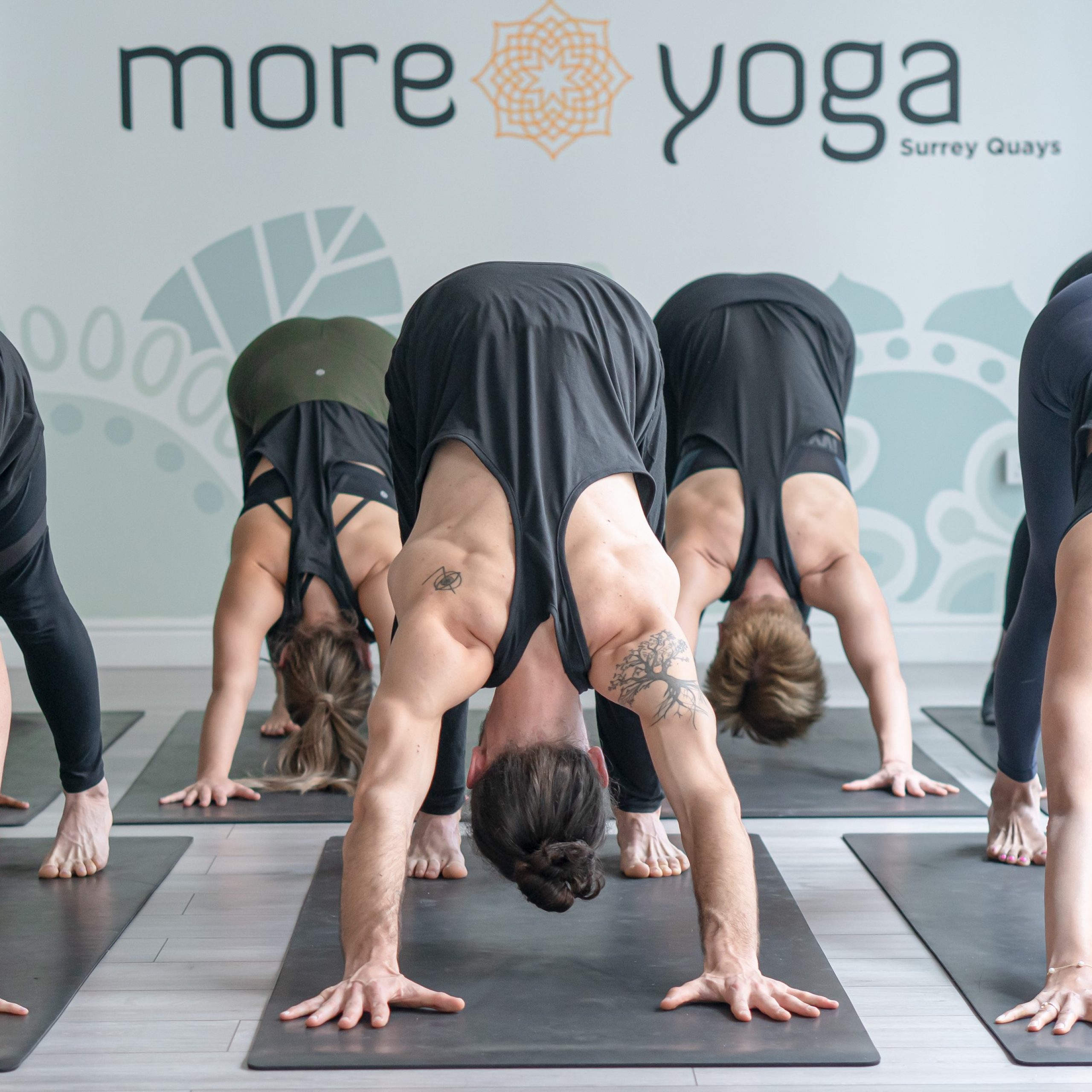
MoreYoga praises support of consumers in helping local studios survive

One of the biggest positives to come out of the pandemic was the enduring spirit of customers supporting local projects and initiatives. MoreYoga, London’s biggest yoga-studio brand, found that clients’ support and dedication to their local community studios meant the business has not just survived, but thrived during this time. Looking forward to welcoming them back with open arms, founder Shamir Sidhu espouses:

“We predict a renaissance of fitness to take place this summer when group exercise is allowed to reopen. At MoreYoga we’ve been fortunate with our dedicated customers, who have helped keep us afloat with their enthusiasm, support and financial backing over the course of lockdown, ready to return on May 17th. We’ll reopen our catalogue of 35 studios across London in line with government guidance and social distancing protocols, but it’s important that we do reopen as there is a huge amount of people, especially in London, who are eager to return to their local community yoga studio, to have that dedicated safe space to channel their energies. and improve their mental and physical health.

 “We’re excited by all the new parts of our service we have been able to develop over the past year in lockdown, including teacher training as well as our online, LIVE and on-demand workshops, classes and courses for consumers. All of this will continue in the form of our newly launching MoreYoga Wellness TV offering, which will be a dedicated platform  for wellness, fitness, mental health, community-led initiatives, all with the same purpose; to make yoga and wellness suitable to everyone, not just the select few who can afford it.

Action Group is a service provider to the fitness and wellness industry, with market-leading clients from across the globe. From NHS-approved exercise prescription apps and globally revered group exercise platforms to top-quality experts in the field of clinical exercise, physiotherapy, massage and fitness.  If you are writing a story about gyms reopening or would like PR support for a business that is reopening after an extended closure, please do get in touch via info@action-group.co.uk