Media Training: Why you need it and might not know it

How to bridge in a interview

Media training is one of the most vital tools in a PR’s wheelhouse. As public relation and reputation experts, we always recommend media training workshops to clients. Whether you’re a business founder, an industry expert, an influencer, an inspiring instructor or a global CEO – navigating the media requires proficiency, authenticity and finesse. All of which – a good PR can teach you.

At the end of the day, reputation can be a funny thing – especially in today’s rapidly evolving media and digital space where public perception and scrutiny is heightened. At Action, we find that the clients who commit to their media training by learning everything from how to have a successful media interview (a topic we’ve discussed in more detail here), to how to use the ABCD method with media engagements (also explored here) – are significantly more empowered and confident with press opportunities in the long term.

But what is media training and why does it matter?

Concise Messaging

The way you convey your thoughts and ideas greatly influences how your message is received. Media training is one of the simplest ways you can learn how to distil your personal passion or complex brand concepts. Helping turn them into concise and impactful statements that your audience (whether that be a journalist, a room full of people or a live broadcast) – just ‘gets’. Through their work, PRs have a great understanding of how journalists and, as a result, their readers – will receive information. It’s through this understanding and experience that PRs can then guide individuals through media training to speak in such a way that will resonate with an audience immediately.

Confidence and Presence

There’s a good reason why so many public speaking workshops and courses are available on the market – because it’s tough! Whether you’re speaking on stage in front of an industry audience, being interviewed live on broadcast news or just speaking to one journalist via a Zoom call – it is always intimidating – even for the most seasoned pros! But that’s where media training provides clients not only with the confidence to conquer this stage fright, but also helps them to remember their reasoning, key messaging, overarching goal and of course – their personal passion. Every one of these are key to giving a journalist and their audience a clear idea of your brand and your presence. In media training, we go through everything from how to spot common jargon phrases (a little sneak peek can be found here), to how to use voice modulation, eye contact and body language to convey calm, concise and clear responses to any question.
Positive Relationships

Good PRs will have done their research on any media engagement and brief a client or interviewee on who they will be interviewed by. Knowing a journalist through and through is part of a PRs remit and within media training, we teach individuals how to speak to that journalist in a way that is both professional but also human. Knowing what their interview style is, what sort of features and articles they write, and what ‘end result’ they are looking for is important. When an interviewee is equipped with all this information, media training comes into its own and individuals can respond in a positive, authentic and human way that doesn’t feel overly rehearsed. Journalists on the flip side – appreciate this level of attention from those they are interviewing and as a result – positive relationships happen on all sides. Which likely will lead to future opportunities…

Social Media and Customer Relations

At Action, we are also adept at adding social and customer relations to our media training guides. We also have experience in teaching social media managers and customer relations officers how to handle everything from everyday communication and marketing to difficult conversations on social platforms. In fact, there’s a blog that covers the latter point here for anyone wanting quick advice! 
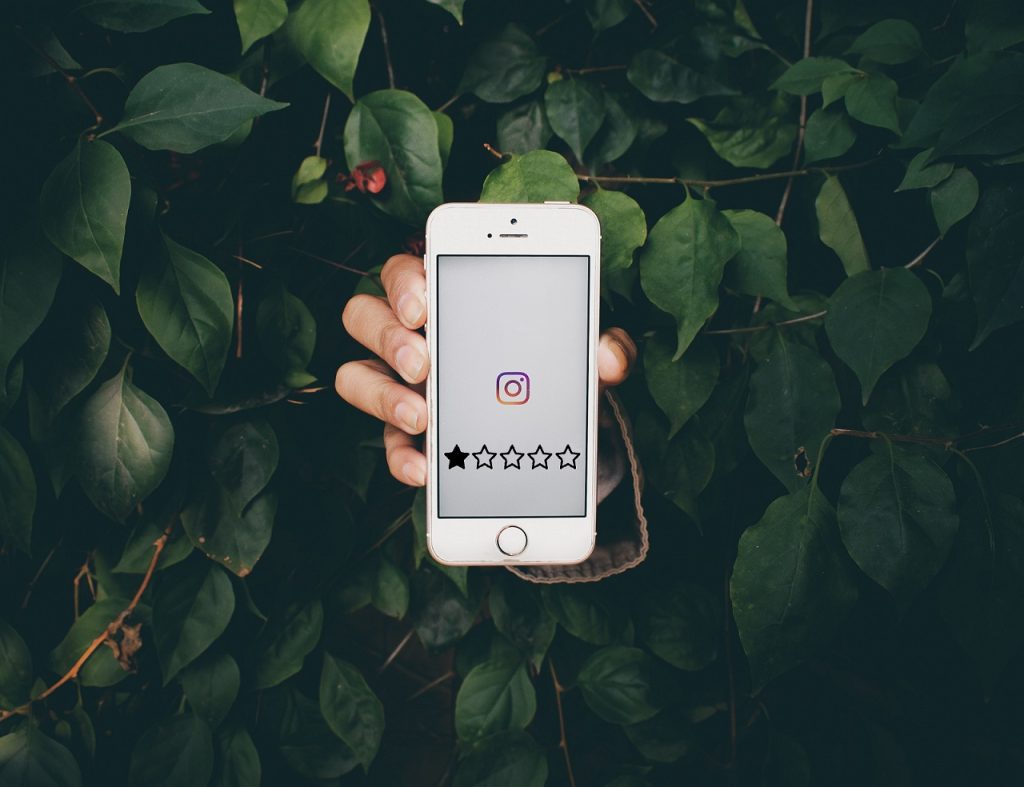
The truth is, the online world can also be a minefield, with the potential for miscommunication, backlash, or reputational damage. Our media training encompasses digital literacy, guiding individuals on how to effectively manage online presence, engage with followers, and navigate potential pitfalls. Understanding the nuances of social media helps individuals harness its power as a communication tool while mitigating risks.

Why Media Training Matters

The media landscape is an ever-evolving behemoth and to make a lasting impression as a business, brand or expert – media training is not a luxury but a necessity. Knowing how to effectively communicate with press and their audience, amplify your message and shape public perception is a powerful skillset. At Action, we believe that crafting compelling messaging, building confidence and presence, handling challenging situations and creating positive relationships – are all part and parcel of achieving this.

If you or your business requires media training, we can help! Please get in touch via info@action-group.co.uk and we can discuss how we create personalised media training packages on an ongoing or one-off basis.

The life-changing benefits of strength training

Strength training

Female bodybuilding. The words conjur retro images of creosote-stained, terrifying women posing in twee little positions who look like they’re going to explode out of their teeny fluoro bikinis into a lava of steroids and deltoids.

But the pursuit of slightly less extreme muscle definition through the modern vernacular for body building – strength training – is a hot topic.  According to Pinterest, saves for ‘strength training’ is up a huge 415%, as the fitness focus is less about losing weight and more about looking strong. You can’t move on Instagram for high profile models and celebrities ceaselessly documenting their gruelling boxing and weight training regimes.

Friend of Action, and all round little firecracker, Chloe Madeley comments: “The ‘size zero’ look went out of fashion long ago. Take one look on Instagram, and you will see that the most coveted women’s physiques are lean and defined. This strong, healthy, athletic appearance is what the majority of women now train for – and for good reason. The immediate aesthetic benefits of weight training are obvious, but it also improves many other aspects of your health; including bone density, lipid metabolism (the rate at which your body burns fat), and insulin sensitivity (how well you tolerate carbohydrates).”

About time too.

The myriad benefits of strength training are well documented – not just physical, but mental too. It improves bone density, slows the ageing process, relieves stress, burns fat, improves sleep, reduces anxiety, increases endorphins for that legal high… The precious NHS recommends bodyweight and weighted resistance exercises to build muscle, reduce the risk of osteoporosis, osteoarthritis and type-2 diabetes, and even to increase your life span… it goes on to say that “muscle-strengthening activities help maintain the ability to perform everyday tasks and slow down the rate of bone and muscle loss associated with ageing.”

Given that women are most prone to brittle bones, particularly post-menopause due to dropping oestrogen levels, regular strength training is key to maintaining bone density.

The historically male dominated, fart-filled free-weight areas of gyms are starting to attract more women. We feel much more welcome in this domain thanks to smart brands like Lomax, Gym Box, Sweat It and Blok who offer weight lifting and strength training as standard, taking the stigma out of it – and appealing to more women who can combine weights, olympic bars, landmines and barbells into regular class content.

I got into strength training properly six months ago, following a back injury from boxing. My L5 disc decided it no longer wanted to be in my spine, and tried to make a break for it, leaving me with a large protruded disc in my lumbar spine and making most movements painful. Luckily, I had a very smart PT and physio, who prescribed strength training alongside physio appointments as a way to build the surrounding muscles of my lower spine, core and legs to ease movement and stop me from thinking I was going to wither away and lose tone. I also found that building strength was a natural pain killer. I got seriously upset after being diagnosed with the disc fiasco, worried that I wouldn’t be able to train anymore…but I just had to figure out quickly what helped and what didn’t, and pay more attention to my body to ensure I was building a strong and mobile structure that could support, rather than worsen, my injury.

So far, so good.

I never worried about bulking up – I know how bloody difficult that is to achieve – and quickly noticed more positive change in my body – and mind – than from any spin class I’d ever been to. I also found it easier to track progress than with anything else, starting to up the weights each week and getting seriously excited when I realised how quickly weights that seemed impossible one week, were easy the next.

While I didn’t want to lose weight, I wanted serious muscle definition, and to be, and feel, strong, Really, really strong. Through weight training three times a week combined with some quality reformer pilates classes [Tempo and Lagree] I have seen my body change shape beyond what I expected. My housemate jokes that when I’m not in I’m out pulling lorries or double decker buses, but he’s not too far from the truth.

I am a little bit addicted, I admit it. My name’s Rachel and I’m a strength addict. etc.

I sustain this training on a vegan diet [yeah, I dont know what to shout first when I walk into a room, that I’m vegan or that I lift…] so I thought I would share some things I’ve learnt since embarking on this new training approach as a plant-pusher, with a fucked-up back.

NB: I am NOT AN EXPERT, this is just my humble little opinion:

  • Get a decent PT – Even just to start with so you can perfect form, then you can go it alone when you choose. If you’re working with an injury, its so crucial you pay micro-attention to form and tekkers so you don’t make it worse, or get a whole new injury. I use the Esquared app to find gyms around London to use without a monthly subscription, that way you can always fit a session in and put your PT into practice wherever you are.
  • Don’t fear the V word – Being a vegan made me drop a lot of body fat – I’m more mindful of getting a complete protein-rich diet now than ever before – so it’s not a hinderance to lifting weights, for me it helped achieve a leaner, more toned shape, you just need a protein source.The best vegan protein powders if you like that type of thing imho are Lomax Pro Edge Plant Formula and Kin OMG No Whey! to supplement a decent diet.
  • Follow legit influencers – Chloe Madeley, Hayley-Jane Warnes, sophiemadtolive and Shona Vertue are smart girls that I genuinely like as people, with bad ass, strong bodies without sensing they may be struggling with obsessive body dysmorphia. They provide excellent, evidence-based advice, creative content, and have candid dialogue with their followers on Instagram. They are living proof that strength training works, and even manage a sense of humour too.
  • Stretching and mobility – I never make enough time for this but it’s vital. Mobility drills, stretching and some resistance band stuff, even if you do infront of the TV, is imperative. It stops me from walking like a robot after a heavy session. I struggle with regular yoga, but youtube/Vimeo offers up some really manageable short sequences from people like the afore mentioned Shona, Steffy White and Cat Meffan which you can get in before work. Faves here and here.
  • Phone a friend – Get a mate who loves it too. I regularly train with friends who push and inspire me. Nothing worse than having to drag friends to train with you – don’t do that to yourself or to them. You’ll all end up hating each other. Also means you can go for some awesome food afterwards – if you’re East, please try out Essence Cuisine – I’m obsessed.
  • Physio/osteo/masseuse – again, find a good one. Preferably all three. It helps monitor progression with an injury and keeps you supple. They can recommend some nice low impact movements to do in the evening when you’re relaxing – nerve flossing, cat/cow stretches and dead bugs are my favourites
  • “You’re not broken” – I always have to remember this. When you get an injury that changes you, it shouldn’t become a negative focus. I just had to change the way I did things, stop smashing out endless HIIT classes where form wasn’t the focus, and start to prioritise the quality of the movement over the quantity. It works.
  • Swim – Now, I hate swimming in London for many reasons – mainly the kids, the smell, the endless asses and vaginas that face me in the changing rooms, the idea of gross foot infections and swimming in other peoples spit, snot and fuck-knows what else – makes me a public pool-phobe. Give me the sea any day. In the absence of living in Malibu, I’ve become a reluctant swimmer, using my local pool (London Aquatics Centre) which is actually a really nice experience. Swimming is a great all-rounder – cardiovascular, good for joints, stretches muscles out and targets all the other little muscles that you don’t reach through weight training.
  • CHILL OUT – As they say, rest really is as important as the training itself. I find it hard not to push myself, so have to impose proper rest days, and when my body doesn’t feel up to it, I have no energy or things hurt, I just don’t train. With my injury, I need to be careful of over-exerting myself and remember that I am actually injured. Getting good sleep so my little body can repair itself is vital, I use the Buddhify app if I’m too wired to sleep after training in the evening, I’m new to meditation but find the shorter sequences super effective.


Feel free to drop me a line at rachel@actionpr.co.uk if you’d like to chat about any of the above, or you have any of your own recommendations!