Why the future of bone health needs to move beyond diagnosis

Bone health is having a moment- From the growing conversation around menopause and healthy ageing to the impact of weight-loss medications and increasingly sedentary lifestyles, awareness of bone health is rising. But while more people are talking about osteoporosis, osteopenia and bone density, one fundamental challenge remains: too many people are finding out they have a problem only after one has already occurred.

For the health, fitness and wellness sector, this presents both a challenge and a significant opportunity. The traditional approach to bone health has largely been reactive. People are assessed when there is a reason for concern, with intervention often coming after bone loss has already progressed or, in some cases, after a fracture. Yet with bone fragility and fractures estimated to cost the NHS billions each year, there is a compelling case for shifting the conversation towards earlier assessment, prevention and ongoing intervention.

This is where the emerging concept of a ‘screen-to-solution’ approach could make a real difference. Power Plate has formalised a UK bone health ecosystem bringing together three complementary technologies: radiation-free bone density assessment from Screen My Bones, Power Plate’s PrecisionWave™ whole-body vibration technology and sister technology bioDensity, which uses low-impact osteogenic loading to support bone and muscle health.

The significance is not simply that three technologies are being brought together. It is the pathway that they create. Assessment can identify where someone is starting from. Targeted intervention can then address areas of need, while ongoing exercise and support can help people maintain their musculoskeletal health over the longer term.

That represents a very different proposition from waiting for a problem to become clinically significant before doing something about it.

Making Bone Health More Accessible

One of the biggest barriers to preventative healthcare is accessibility; traditional bone density assessment can be difficult for people to access, particularly when they do not yet have symptoms or an obvious clinical reason for referral. Screen My Bones uses REMS (Radiofrequency Echographic Multi-Spectrometry), a radiation-free technology that uses sound waves to assess bone mineral density and bone quality.

The potential of technologies like this extends beyond the technology itself. By bringing screening into environments that people already visit, including health clubs, the industry has an opportunity to make bone health assessment feel less like a distant healthcare issue and more like a routine part of looking after your body.

This is already beginning to happen.

David Lloyd is piloting bone screening days across selected UK clubs, creating an example of what preventative health could look like when healthcare and fitness become more closely connected.

It is an important development because health clubs have something the traditional healthcare system often struggles to provide: regular contact with large numbers of people who are already motivated to improve their health.

David Lloyd’s skeletal health training module, which includes vibration training, also demonstrates the importance of the people delivering these interventions. Technology alone cannot create a preventative health pathway. Education, appropriately trained professionals and the ability to translate assessment into practical action are equally important.

From Knowing Your Numbers to Doing Something About Them

There is little value in screening if the result simply sits on a page.

The next stage is intervention.

Power Plate’s whole-body vibration technology has been researched for more than two decades, with studies exploring its role across areas including bone mineral density, muscle strength, balance, mobility and healthy ageing.

Alongside this, bioDensity is designed to generate the mechanical forces associated with an osteogenic response through brief, low-impact strength training. Its proposition is particularly relevant to people who may struggle with traditional high-impact exercise but still need to address declining strength and bone health.

Together, these approaches highlight an important shift in thinking.

Bone health should not be treated as a standalone issue.

It sits within a much bigger picture encompassing muscle mass, strength, balance, mobility, physical activity and functional independence.

This is particularly important as the population ages. Maintaining bone density is only part of the equation. Being strong enough to move confidently, maintain balance and recover from everyday physical demands can have a major influence on quality of life.

Why The Conversation is Bigger Than Osteoporosis

The opportunity for preventative bone health is also being amplified by several of the biggest conversations currently taking place across health and wellness.

Menopause has brought bone health firmly into the mainstream, with declining oestrogen during and after menopause associated with accelerated bone loss.

At the same time, the rapid growth of weight-loss medications is prompting a broader conversation around preserving muscle and maintaining physical function alongside weight reduction.

Healthy ageing is another major driver. As people live longer, the objective is increasingly not simply to add years to life, but to maintain independence and quality of life for as long as possible.

All of these trends point towards the same conclusion: musculoskeletal health needs to become a proactive part of the wider health conversation.

And that means thinking differently about where prevention happens.

It doesn’t necessarily need to happen exclusively in a hospital or GP surgery. It can happen in a health club, workplace, hotel, rehabilitation environment or community setting. It can happen wherever people already live, work, exercise and engage with their health.

A New Role For The Fitness Industry

This creates an exciting opportunity for the fitness industry; health clubs have traditionally focused on exercise, performance and increasingly broader wellbeing. The next evolution could see them play a much greater role in preventative health, working alongside healthcare providers and technology companies to help people identify risks earlier and take action before those risks become problems.

That does not mean turning gyms into clinics, it means creating better connections between screening, exercise, education and ongoing support. The Power Plate, Screen My Bones and bioDensity ecosystem provides one example of how that could work in practice. It demonstrates how technology can potentially connect the dots between understanding an individual’s starting point and providing an appropriate pathway to support their long-term musculoskeletal health.

For the industry, the opportunity is significant. For consumers, the proposition is even simpler: don’t wait for a fracture to tell you your bones need attention. The future of bone health should be about finding problems earlier, making preventative assessment easier to access and giving people practical, evidence-led ways to do something about the results.

The shift from reactive treatment to proactive prevention will not happen overnight. But as technology becomes more accessible and the boundaries between healthcare, fitness and wellness continue to blur, the idea of a genuine ‘screen-to-solution’ pathway could become an increasingly important part of the UK’s preventative health landscape.

And ultimately, better bone health isn’t just about stronger bones, it is about helping people stay stronger, more mobile and independent for longer.

How to maximise new gym equipment installations

For equipment suppliers, making a sale is only the beginning. Once a new piece of equipment arrives on the gym floor, the real opportunity is in helping operators make sure it gets used, understood and valued by members. 

This is especially important for brands like Speedflex with their unique technology that many members would not have encountered before. 

So, how do you maximise new equipment installations in gyms?

It’s about so much more than simply delivering the equipment and leaving it on the gym floor. 

For suppliers, maximising equipment usage means providing the ongoing support that helps operators get the most out of their investment, which can include:

  • Training Materials to help PTs, coaches and gym teams understand how to use and teach on the equipment 
  • Marketing resources that promote the equipment within the gym through social media content, email templates, posters, banners and other ready-to-use marketing materials
  • Member engagement campaigns and challenges that give members a reason to try the equipment and keep coming back
  • Ongoing support and fresh content to keep the equipment visible, relevant and engaging

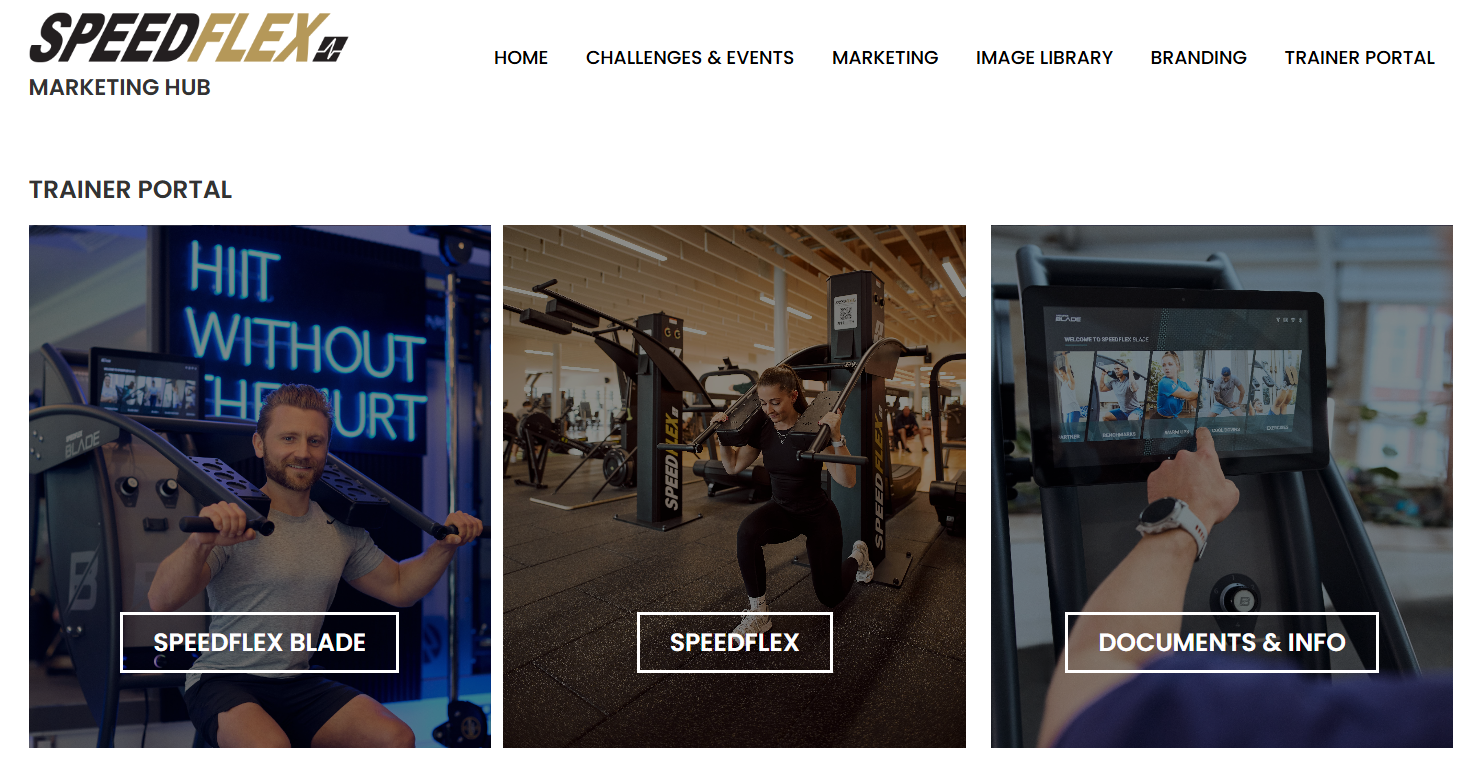
This is exactly the approach we took when working with Speedflex on their dedicated marketing portal.

Training teams to get the most from the equipment

When a new piece of equipment offers something different to the traditional gym offering, operators need to understand it before they can effectively promote it to their members.

The Blade is a great example of that. Its unique adaptive resistance technology and approach to training means that PTs and coaches need to understand not just how to use the equipment, but how to train members on it and communicate what makes it different. 

As part of the Speedflex Marketing Portal, we created a range of training materials to help operators do exactly that.

This included videos and supporting resources covering everything from how to use the equipment, how to set up and deliver Speedflex sessions and how to communicate its key USPs to members. 

By ensuring that the team has the knowledge and confidence to use and train members on the equipment, suppliers can remove one of the biggest barriers to usage: not knowing where to start or how to effectively use the machines. 

For Speedflex, this means operators had access to the tools they needed to make the Blade a core part of their gym’s offering that members could successfully integrate into their own training.

Marketing Materials for the Promotion of New Equipment

Getting members to use new equipment starts with getting them to notice it and understand how it works.

When a new product is installed in a gym, operators need to be able to both build excitement around it and show why members should give it a go. But creating a full marketing campaign from scratch can be time-consuming for busy operators. 

This is where we came in. 

To support Speedflex operators, we created a range of ready-to-use promotional materials through the Marketing Portal, including printable banners, posters, social media titles and email templates that operators could use to promote the arrival of Speedflex to their members.

Driving Member Engagement and Ongoing Member Usage

Getting members to try a new piece of equipment is one thing. Getting them to keep using it is another. 

That’s why ongoing member engagement was a key consideration when creating the Speedflex Marketing Portal. 

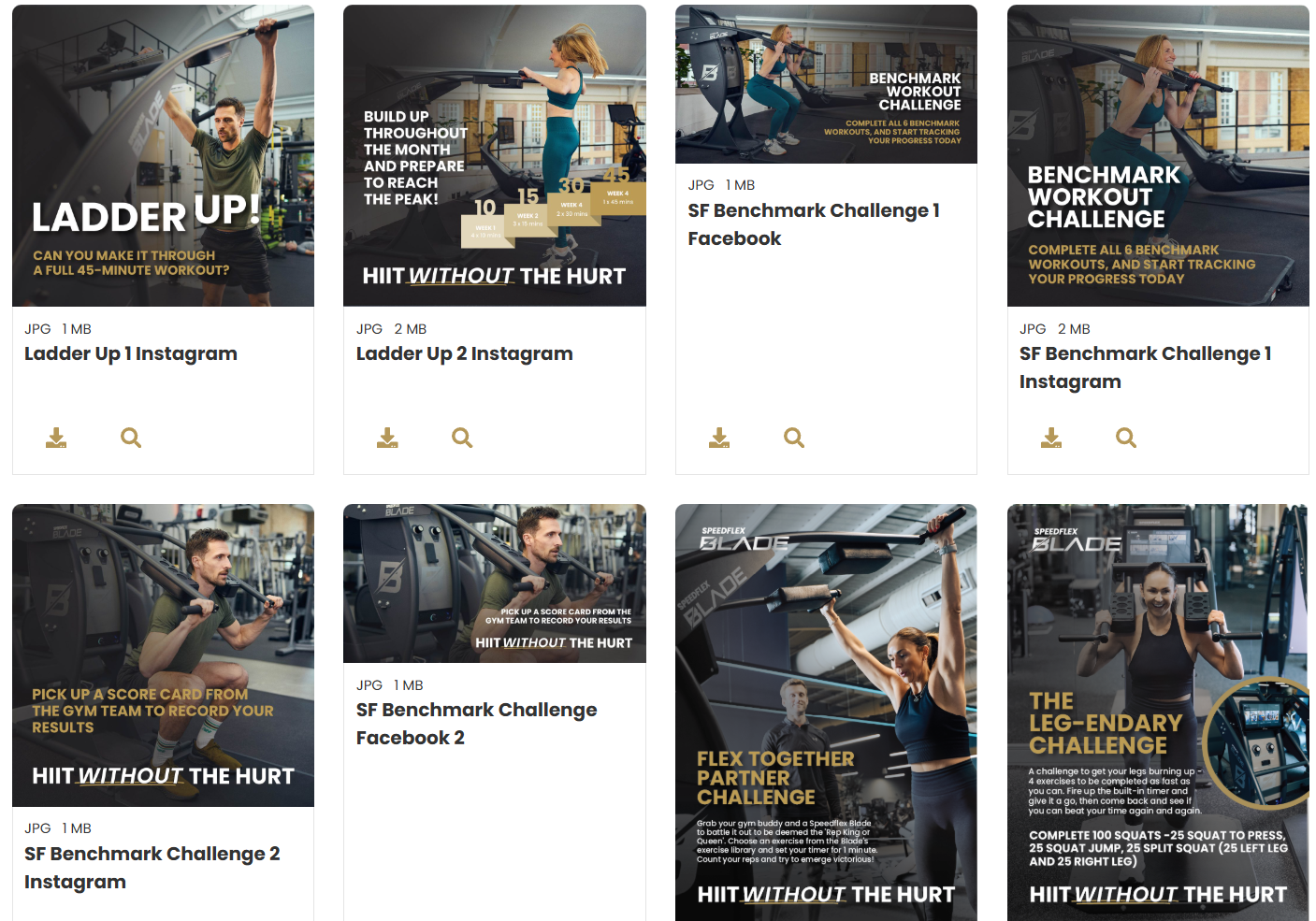
We created a series of Speedflex challenges designed to give members new goals to work towards, encourage friendly competition and create a sense of community based around the equipment. 

Crucially, the challenges were not a one-off campaign. Our team refreshed them with new challenges every quarter, giving operators fresh opportunities to engage members and keep Speedflex visible within their clubs. We designed and delivered everything from the initial concepts and challenge formats through to the campaign content and creative assets, creating ready-to-use resources that operators could display in their gyms and promote across social media. 

Our team even created translated versions of the materials to support operators in different markets, including a gym in Germany!

This ongoing approach helps operators give members a reason to return to the equipment, rather than relying on the initial excitement of a new installation.

Reaching New Audiences

Maximising new gym equipment installations also means considering who is using it.

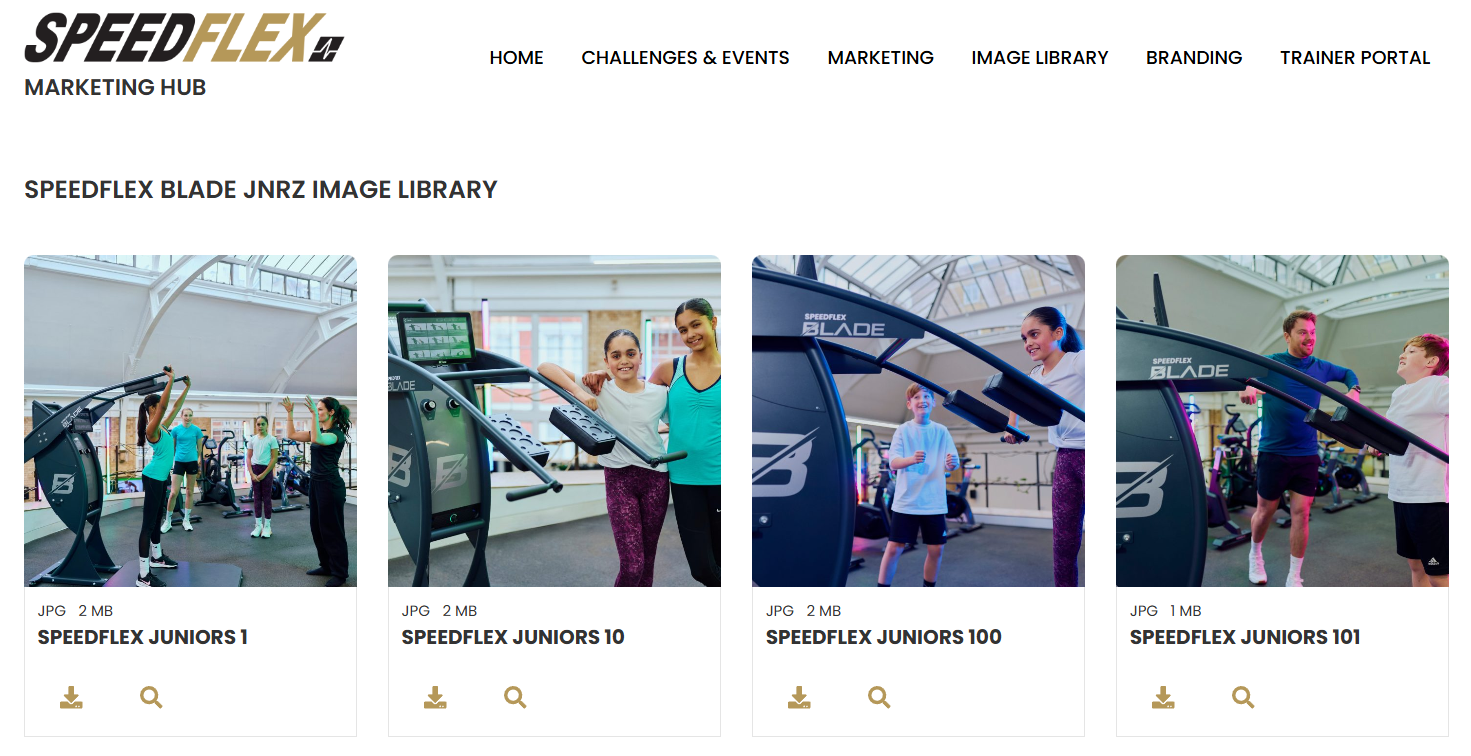
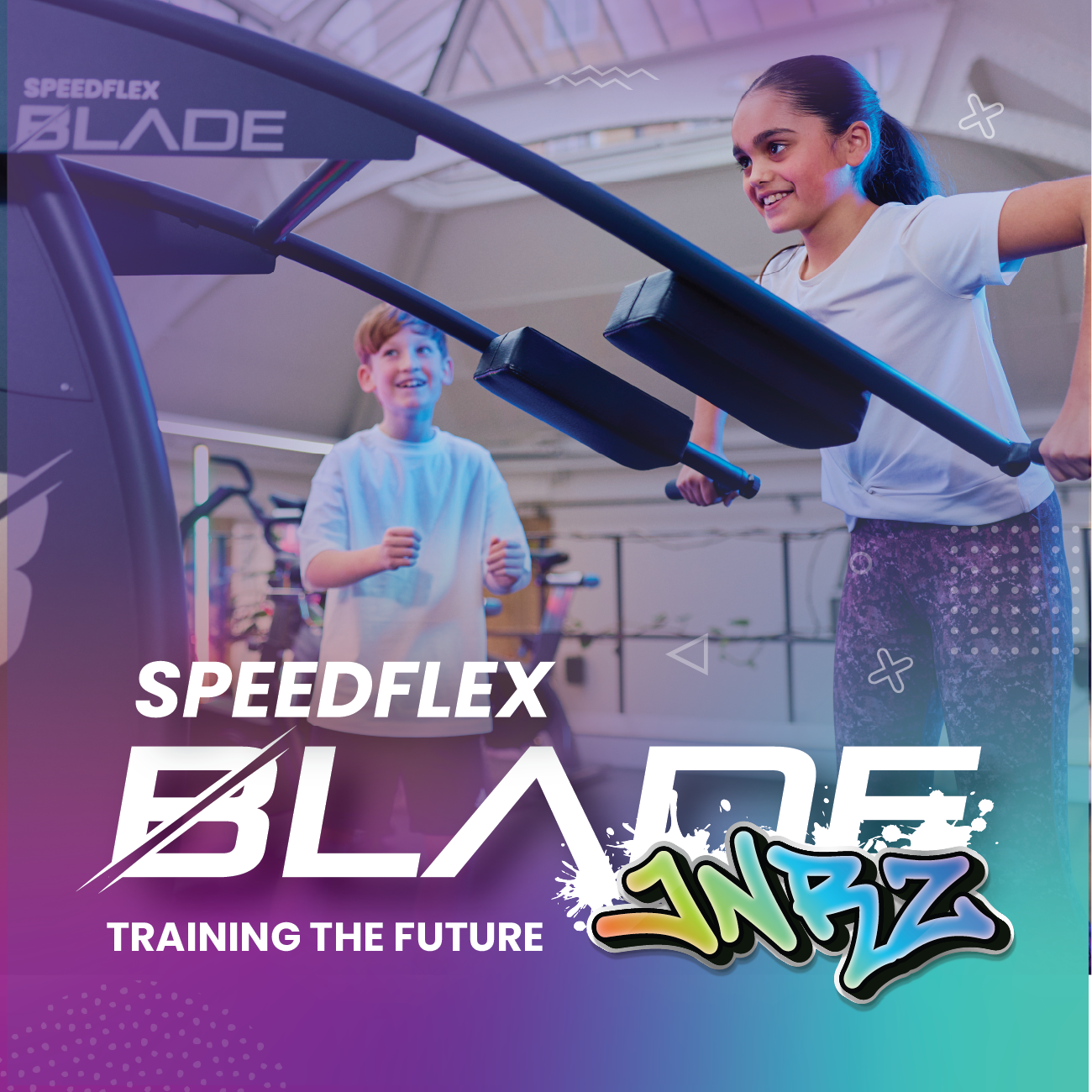
When Speedflex launched its JNRZ concept for younger members to train on the Blade, we worked alongside the team to support the launch with the same focus on operator activation and member engagement. 

As well as developing the branding and launch materials, we created challenges designed specifically around younger members – including opportunities for parents and children to take part in workouts together. 

This gave operators another way to introduce Speedflex to their members and encourage families to get involved. 

A perfect example of how ongoing marketing support can help suppliers and operators identify new audiences and find new opportunities to increase equipment usage.

Support That Goes Beyond the Sale

The Speedflex Marketing Portal has successfully brought all of these resources together in one easy to access place, giving operators a central hub for training, marketing and member engagement.

But we haven’t stopped there.

We’ve continued to add and update content on the marketing portal, including campaigns and marketing materials, to keep the materials fresh, relevant and valuable, while also listening directly and responding to operator feedback. When operators have identified a particular need, we’ve worked with Speedflex to create new resources to help address it – meaning that the support continues to evolve alongside the needs of Speedflex’s operator network.

And that is ultimately how to maximise new gym equipment installations. Give operators the tools, knowledge and ideas they need to introduce it, promote it, train on it and keep members coming back to it.

Helping Equipment Suppliers Build Successful Relationships with Gym Operators

The Marketing Portal we created for Speedflex is a great example of how marketing can add value far beyond selling a product.

By providing training resources, marketing materials, member engagement campaigns and ongoing support all in one place we helped Speedflex give its operators everything they needed to get the most out of their investment. 

When suppliers support operators throughout the customer journey, they are not just selling equipment, they are helping their customers succeed with it.

And when operators have the tools to successfully launch, promote and maximise usage of new equipment, everyone benefits – the supplier, the operator and most importantly the members.

If you’re looking for marketing support for your health, fitness or wellness brand, get in touch at info@action-group.co.uk

The most overlooked growth channel in wellness: partnerships

The wellness industry has never been more crowded- it feels like every week, another supplement brand or yoga onesie brand launches. Blink, and another ‘essential’ and ‘groundbreaking’ app or subscription service starts pining up on your Instagram. The result? Consumers have more choice than ever before, but brands have to work harder to earn attention.

For many, the answer has been to increase investment in paid media, social content or influencer campaigns. While all of these have their place, one of the most effective growth channels is still surprisingly underused – strategic partnerships.

Done well, partnerships don’t just expand your reach, they build credibility, unlock new audiences and create the kind of cultural relevance that advertising alone often struggles to achieve.

The fastest way to build trust

Consumers are increasingly sceptical of brands talking about themselves; its feels self-serving and overly indulgent. Recent insights show that consumer are far more likely to trust recommendations that come from people, organisations or communities they already know, and that’s why partnerships work so well.

Whether it’s a wellness brand collaborating with a premium hotel, a nutrition company working alongside a fitness franchise or a gym partnering with a mental health charity, the right collaboration immediately borrows trust from both sides.

Instead of asking consumers to discover you from scratch, you’re being introduced by someone they’ve already chosen to believe.

Partnerships create stories, not just exposure

One of the biggest mistakes brands make is viewing partnerships as little more than logo swaps or discount offers. The strongest collaborations create something people actually want to talk about.

They launch new products, host events,  produce research,  solve a problem. Simply put, they champion a real cause or initiative, not just one that chases their bottom line. They bring together expertise that couldn’t exist without both brands in the room.

That gives PR teams something meaningful to pitch, social teams something worth sharing and creators something authentic to talk about; making the partnership the story, rather than simply supporting one.

The best partnerships make perfect sense

Consumers are savvy, and can spot a forced collaboration almost instantly. When a partnership is forced or inauthentic, it feels like brands dragging metaphorical nails down the consumer chalk board. Just because two brands operate in the same sector doesn’t mean they belong together.

The partnerships that resonate feel obvious in hindsight; they share values, audiences or a common purpose, even if they operate in completely different categories.

Some of the most successful wellness collaborations happen outside the wellness industry altogether…

  • Fitness brands partnering with hospitality businesses to create recovery experiences.
  • Nutrition brands working with workplace wellbeing providers.
  • Sportswear brands collaborating with cafés, festivals or travel companies.

These partnerships work because they reflect how consumers actually live. Wellness isn’t a separate category anymore, it’s woven into everyday life.

Think audiences, not industries

One of the biggest mindset shifts brands can make is to stop asking, “Who are our competitors?” and start asking, “Who else serves our audience?”. The answer is usually much broader than expected.

Someone interested in improving their health might also be booking holidays, buying running shoes, listening to wellbeing podcasts, visiting coffee shops, using productivity apps and investing in better sleep. All of these are crucial touchpoints that represent partnership opportunities.

The goal isn’t simply to reach more people, it’s to meet the right people in places where they’re already engaged.

Partnerships amplify every other channel

The beauty of a great partnership is that it rarely exists in just one place. A single collaboration can generate months of activity across multiple channels, from PR coverage and influencer content to social media, paid campaigns, thought leadership and behind-the-scenes storytelling.

Rather than creating isolated marketing moments, brands build an entire ecosystem of content around one central idea, maximising both reach and return. That’s what makes strategic partnerships one of the most effective and often overlooked growth channels available to modern marketers.

The biggest opportunity isn’t more partnerships. It’s better ones.

Too many collaborations begin with one question: “Who has a big audience?”

The better question is: “What could we create together that neither of us could achieve alone?”

However, the partnerships that generate headlines, social engagement and commercial results are rarely transactional. They’re built around a shared ambition, whether that’s improving community wellbeing, solving a consumer challenge or creating an experience people genuinely want to be part of.

When collaboration starts with purpose rather than promotion, the marketing almost takes care of itself.

Why partnerships should sit at the heart of your growth strategy

As customer acquisition becomes more expensive and consumers become harder to impress, brands need growth strategies that do more than simply buy attention- strategic partnerships deliver exactly that.

They unlock new audiences, increase credibility, generate richer stories and create opportunities across PR, social, influencer marketing, experiential and content all at once.

For wellness brands in particular, they also reflect how consumers increasingly experience health itself: not through one product or one service, but through an interconnected ecosystem of brands that support different aspects of their lives.

At Action Group, partnerships are never viewed as standalone activations. They’re designed as growth platforms. We identify complementary brands, develop culturally relevant campaign ideas and build integrated strategies that maximise every opportunity across earned, owned and social channels.

Because the brands growing fastest today aren’t trying to do everything alone.

They’re finding the right partners to help tell a bigger story.

If you’re a brand in the health and fitness industry looking to elevate your brand and secure powerful partnerships, or if you’re looking to partner with brands in the fitness industry – get in touch: info@action-group.co.uk

How TikTok changed fitness marketing forever

For years, fitness marketing followed a fairly predictable playbook. Brands sold aspiration through polished imagery, celebrity endorsements and dramatic transformation stories. Campaigns were meticulously produced, messaging was tightly controlled and consumers were expected to admire the lifestyle being presented before eventually buying into it.

Then TikTok arrived.

Almost overnight, the platforms that had rewarded perfection began rewarding authenticity instead. Suddenly, a personal trainer filming a workout between clients could outperform a professionally produced campaign, while an honest review of a local gym could generate more engagement than a glossy brand advert.

TikTok didn’t just introduce another social platform. It fundamentally changed what people expected from fitness brands, and in doing so, reshaped the industry’s marketing strategy forever.

Authenticity became the new currency

Perhaps the biggest shift TikTok brought was the end of perfection as the ultimate goal.

Consumers no longer expect fitness brands to present an unattainable lifestyle. Instead, they want to see real people, real routines and real experiences. They connect with trainers who admit they occasionally skip workouts, runners documenting their first marathon rather than their fiftieth, and nutritionists who explain that sustainable habits will always outperform quick fixes.

That doesn’t mean production quality no longer matters. It means audiences are far more interested in content that feels genuine than content that feels manufactured.

For brands, authenticity is no longer a creative choice, it’s a commercial necessity.

Expertise now has to earn attention

One of TikTok’s greatest strengths is its ability to make education entertaining.

Fitness has become one of the platform’s biggest knowledge-sharing communities, where trainers, physiotherapists, coaches and nutritionists break down complex topics into content people actually want to watch.

Whether it’s debunking workout myths, explaining why recovery matters or reacting to the latest viral trend, expertise has become one of the most powerful forms of content.

The difference is that expertise can no longer hide behind jargon or lengthy explanations. It has to be engaging, accessible and relevant enough to stop someone scrolling.

The brands winning attention today aren’t simply promoting products, they’re consistently providing value.

Fitness became part of culture, not just health

TikTok has also expanded what fitness actually means; a decade ago, most fitness content revolved around weight loss or muscle gain. Today, the conversation stretches far beyond the gym floor.

Fitness is now linked with workplace wellbeing, mental health, sleep, recovery, longevity, productivity, wearable technology, fashion and even travel. Someone might discover a new workout because it supports better focus at work, helps them sleep more deeply or improves their mental wellbeing rather than because they want visible abs.

That cultural shift has transformed the role of fitness brands because they’re no longer speaking solely to gym enthusiasts, rather they’re speaking to anyone interested in living better.

Communities matter more than follower counts

TikTok also changed how influence works.

For years, brands chased the biggest creators they could afford. Today, many of the most successful campaigns are built around smaller creators with highly engaged communities.

Consumers don’t automatically trust the person with the largest audience. They trust the person who consistently provides useful advice and feels relatable.

That’s particularly true in fitness, where credibility matters. A local coach with a loyal community can often have more influence over purchasing decisions than a celebrity with millions of followers. In short- the conversation has shifted from reach to relevance.

Brands have to move at the speed of culture

Perhaps the biggest challenge TikTok created is the pace at which conversations now evolve.

Fitness trends emerge almost overnight. One week everyone is talking about Hyrox, the next it’s Japanese walking, cold plunges, Zone 2 cardio or the latest wearable technology, and many brands feel the temptation to chase every trend.

The smarter approach is understanding which conversations genuinely align with your brand and adding something valuable to them. Audiences quickly recognise when brands are forcing themselves into trends that don’t fit.

The future belongs to brands that participate

The biggest misconception about TikTok is that it changed social media, when in reality, it changed consumer expectations and experiences.

People now expect brands to educate rather than advertise, participate rather than broadcast and contribute something meaningful before asking for attention.

The fitness brands building long-term success aren’t creating content because the algorithm demands it. They’re creating content because it answers questions, starts conversations and helps people navigate an increasingly complex health and wellness landscape.

The platform may evolve and new social channels will inevitably emerge, but that mindset is unlikely to disappear.

What this means for fitness brands

The lesson for marketers isn’t that every fitness brand needs to dance to trending audio or recreate every viral format, it’s that consumers have fundamentally changed what they value.

At Action Group, we help brands understand those shifts before they become mainstream. Whether through PR, influencer partnerships, social-first campaigns or culturally relevant storytelling, our focus is always the same: creating work that people genuinely want to engage with rather than simply interrupting their feeds.

Because TikTok didn’t change fitness marketing by making it louder- it changed it by making it feel more human.

From Concept to Launch: Bringing Speedflex Blade JNRZ to life

Blade JNRZ has just launched, a brand new youth-focused fitness concept designed to make fitness fun, accessible, and exciting for a new younger audience. 

Developed from the ground up by our team, Blade JNRZ was created in response to the new ukactive guidelines allowing children aged 10+ to exercise in gyms, alongside changing industry trends that have created a growing opportunity to engage younger audiences in fitness. As the most inclusive kit on the gym floor, Speedflex is perfectly placed to offer safe and effective sessions for young gym-goers. Using our industry knowledge and expertise, we identified the opportunity to create a sub-brand, for this entirely new youth-focused concept to inspire the next generation to get moving, positioning Speedflex at the forefront of this emerging market.

Bringing Speedflex Blade JNRZ to Life

We brought the concept to life through branding, creative design, launch support and PR activity. This included developing the JNRZ identity, including the logo and a suite of campaign assets designed to capture the energy and accessibility at the heart of the programme. Our aim was to create a visual identity that felt bold, modern and exciting for a younger audience, helping JNRZ stand out as something fresh and innovative whilst remaining instantly recognisable as part of the Speedflex brand.

Alongside the branding and creative work, we planned and organised a dedicated content shoot to create marketing imagery and campaign assets ahead of launch. We then coordinated the launch itself, ensuring campaign messaging, marketing activity and communications were fully aligned to maximise impact.

To further support awareness around the launch, we secured targeted coverage across leading fitness and trade media titles, helping position Blade JNRZ in front of gym operators, fitness professionals and key industry audiences. The PR campaign helped generate excitement around the new concept and ensured Speedflex JNRZ made a strong impact across the industry from day one.

Projects like this are exactly what we love doing at Action Group – combining strategy, branding, creative design, content creation, launch support and PR to help our clients turn ideas into impactful campaigns.

If you’re looking to launch a new product, concept or campaign and want support bringing it to life, get in touch with our team: info@action-group.co.uk

Launching Trust Your Trainer: Taking on fitness misinformation with Active IQ

In an era where anyone with a smartphone and a social media account can position themselves as a fitness expert, the challenge of separating credible advice from potentially harmful misinformation has never been greater.

That’s why we were delighted to support Active IQ in the launch of Trust Your Trainer, a national campaign designed to tackle the growing issue of unqualified health and fitness advice online and champion the role of properly qualified professionals across the sector.

The Challenge

The rise of social media has transformed how people access health, fitness and wellbeing advice. While this has created significant opportunities for education and engagement, it has also opened the door to a growing volume of misleading, inaccurate and, in some cases, dangerous content.

From extreme diet trends and unrealistic body transformation claims to unsafe workout advice and unregulated coaching services, consumers are increasingly being exposed to content that prioritises engagement over expertise. Active IQ recognised that the industry needed a stronger voice to address the issue and advocate for higher standards online.

The organisation’s ambition was clear: create a movement that would not only raise awareness of the risks associated with fitness misinformation but also push for meaningful change across the industry and social media platforms themselves.

The Insight

The fitness industry has spent decades professionalising standards, qualifications and career pathways, yet online, expertise and influence are often treated as the same thing.

As more consumers turn to platforms such as TikTok and Instagram for fitness guidance, the gap between qualified professionals and unregulated influencers continues to widen. Research highlighted by the campaign showed that much of the diet and exercise advice circulating on social media is misleading, harmful or lacking important context, creating confusion for consumers and undermining trust in qualified practitioners.

For Active IQ, the opportunity was not simply to highlight the problem, but to lead a positive solution.

The Idea

At the heart of the campaign sat a simple but powerful proposition: Trust Your Trainer.

Working closely with the Active IQ team, we helped shape a campaign designed to elevate qualified professionals and encourage greater accountability within the online fitness space.

Central to the activity was the launch of an industry manifesto calling on social media platforms to introduce a trust mark for qualified fitness professionals. The proposed trust mark would provide consumers with a simple way to identify whether the person sharing health and fitness advice holds recognised qualifications, helping them make more informed decisions about who they follow and trust online.

Alongside the manifesto, the campaign sought to unite training providers, employers, operators, fitness professionals and wider industry stakeholders behind a shared call for change.

Bringing The Campaign To Life

Our role focused on transforming an important industry issue into a compelling media narrative capable of engaging both trade and consumer audiences.

We developed the campaign story, media positioning and communications strategy, helping Active IQ frame the conversation around consumer safety, professional standards and the growing influence of social media on health behaviours.

A key part of the launch centred around real-life experiences from Active IQ ambassadors, including personal trainer Robyn Drummond, whose own experiences with misinformation and unqualified coaching highlighted the very real consequences that poor advice can have on physical and mental wellbeing. Her story provided a powerful human dimension to a broader industry challenge.

By combining industry advocacy with authentic lived experience, the campaign was able to move beyond statistics and create a conversation that resonated with fitness professionals, policymakers, media and consumers alike.

Why It Mattered

Trust Your Trainer was about more than qualifications, it was about consumer protection and restoring confidence in credible expertise.

And it was about ensuring that the professionals who invest time, money and effort into developing recognised skills are given the visibility and recognition they deserve.

As AI-generated content, influencer culture and algorithm-driven recommendations continue to shape health behaviours, the importance of trusted expertise has never been greater. Trust Your Trainer positioned Active IQ at the forefront of that conversation, reinforcing its role as a leading advocate for professional standards, workforce development and consumer wellbeing across the active leisure sector.

The Result

The campaign generated industry-wide discussion around misinformation, professional standards and the future of trusted health and fitness advice online.

Most importantly, it gave the sector a clear rallying point. A movement that brought together qualified professionals, employers, training providers and industry bodies around a shared belief that when it comes to health and fitness advice, expertise should matter more than follower count.

For Active IQ, Trust Your Trainer wasn’t simply a campaign launch. It was the beginning of a long-term movement designed to help consumers make safer choices and ensure qualified professionals remain at the heart of the fitness industry’s future.

If you’re looking for powerful campaigns that make an impact, get in touch: info@action-group.co.uk

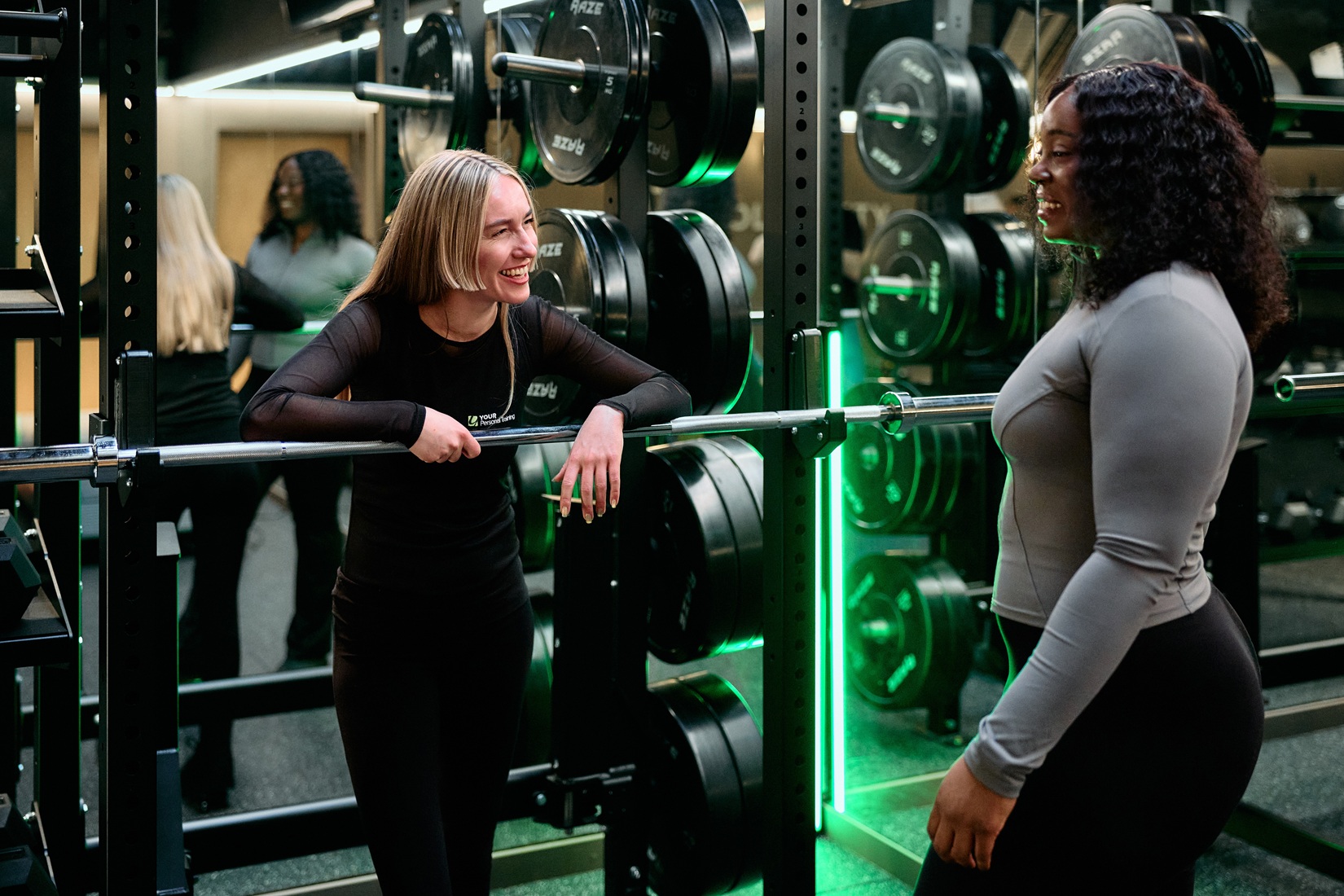
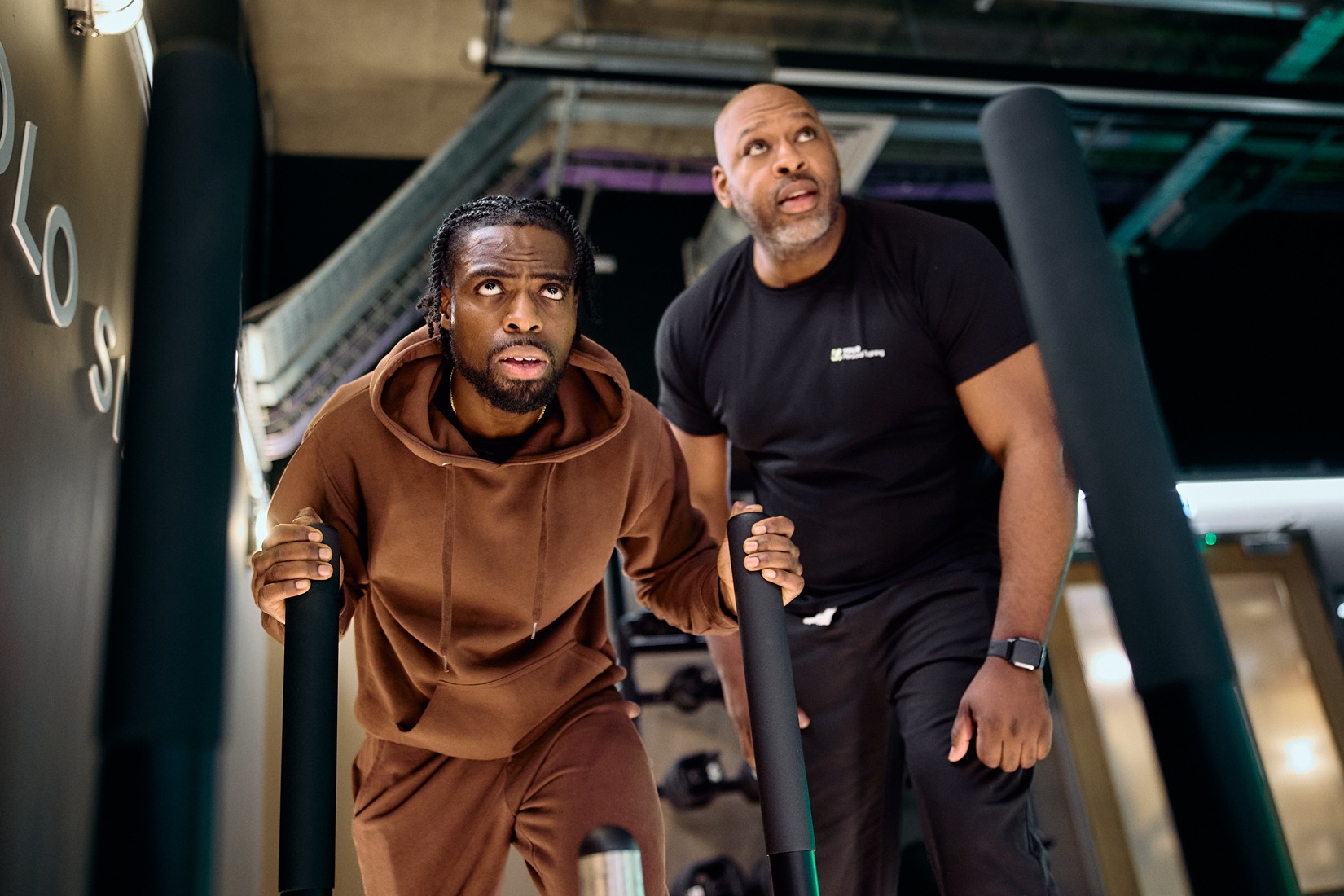
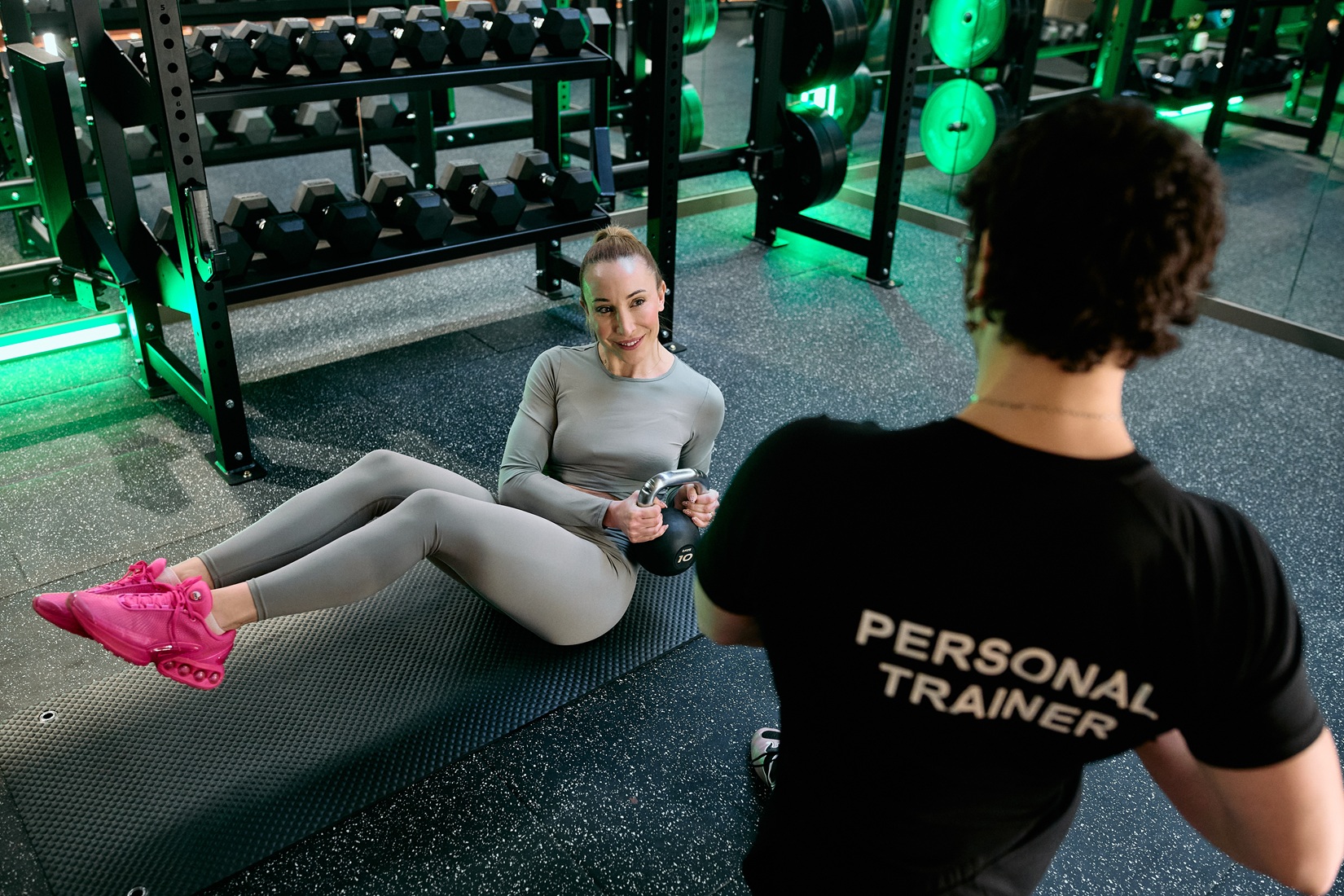
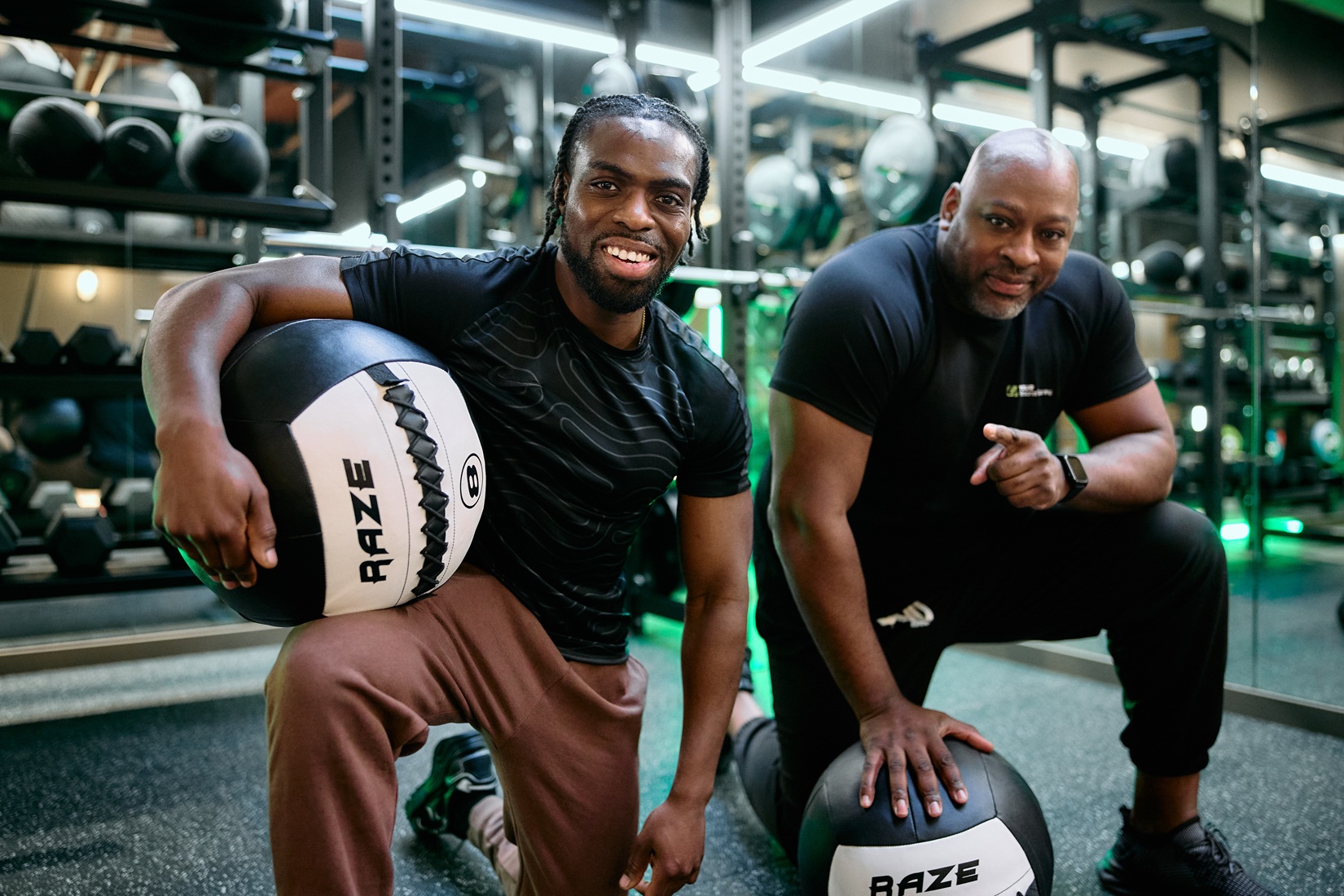
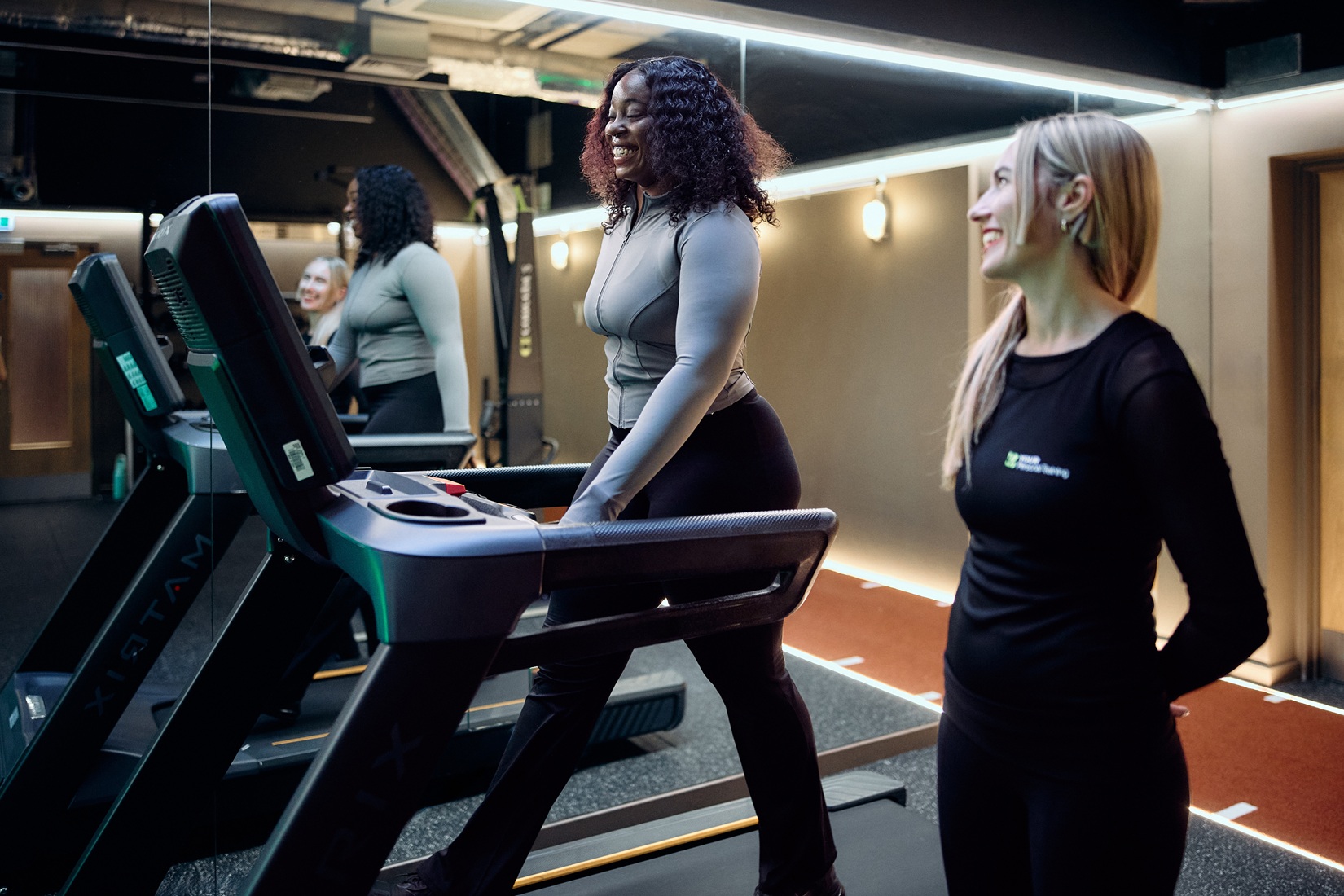
PT photography for YOUR Personal Training

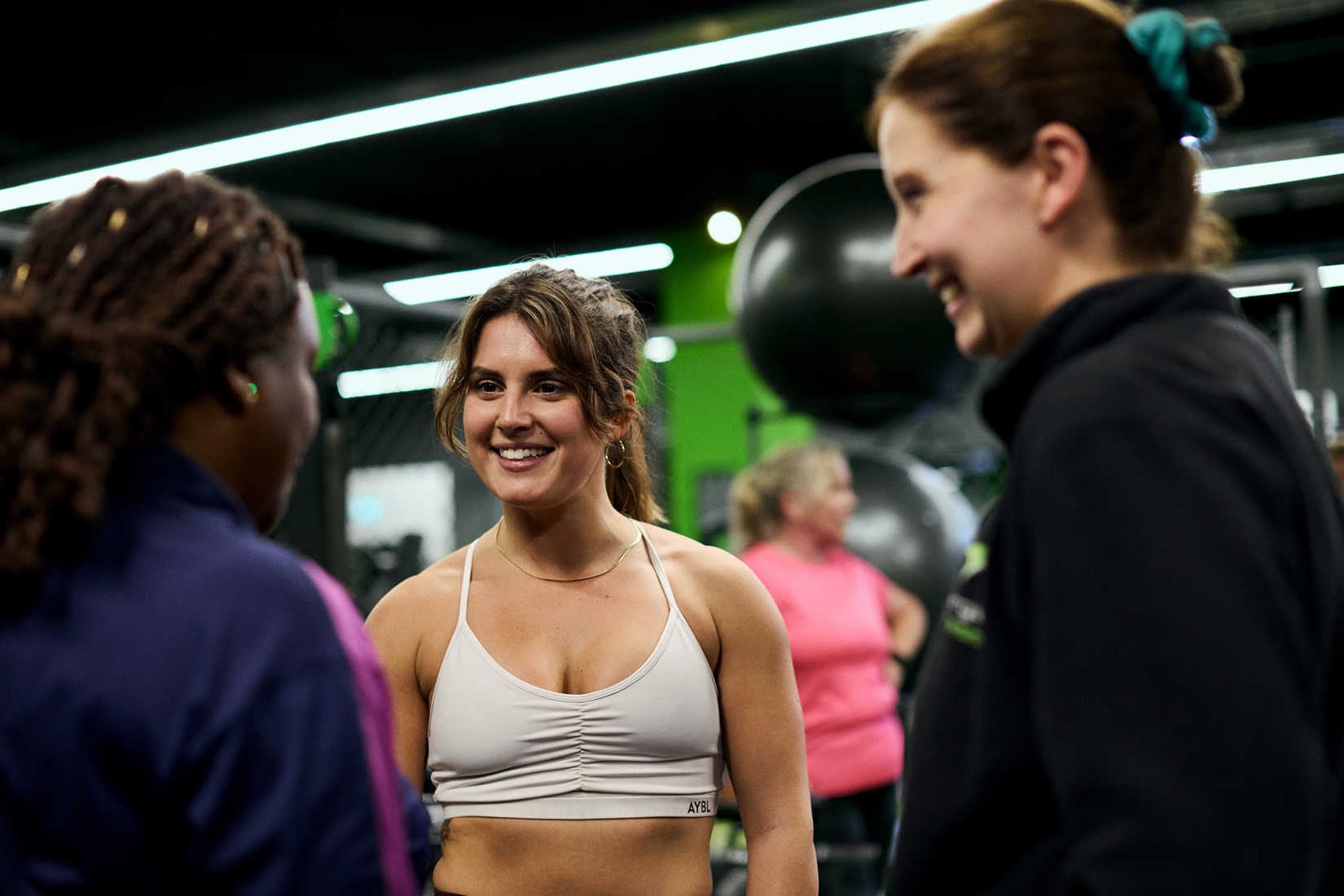
We recently shot a batch of content for YOUR Personal Training, and the goal was simple: shoot PT photography and create content that felt real, energetic, and focused on real trainers.

We headed into the gym environment to capture PT-client sessions. Every setup was designed to feel authentic, showcasing the connection between trainers and clients.

Alongside photography, we produced a bank of dynamic video content tailored for social, web, and recruitment campaigns. That included fast-paced training clips, cinematic gym visuals, and interview-led content designed to put real voices at the centre of the brand. The result was a versatile content library that gives YPT the flexibility to tell its story across every platform.

The shoot was all about energy, movement, and personality, creating content that reflects what YPT is really about: people pushing people further. Check out some of our favourite shots below:

If you’re looking for powerful brand photography or videography, get in touch with us: info@action-group.co.uk

Shooting High Energy Content For Energie Fitness Classes

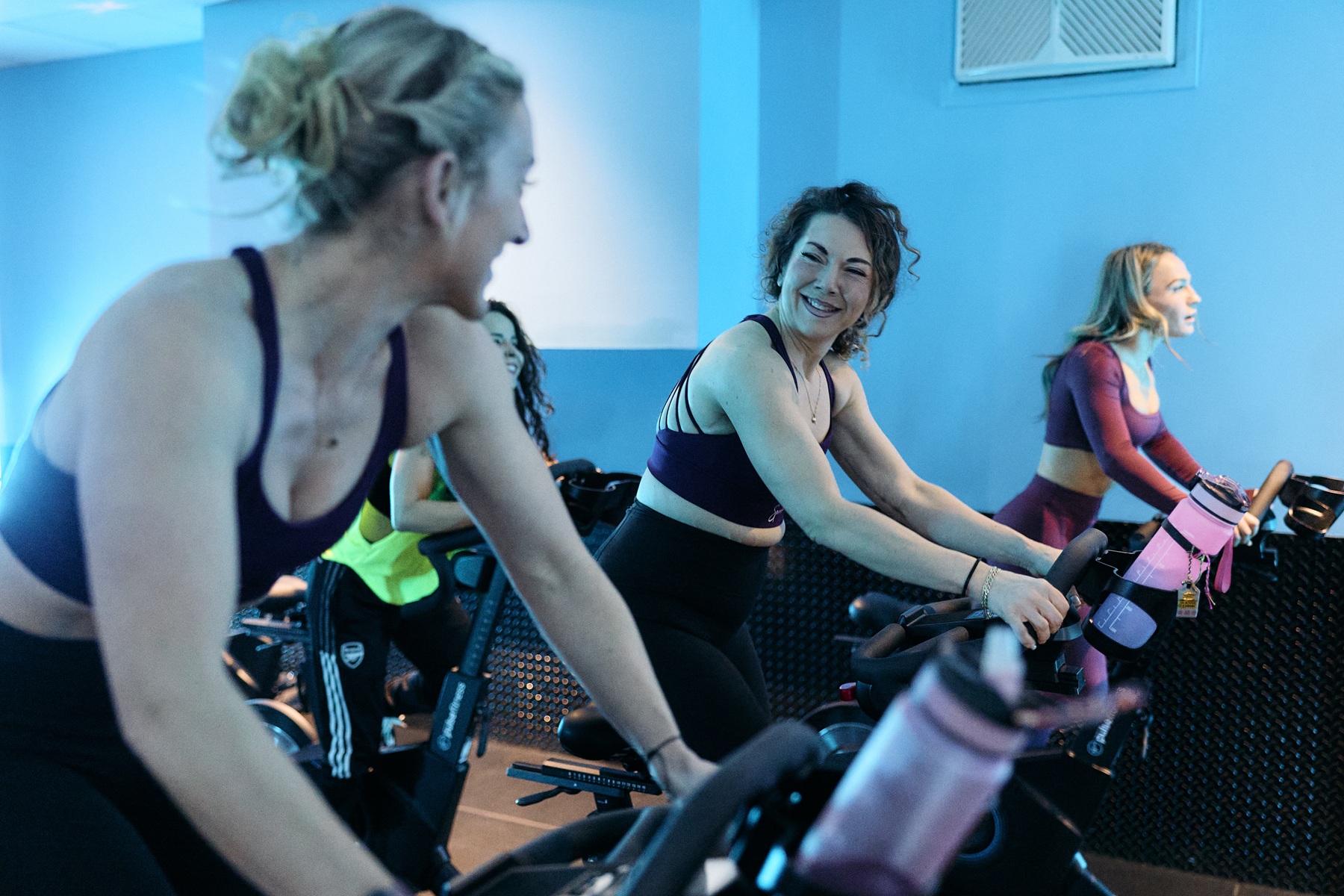
Continuing our work with Energie Fitness, we were tasked to capture their new range of group exercise classes. Freshly launched in response to consumer demand, the 5 classes covered functional training, weight lifting and technique, mindfulness, spin.

We had two models from Action Fitness Models, along with a handful of amazing members, and simulated the classes. We always find the best way to capture the right atmosphere is to shoot it for real, and then we can set up any specific shots after.

Check out the amazing range of Energie Fitness classes below: EROX, ELEV8, MOVEWELL, STRENGTH CLUB, and VOLT CYCLE.

STRENGTH CLUB

ELEV8

EROX

MOVEWELL

VOLT CYCLE

If you’re looking for some high-energy video content, get in touch: info@action-group.co.uk

Capturing content for Pulse Fitness at igym Carshalton

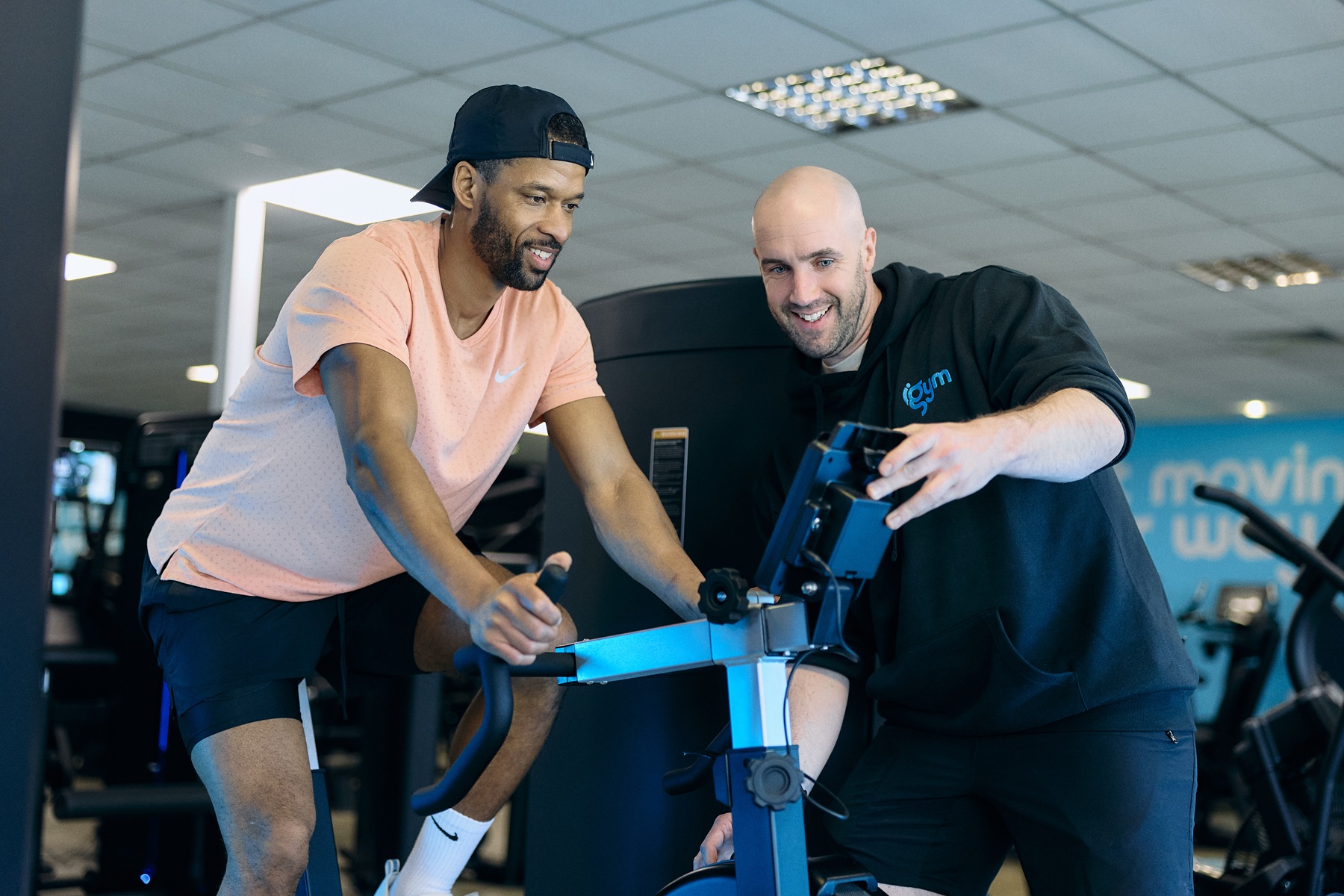
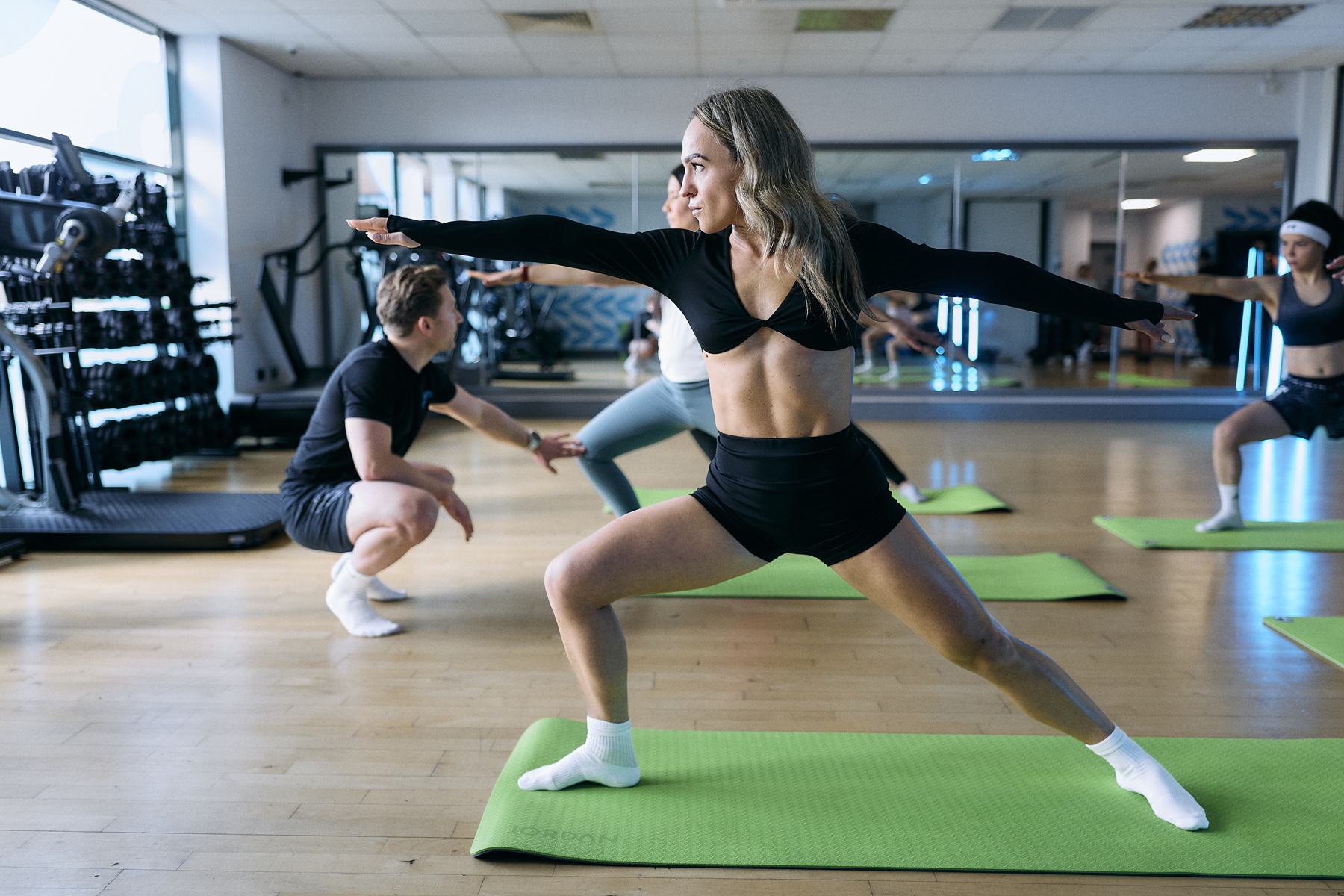
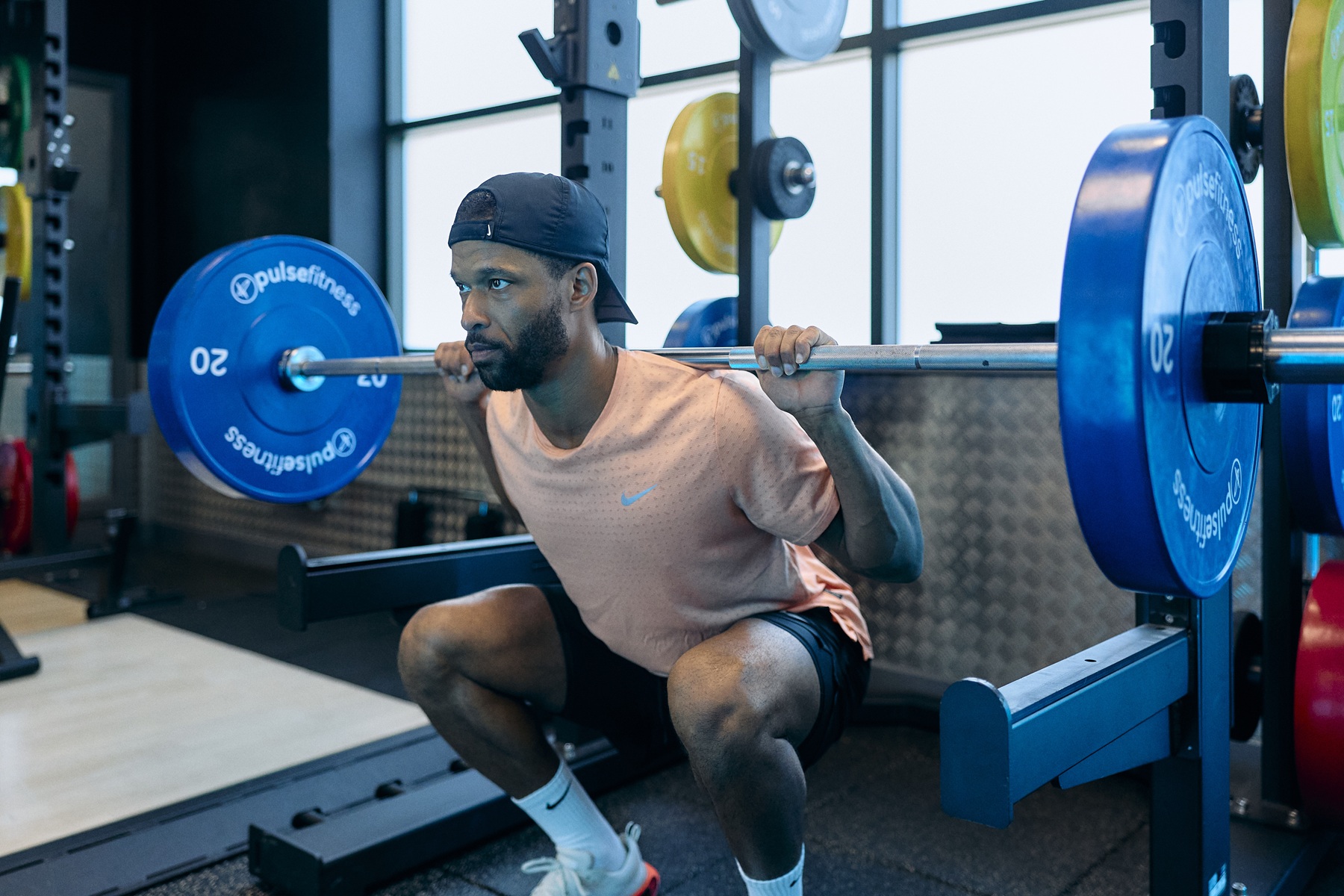
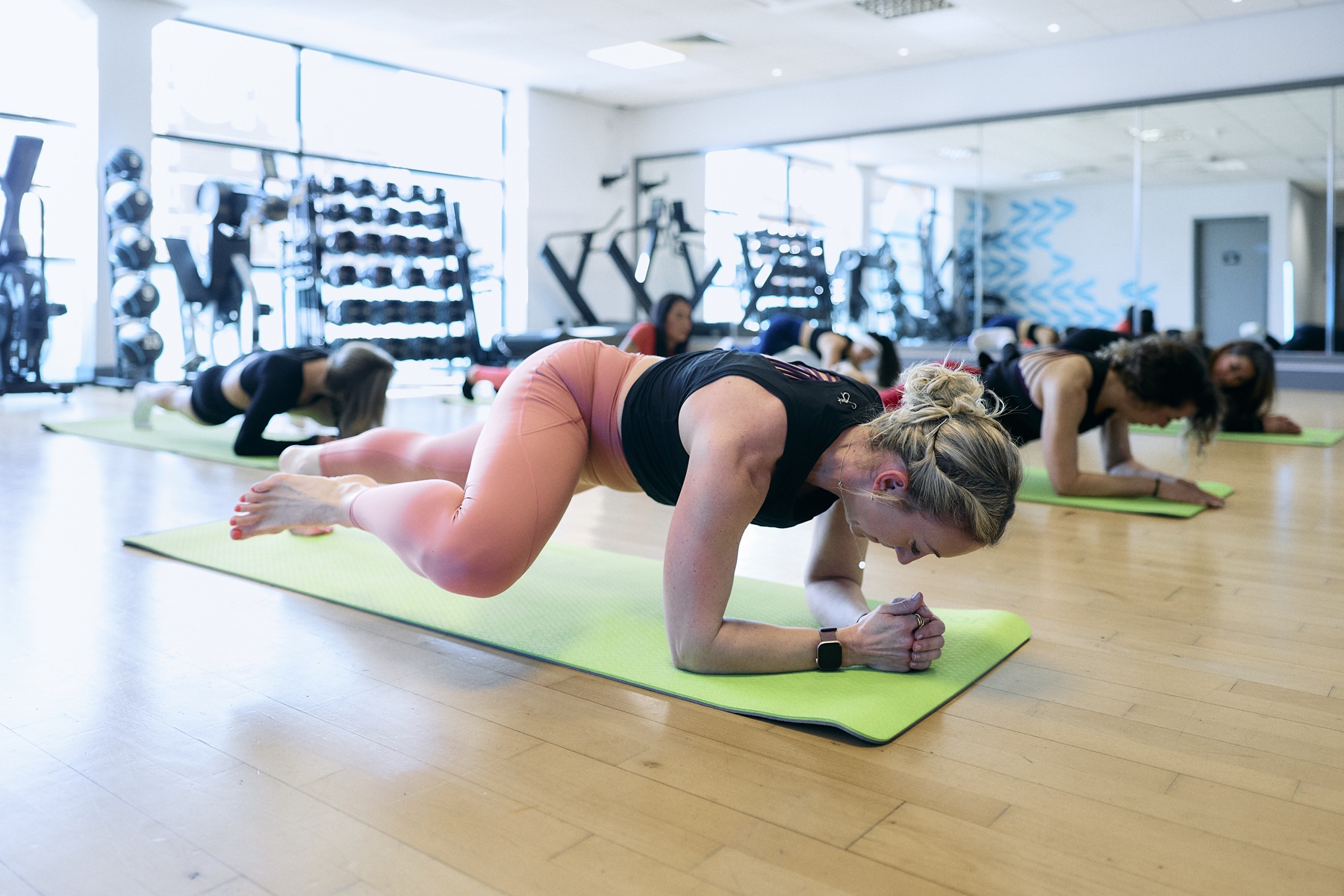
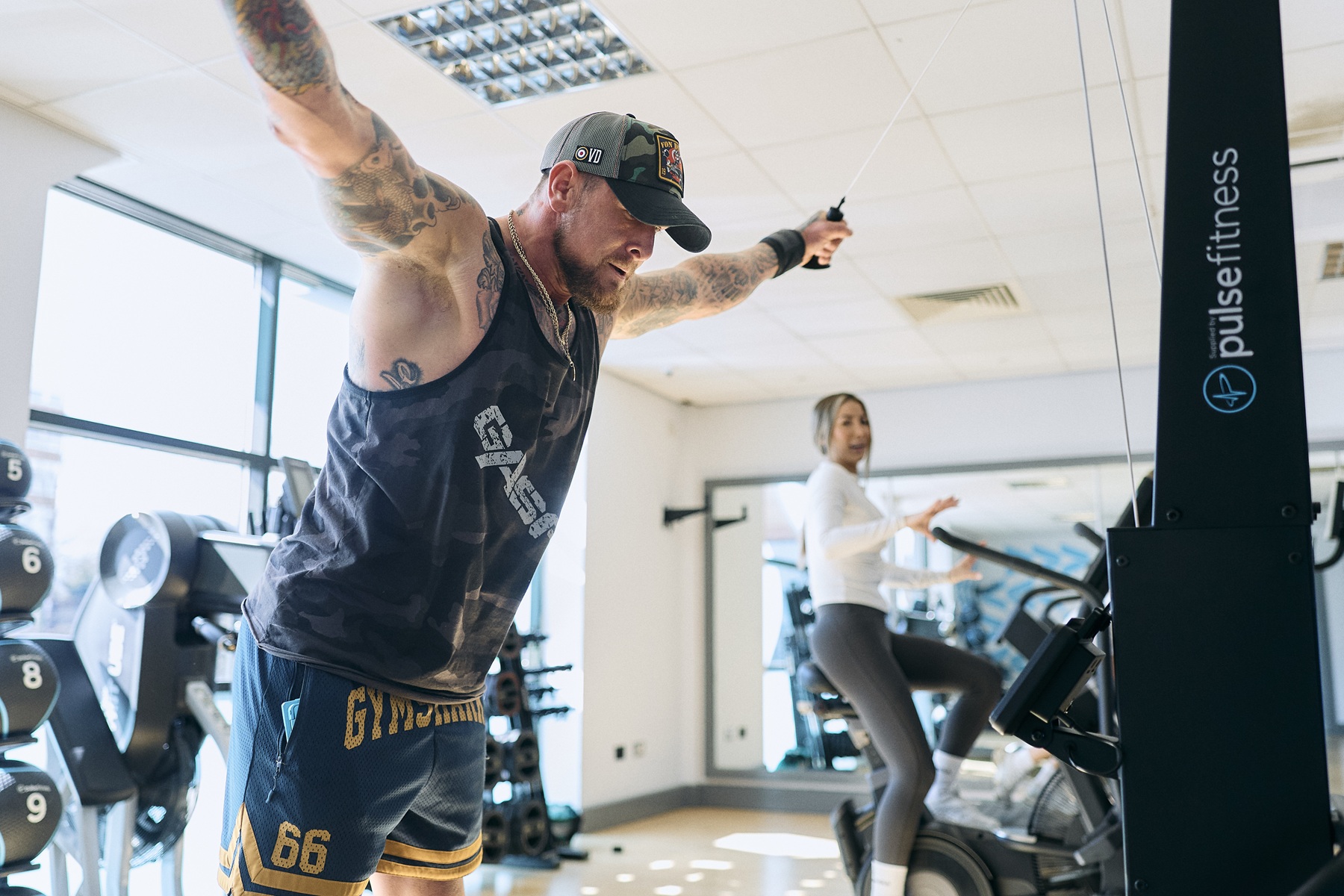
We recently completed a two-day photography and videography shoot for our client, Pulse Fitness, at the newly refurbished igym Carshalton. Our goal was to capture a comprehensive library of authentic content that showcases both the quality of the facility and the experience members can expect.

Full Facility Photography

Over the two days, we captured professional photography of every area of the club, including:

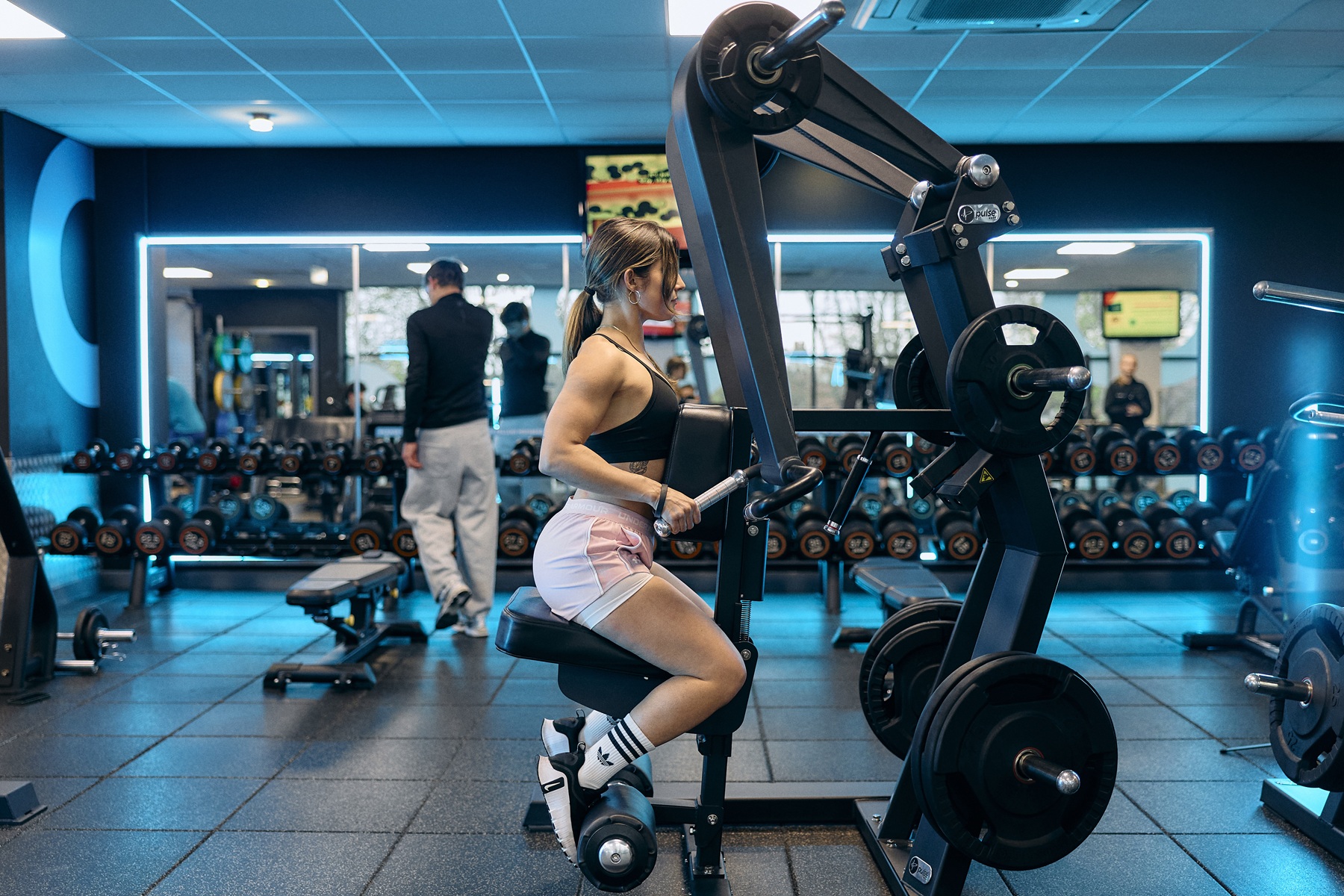
  • The main gym floor
  • Group exercise studios
  • Spin studio
  • Swimming pool
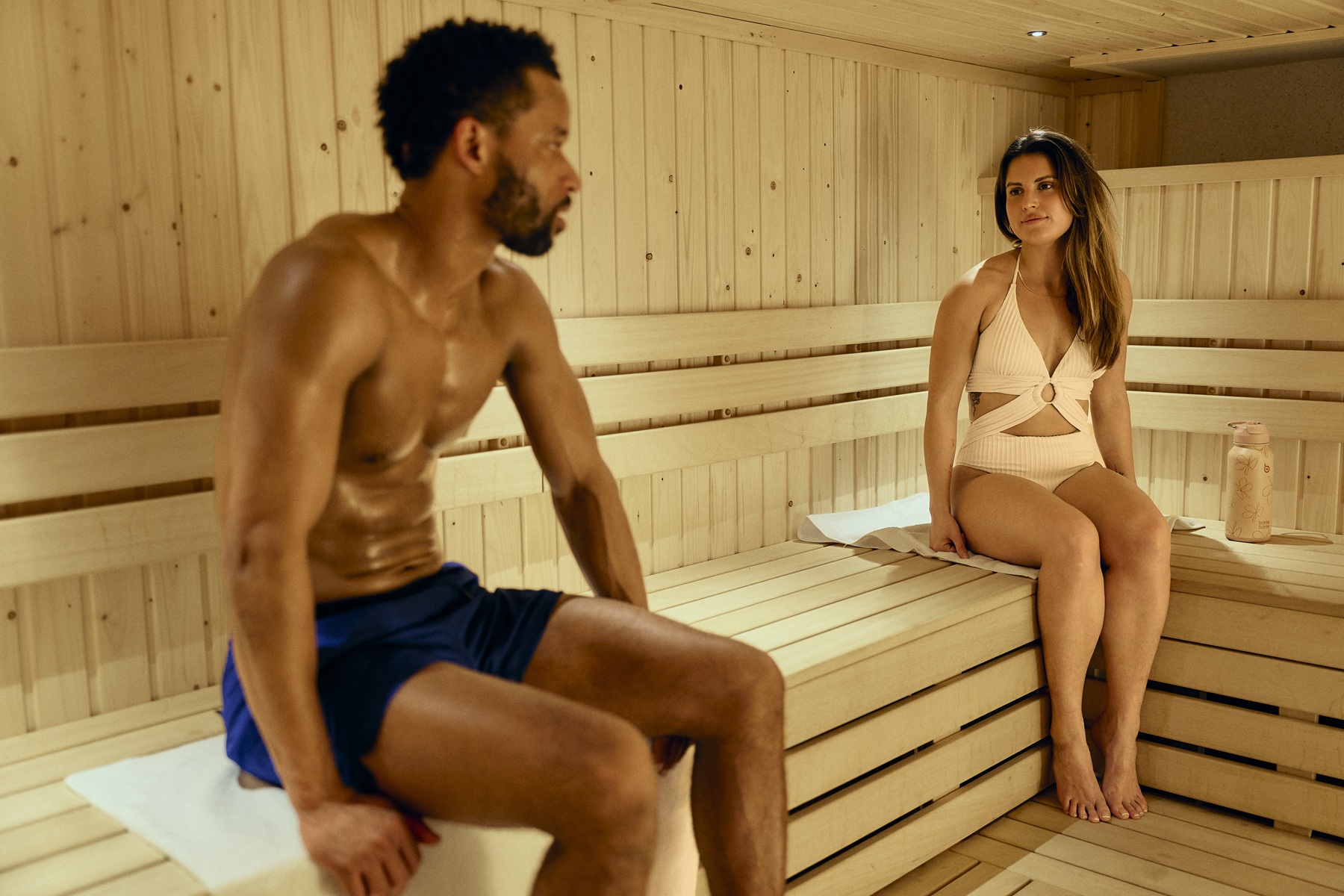
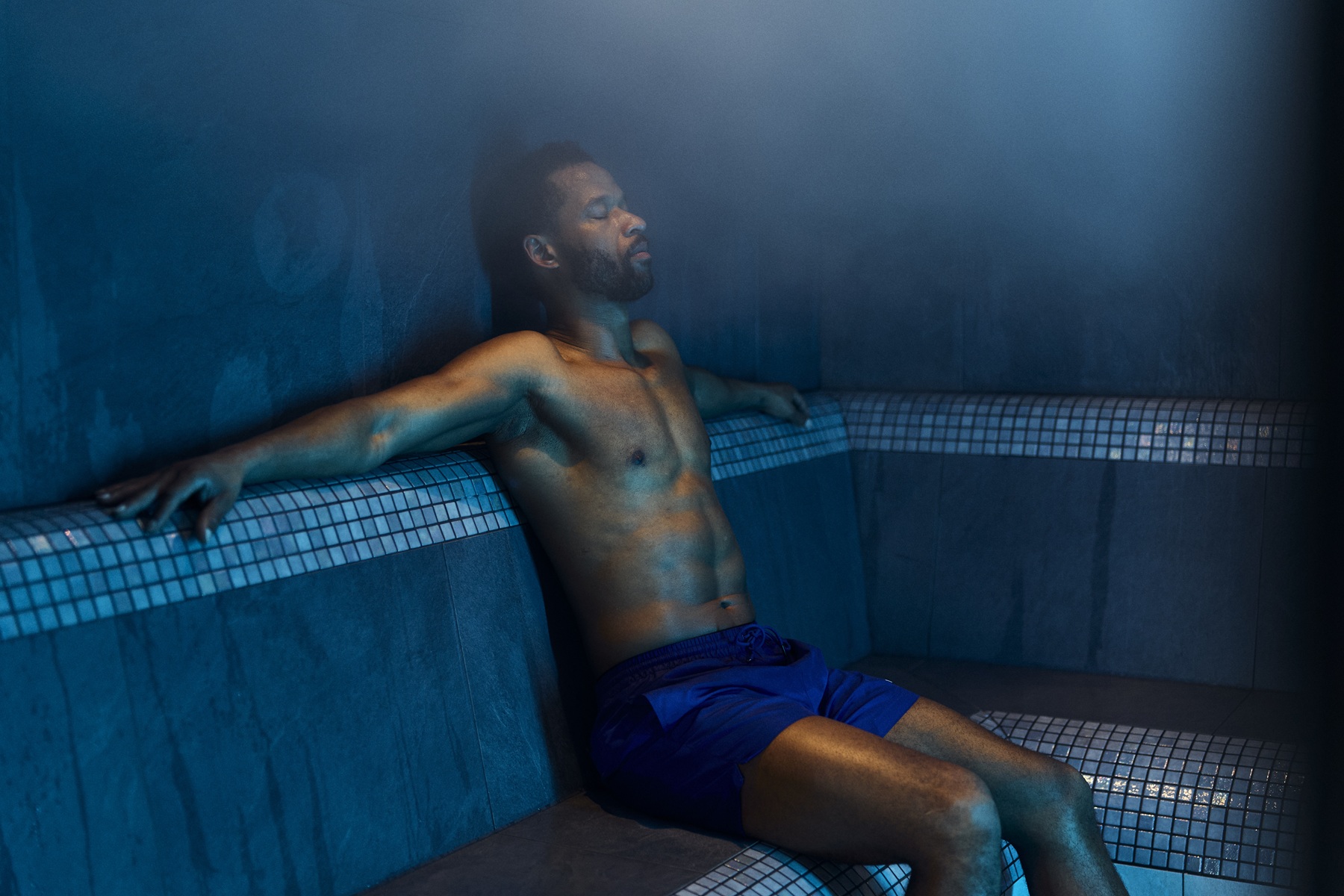
  • Sauna and steam rooms
  • Reception and member areas

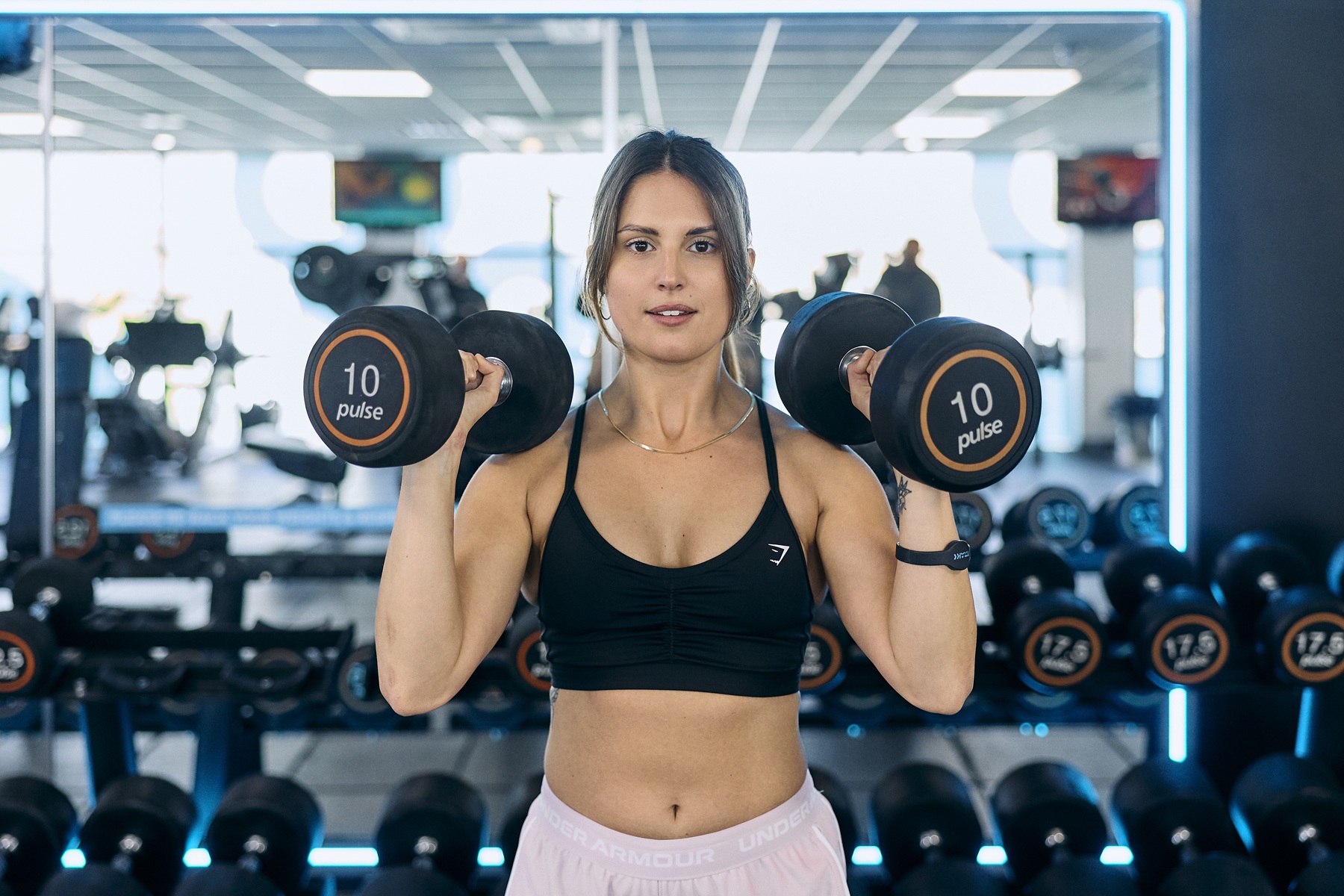
Using two fitness models from our agency, Action Fitness Models, we produced a wide range of lifestyle imagery designed for use across Pulse Fitness’s website, social media, marketing and sales materials.

Video Production

Alongside the photography, we created two promotional videos to bring the member experience to life. The first was a cinematic ‘Member Journey’ video, following a typical visit from arrival at reception through to training on the gym floor, attending classes, and relaxing in the sauna and steam room.

We also produced a dedicated classes video featuring the variety of classes available to members, including indoor cycling, HIIT, yoga and more. Together, these videos provide Pulse Fitness with engaging content that highlights both the facility and the lifestyle it supports.

Highlighting Accessibility

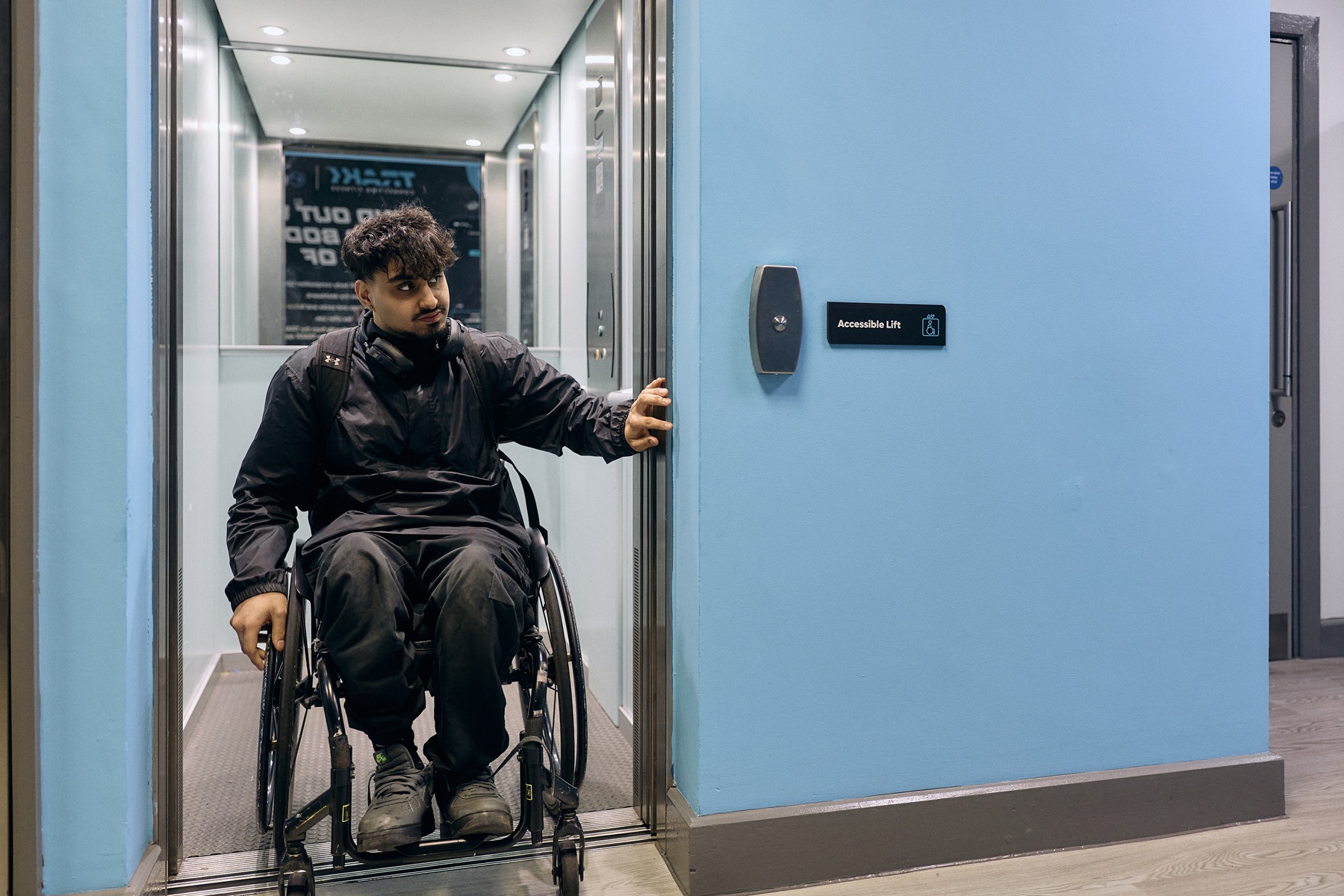
As part of the shoot, we worked with igym member Abdul, who uses a wheelchair, to showcase the accessible features of the club.

This content highlights the facility’s inclusive design and reinforces Pulse Fitness’s commitment to creating welcoming fitness environments for all users.

If you’re interested in photography or videography production, get in touch with us today: info@action-group.co.uk

Global Call to Action: Everyone working in Fitness Invited to Shape the Future of Diversity and Inclusion

A new international study is launching to understand how far the fitness sector has progressed on diversity, equity and inclusion and where more work is needed.

RISE is calling on professionals across the global fitness industry to take part in a major international survey, forming the next edition of its Diversity in the Fitness Sector report. Building on the foundations of its previous research, the study will track progress, identify ongoing barriers, and help shape a more inclusive future for the industry.

The original report highlighted both the scale of the challenge and the opportunity ahead, showing that diversity is not only a social imperative, but a commercial one, with evidence linking inclusive environments to stronger engagement, retention and financial performance.

This next phase aims to deepen that understanding by gathering fresh, global insights from people working across all areas of the fitness sector.

To view the report scroll to the end of this article.

Call for Participants

Those working in the fitness industry across all roles, levels and markets are invited to contribute their experiences by completing a short survey, available in five languages: Dutch, French, German, Spanish and English.

Participants will be entered into a prize draw to win one of five £100 Amazon vouchers or the top prize of £500 of Amazon vouchers.

The survey deadline is 25 May 2026.

Why it Matters

Despite growing awareness, previous findings revealed that inequality and bias continue to impact both individuals and businesses across the sector affecting career progression, wellbeing, and organisational performance.

By contributing to this survey, participants will play a direct role in:

  • Benchmarking global progress on DEI
  • Identifying key barriers still facing women in fitness
  • Informing practical, industry-wide recommendations
  • Driving meaningful, measurable change

What’s Next?

The findings will be unveiled at Elevate London on Thursday 18th June 2026, as part of a dedicated panel discussion “Investing in Diversity Pays for Itself”.

The session will bring together industry voices to explore the commercial and cultural impact of DEI, and what meaningful progress looks like for the future.

Get Involved

This is a collective effort to better understand the realities of everyone working in fitness today and to ensure the industry continues to evolve in a way that is inclusive, equitable and representative.

Take part here:

English https://s.surveyplanet.com/duafkix7

Dutch https://s.surveyplanet.com/m0br75ac

French https://s.surveyplanet.com/ps7v8htz

German https://s.surveyplanet.com/zvvvy9x5

Spanish https://s.surveyplanet.com/j3wwolpv

Deadline: 25 May 2026

Industry Support

The report is supported by global industry leaders Les Mills International, S7RONGER and Elevate Arena, reinforcing a shared commitment to advancing diversity and inclusion across the fitness sector.

For any questions or to support the survey, please contact Dr Lou Atkinson, lou@wearethecollective.world

Diversity in the Fitness Sector – The Report: