What it means to be a fit female

From the Atkins diet and Jane Fonda aerobics-videos, to Goop and Peloton’s world domination, it’s safe to say the world of fitness has changed a lot over the last decade. From our perspective, one of the biggest shifts we’re currently seeing, is what it means to be a fit female.

How has the female fitness industry changed?

In the last couple of years, fitness marketing has changed from being solely about how to ‘lose weight’ to now focusing on women’s strength, confidence and holistic wellness. In short, slimming shakes are out and heavy weights and meditation are in.

Who is driving this change?

Through powerful marketing, opinion-led journalism and changes in consumer demand, we’re seeing a real positive step for females who want to incorporate fitness (in all shapes and sizes) into their lifestyle. Different versions of fitness for different types of women are being championed and we couldn’t be happier. Here are some of the most recent, thought-provoking activities we’ve seen.

MARKETING: STYLIST STRONG STUDIO

We recently visited Stylist magazine’s very first fitness studio. The team at Stylist has cleverly called it the Stylist Strong Studio, because this space is not for ‘fat-loss’, ‘calorie-burn’ or ‘beasting yourself’. This studio is a safe space for women who are trying to strengthen their minds and bodies.

Positioned within The Allbright (a member’s club created by women, for women), Stylist Strong hosts classes, events, talks and panel discussions on fitness and strength-training. The tailored programme was created by Nike Global Master Trainer, Joslyn Thompson Rule, which has been designed to encourage and inspire women of all physical strengths.

Lisa Smosarski, editor-in-chief at Stylist, discussed why it was important to launch this studio: “We watch trends closely at Stylist and we have seen a real growth in women strength training – for body, for mind and as a way of reclaiming a traditionally male space.”

It’s important to point out that this studio and experience is not anti-male. But it is a chance for women to call the shots on the gym-floor and work on a holistic wellness routine for themselves in a sector where mostly white, middle class men have been making the rules for the last few decades.

OPINION-LED JOURNALISM: ALL WOMEN EVERYWHERE

Launched by news website, Huffington Post, this platform highlights that women face challenges daily, which differ hugely based on their age, ethnicity, social status, sexuality and gender identity. In the past, women’s experiences and goals (especially in the fitness industry) were grouped into one lump category (usually defined by white, affluent, first-world needs). These days, platforms such as All Women Everywhere gives a home to voices in different fields. One such example is award-winning journalist, Poorna Bell’s shift into the weight-lifting world:

Why Weight(s) Matter: Following her husband’s suicide, Poorna Bell spent years trying to learn coping methods. Unsurprisingly, she’s found that exercise has been one of the best therapies for her and has landed on weightlifting as her holy grail. Her essay looks at how she had always seen weightlifting as a scary, intimidating, male-focused activity on the gym floor (sadly, most women used to experience this too). However, after realising she needed to try something that terrified her to change her perspective, she found weightlifting didn’t turn her into the female-Arnold-Schwarzenegger, but gave her power, confidence and a new life skill. The response she received was phenomenal. To continue this conversation, she recently launched a new Instagram channel called See My Strong which curates stories of fitness across colour, culture, age, body size and ability. The goal? To inspire and empower beyond the mainstream.

CONSUMER DEMAND: NIKE MANNEQUIN

Possibly one of the most controversial and most discussed topics of 2019 globally, was Nike’s decision to start showcasing their range using plus-sized mannequins in the London flagship store. Inclusivity is the word of the season for major brands and this was Nike’s time to shine. Many took offence to the move, claiming that the sports-wear brand was glamorising obesity. However, we don’t see it this way at all. Fitness doesn’t come in one shape or size (look at Serena Williams vs Kimmie Meissner – both world class athletes in their fields) and Nike’s acceptance of this showcases that big companies need to cater to all populations to be considered worthy of purchase.

As the saying goes, haters going to hate – but Nike had the last laugh when clicks on the Nike One Luxe Tights, which are featured in the photo of the mannequin that went viral, increased by 200%.

What’s next for fit females?

The fitness industry is an ever-evolving mammoth of activity, with lots of hits (hello This Girl Can) and some definite misses (see you later Protein World). What’s important is that consumers continue to challenge stereotypes and push brands to get better, more inclusive and more sustainable now, and into the future.  We’re making progress, but there’s still a long way to go.

Action PR takes a spin on the Peloton Bike

Peloton House London

It’s nearly the end of 2018 and if Peloton is a word you’ve not come across yet this year, then frankly – you’ve been living under a rock.

Peloton One is a leading digital fitness model which sells online workout programmes to consumers worldwide. The newest venture is the Peloton Bike, which is the ultimate at-home spinning workout experience. Although as a brand it has been around since 2012, Peloton has in recent years, absolutely exploded on the global fitness market. So much so, that figures now show Peloton has more US customers than SoulCycle – which, up until now, has arguably been the best-known spinning brand worldwide.

The tech-based home fitness brand has shaken and stirred the fitness market. Everyone from boutique instructors and studios to big-box operators are taking note of exactly what Peloton is doing with their brand, their marketing and for their target audience.

Having only recently launched in the UK, a lot of our clients and network contacts have asked us for our opinion of Peloton. So, we decided to go try it for ourselves and see what all the hype was about.

Peloton House London

What is Peloton?

In basic terms, it’s a brand with a stationary-exercise bike as its main product. The bike is something which can be placed anywhere. It is therefore ideal for busy people who can’t make it to the gym or those who simply don’t want to get a gym membership. The bike is built with a 22-inch high definition screen set up to receive classes streamed live up to 14 times a day. You can also access a bank of pre-recorded sessions which play on demand.

Although, having now been on the bike – we realise it’s a lot more than just another exercise machine. It’s an immersive experience with an engaged, competitive community, a thrilling visual and audio journey and at its core, it’s also physically hard work!

Peloton House London

Where does it sit in the fitness industry?

Although on-demand fitness isn’t necessarily a new phenomenon, Peloton has taken things a bit further with this bike. In terms of market space, it’s one of the first of its kind and ticks all the boxes – the machine, the instructor, the motivating class look and feel, but all at your own convenience.

The programmes are produced at a very high-level with fitness performance and motivation at its core. Above all, it’s personalised – there are pre-recorded classes to join, which show you where you rank compared to other riders or there are the live classes, where the instructors keep you motivated throughout the session.

Why is everyone talking about it?

Aside from the physical experience of using the bike – which in itself has convinced countless cynics (according to reviews), the brand’s creative marketing and advertising approach has been relentless.

For example, the advertising campaign, which cost a whopping £7m, has littered online, broadcast and traditional platforms and even uses real Peloton instructors who are sweating their butts off on the bike, (helping break down those conventional ‘I need to look good whilst working out’ barriers).

Media were also given the opportunity to trial the product in advance of it being launched, meaning the press reviews were already live by the time the bike hit the UK market. Finally, the brand itself has invested heavily in allowing prospective users first-hand experience.

Peloton House London

How can you try it?

The brand also launched Peloton House a couple of months ago for members of the public to book into private sessions with the bike. When we went to the flagship in Covent Garden last week, we assumed it was a pop-up; a quick marketing activity which would close once enough sales were made. Wrong – Peloton has bought the central London space! As well as the trial areas downstairs – of which there are multiple rooms, from the bedroom, to the lounge to the study – the Covent Garden space will also be a live-studio where people can drop in to do sessions with the brand’s instructors. The whole experience Peloton gives new and old users is tailored and exciting.

What are the barriers?

As great as it was to go to Peloton House and immersive ourselves in the experience, the machine is prohibitively expensive. At nearly £2000 for the physical bike plus nearly £40 per month for unlimited access to the classes and programme, it’s one hell of a fitness investment and therefore not something people enter lightly. When comparing the price to a monthly gym-membership, it seems strange paying that much for just one piece of equipment.

Peloton House London

The overall verdict?

Peloton One is doing a fantastic job in the on-demand fitness world and is providing customers with a high-quality, tailored product. So much so, that the hype around the bike, the marketing and the programming feels almost ‘cult-like’.

Although Peloton has a place in the market, we do feel it is a bit limited in terms of who can afford the product and the subscription. We also believe, variety is the spice of life and people should enjoy various forms of exercise day-to-day.

How Can the Wellness Industry be More Inclusive?

Inclusivity and fitness

London. The UK’s second biggest city with a melting pot of 8.8million people accounting for 13% of the whole UK population. A positive smorgasbord of individuals, there are over 200 languages spoken on the streets, 44% identify as BAME and 1 in 5 people in England have an impairment. So why when I hit the gym for a sweat sesh, is it in a predominantly young, white, able-bodied environment. What gives

Fitness for all?

Health and fitness is big business and on the rise both nationally and globally. According to Allegra’s Project Fitness 2018 report, the UK fitness industry is worth £5.1bn alone with an annual growth of 7.1% However, a societal desire for inclusivity has meant this booming industry has been scrutinised of late. “Is your spin class too young, too thin and too white?”  asks The Washington Post. “Is wellness racist?” debates Balance. “Why do gyms make things so difficult for blind people?” debates The Guardian. Not going unrecognised by global wellness news platform Welltodo, it cites inclusivity as one the key trends in the consumer wellness industry for 2019.

How are the industry trailblazers tackling the challenge of inclusivity?

LGBTQ+ Friendly Fitness

The LGBTQ+ community is still underrepresented in many areas of life. Only recently has money been crowdfunded to create London’s first LGBTQ community centre following in the footsteps of places like New York and Berlin.

Within the fitness community, CrossFit came under fire for making competitors in their 2018 CrossFit Games compete as the gender they were assigned at birth. “Gymtimidation” is real and can be intensified by those who already feel marginalised by identifying as lesbian, gay, bisexual or trans.

In recognition that fitness may be the mainstream, but you don’t have to be, several LGBTQ+ fitness offerings have sprung up throughout the capital. Boxing studio Kobox recently launched ‘Proud’, a campaign to break down the stereotypes surrounding boxing. South-west London nutrition group Hex launched HIIT Club, a new nightclub fitness class for the gay community, a full-on workout but most importantly a social environment. Founder Chris Timmins believes the act of face-to-face socialising is getting lost and after all, fitness is an effective way to bond and create a sense of community.

Create a collective

With over 96 million uses of the hashtag #fitfam, it is clear that people want to feel like they belong to something bigger than themselves but what if your identity is not being catered for?

With current fitness trends and gyms tending to focus on the young, white, affluent fitness-goers, diversity is clearly missing in the fitness world. Recognising those interested in health and fitness are not one-dimensional beings has led to frustrated consumers biting back with the micro-fitness community. London based Run Dem Crew is one example. They define themselves as a collective of ‘creative heads with a passion for running and the exchange of ideas’ as opposed to a running club.

Similarly, Run Dem Crew member Sanchia Legister created Yogahood classes in response to being frustrated at the lack of diversity in many yoga studios. With over 20,000 Instagram followers between them, they seem to be onto something.

Consider those with a disability

Disabled people are twice as likely to be inactive in comparison to the general population and are at an increased risk of developing long-term conditions such as high blood pressure, diabetes and heart disease. Physical activity is a proven method in treating and preventing these conditions, yet we are usually only exposed to disabled people being inactive or being Paralympians, one extreme or the other. Accessibility and inclusivity must go beyond an accessible toilet, ramp or lift. Flashing lights in a spin class might look great but consider those who may have an issue with lighting and contrasting colours or difficulty with signage and communicating with staff. Salford based Empower You, a pilot scheme breaking down barriers facing disabled people and making exercise more fun, is helping get more disabled people active. While Dublin based UFIT, a specialised gym to help people with neurological, developmental or physical challenges stay fit, is going from strength to strength. With a new gym seemingly opening every week in London, it is high time they considered the 11.5 million people living in the UK with an impairment.

Looking to the future

With a constant deluge of studies and shock headlines claiming horrifying truths such as ‘not exercising is worse for your health than smoking’, the media has done a fantastic job of telling us about the importance of physical activity. However, what is missing is an antidote to getting the masses moving. Inclusivity seems to be where the true opportunity lies. Going beyond providing just a service and attempting to make people feel part of something bigger no matter their age, ethnicity, sexual orientation, religion, sex etc is key. Although change has begun, there is still a lot of work to be done. Watch this space.

The life-changing benefits of strength training

Strength training

Female bodybuilding. The words conjur retro images of creosote-stained, terrifying women posing in twee little positions who look like they’re going to explode out of their teeny fluoro bikinis into a lava of steroids and deltoids.

But the pursuit of slightly less extreme muscle definition through the modern vernacular for body building – strength training – is a hot topic.  According to Pinterest, saves for ‘strength training’ is up a huge 415%, as the fitness focus is less about losing weight and more about looking strong. You can’t move on Instagram for high profile models and celebrities ceaselessly documenting their gruelling boxing and weight training regimes.

Friend of Action, and all round little firecracker, Chloe Madeley comments: “The ‘size zero’ look went out of fashion long ago. Take one look on Instagram, and you will see that the most coveted women’s physiques are lean and defined. This strong, healthy, athletic appearance is what the majority of women now train for – and for good reason. The immediate aesthetic benefits of weight training are obvious, but it also improves many other aspects of your health; including bone density, lipid metabolism (the rate at which your body burns fat), and insulin sensitivity (how well you tolerate carbohydrates).”

About time too.

The myriad benefits of strength training are well documented – not just physical, but mental too. It improves bone density, slows the ageing process, relieves stress, burns fat, improves sleep, reduces anxiety, increases endorphins for that legal high… The precious NHS recommends bodyweight and weighted resistance exercises to build muscle, reduce the risk of osteoporosis, osteoarthritis and type-2 diabetes, and even to increase your life span… it goes on to say that “muscle-strengthening activities help maintain the ability to perform everyday tasks and slow down the rate of bone and muscle loss associated with ageing.”

Given that women are most prone to brittle bones, particularly post-menopause due to dropping oestrogen levels, regular strength training is key to maintaining bone density.

The historically male dominated, fart-filled free-weight areas of gyms are starting to attract more women. We feel much more welcome in this domain thanks to smart brands like Lomax, Gym Box, Sweat It and Blok who offer weight lifting and strength training as standard, taking the stigma out of it – and appealing to more women who can combine weights, olympic bars, landmines and barbells into regular class content.

I got into strength training properly six months ago, following a back injury from boxing. My L5 disc decided it no longer wanted to be in my spine, and tried to make a break for it, leaving me with a large protruded disc in my lumbar spine and making most movements painful. Luckily, I had a very smart PT and physio, who prescribed strength training alongside physio appointments as a way to build the surrounding muscles of my lower spine, core and legs to ease movement and stop me from thinking I was going to wither away and lose tone. I also found that building strength was a natural pain killer. I got seriously upset after being diagnosed with the disc fiasco, worried that I wouldn’t be able to train anymore…but I just had to figure out quickly what helped and what didn’t, and pay more attention to my body to ensure I was building a strong and mobile structure that could support, rather than worsen, my injury.

So far, so good.

I never worried about bulking up – I know how bloody difficult that is to achieve – and quickly noticed more positive change in my body – and mind – than from any spin class I’d ever been to. I also found it easier to track progress than with anything else, starting to up the weights each week and getting seriously excited when I realised how quickly weights that seemed impossible one week, were easy the next.

While I didn’t want to lose weight, I wanted serious muscle definition, and to be, and feel, strong, Really, really strong. Through weight training three times a week combined with some quality reformer pilates classes [Tempo and Lagree] I have seen my body change shape beyond what I expected. My housemate jokes that when I’m not in I’m out pulling lorries or double decker buses, but he’s not too far from the truth.

I am a little bit addicted, I admit it. My name’s Rachel and I’m a strength addict. etc.

I sustain this training on a vegan diet [yeah, I dont know what to shout first when I walk into a room, that I’m vegan or that I lift…] so I thought I would share some things I’ve learnt since embarking on this new training approach as a plant-pusher, with a fucked-up back.

NB: I am NOT AN EXPERT, this is just my humble little opinion:

  • Get a decent PT – Even just to start with so you can perfect form, then you can go it alone when you choose. If you’re working with an injury, its so crucial you pay micro-attention to form and tekkers so you don’t make it worse, or get a whole new injury. I use the Esquared app to find gyms around London to use without a monthly subscription, that way you can always fit a session in and put your PT into practice wherever you are.
  • Don’t fear the V word – Being a vegan made me drop a lot of body fat – I’m more mindful of getting a complete protein-rich diet now than ever before – so it’s not a hinderance to lifting weights, for me it helped achieve a leaner, more toned shape, you just need a protein source.The best vegan protein powders if you like that type of thing imho are Lomax Pro Edge Plant Formula and Kin OMG No Whey! to supplement a decent diet.
  • Follow legit influencers – Chloe Madeley, Hayley-Jane Warnes, sophiemadtolive and Shona Vertue are smart girls that I genuinely like as people, with bad ass, strong bodies without sensing they may be struggling with obsessive body dysmorphia. They provide excellent, evidence-based advice, creative content, and have candid dialogue with their followers on Instagram. They are living proof that strength training works, and even manage a sense of humour too.
  • Stretching and mobility – I never make enough time for this but it’s vital. Mobility drills, stretching and some resistance band stuff, even if you do infront of the TV, is imperative. It stops me from walking like a robot after a heavy session. I struggle with regular yoga, but youtube/Vimeo offers up some really manageable short sequences from people like the afore mentioned Shona, Steffy White and Cat Meffan which you can get in before work. Faves here and here.
  • Phone a friend – Get a mate who loves it too. I regularly train with friends who push and inspire me. Nothing worse than having to drag friends to train with you – don’t do that to yourself or to them. You’ll all end up hating each other. Also means you can go for some awesome food afterwards – if you’re East, please try out Essence Cuisine – I’m obsessed.
  • Physio/osteo/masseuse – again, find a good one. Preferably all three. It helps monitor progression with an injury and keeps you supple. They can recommend some nice low impact movements to do in the evening when you’re relaxing – nerve flossing, cat/cow stretches and dead bugs are my favourites
  • “You’re not broken” – I always have to remember this. When you get an injury that changes you, it shouldn’t become a negative focus. I just had to change the way I did things, stop smashing out endless HIIT classes where form wasn’t the focus, and start to prioritise the quality of the movement over the quantity. It works.
  • Swim – Now, I hate swimming in London for many reasons – mainly the kids, the smell, the endless asses and vaginas that face me in the changing rooms, the idea of gross foot infections and swimming in other peoples spit, snot and fuck-knows what else – makes me a public pool-phobe. Give me the sea any day. In the absence of living in Malibu, I’ve become a reluctant swimmer, using my local pool (London Aquatics Centre) which is actually a really nice experience. Swimming is a great all-rounder – cardiovascular, good for joints, stretches muscles out and targets all the other little muscles that you don’t reach through weight training.
  • CHILL OUT – As they say, rest really is as important as the training itself. I find it hard not to push myself, so have to impose proper rest days, and when my body doesn’t feel up to it, I have no energy or things hurt, I just don’t train. With my injury, I need to be careful of over-exerting myself and remember that I am actually injured. Getting good sleep so my little body can repair itself is vital, I use the Buddhify app if I’m too wired to sleep after training in the evening, I’m new to meditation but find the shorter sequences super effective.


Feel free to drop me a line at rachel@actionpr.co.uk if you’d like to chat about any of the above, or you have any of your own recommendations!

Savvy Office Snacking Tips to Boost Productivity

Office Snacks for Productivity

You wouldn’t tackle a workout without sufficient hydration and nutrition, so why go to the office and expect to ‘perform’ at your best without a bit of planning? We asked Tilly Spurr, performance nutritionist and founder of Eat Yourself Brilliant for some tips on savvy snacking at the office.  Step away from the biscuit tin and read on….


Desk Breakfast

A desk breakfast isn’t a bad thing – if you make a good choice.  If you run or cycle into the office, do an early morning workout or simply can’t face breakfast before you leave the house, having a healthy option at your desk is good.  Make it count and pack some protein into it. “We tend to eat most of our protein in our evening meal but actually to gain the most benefit we should eat our protein spread out evenly across the day. Our bodies are constantly being broken down and rebuilt and need a steady supply of protein,” says Tilly.

Try:

  • Peanut butter on wholemeal toast
  • Greek yoghurt with nuts and seeds
  • And, you’ll like this one, a latte! Yup – a large one can contain as much as 15g of protein…


Mid-morning munchies

Its nibble-o’clock, not yet lunchtime… biscuits, muffins and chocolate may come to mind.  But beware, all these will spike your blood sugar and create a rapid insulin response to drop your blood sugar – and energy – back down.  “It’s tempting to reach for a sugary, high-fat snack but after the initial pleasure of eating this, your body won’t thank you,” says Tilly.

Try:

  • Yogurt/granola/nuts/seeds
  • A piece of fruit and handful of nuts
  • Rice cakes/oatcakes and peanut butter
  • Also: drink a glass of water and keep hydrated: often we feel tired and ‘hungry’ when, in fact, we’re thirsty.


Lunch

If ‘grabbing a sandwich’ is your lunchtime habit – think again: too much carbohydrate will make your energy slump soon afterwards. Instead, try a satisfying, energy boosting Lunch Bowl including cooked grains (prep them the night before), nuts, seeds, vegetables and herbs, a swirl of olive oil, a sprinkle of salt and perhaps some chopped chicken, smoked salmon, chickpeas or feta cheese. Literally mix it up. “There are so many grains to choose from: quinoa, brown rice, wild rice, cous cous, bulgar and barley all work well,” says Tilly, who favours quinoa, as a good source of protein and fat that give a steady, slow energy release to prevent a post-lunch slump.


Avoid the mid-afternoon dip

“The mid-afternoon dip can be avoided by eating a small snack combining protein and unrefined carbohydrate,” says Tilly. “It’s especially important if you’re planning an evening workout, run or cycle home.”

Try:

  • Oatcakes and houmous
  • Crudites and cream cheese
  • Rice cakes and nut butter
  • Add an apple, pear or satsuma to tick off one of your five a day
  • Also: drink peppermint tea to stimulate your brain while soothing your stomach.


The case for coffee

“Coffee can get a bad press but there is no scientific basis for this and, in fact, all the available research suggests that drinking 3-5 small cups of coffee a day may well be beneficial,” says Tilly.  However, not all coffees are created equal. “There are two species of coffee plant – Arabica and Robusta.  Arabica is grown at altitude over a longer period of time and contains more of the phytonutrients that give coffee its health benefits,” says Tilly.  “Fresh is best as although instant coffee contains caffeine it has lower availability of phytonutrients.”

Tilly recommends drinking freshly brewed Arabica coffee. See if you can convince your boss to buy a ‘bean to cup’ fresh coffee maker – the aroma alone will perk up the whole office.


For a healthy, organic, all-natural caffeine boost to get you through those early mornings and late nights in the office, why not try a bottle of Point Blank Cold Brew coffee? Check out the recent photo shoot we did for them!

What Event Organisers Can Learn from The National Running Show

National Running Show

This weekend was the first annual National Running Show. Held at the NEC in Birmingham, the event is the UK’s biggest non-race affiliated running exhibition. With a line-up of amazing speakers headlined by Dame Kelly Holmes, the event was the talk of the running community for many months. As an avid runner, I couldn’t get involved fast enough.

With so many shows struggling to get enough attendance to interest sponsors, exhibitors and speakers, what can we learn from The National Running Show? No, it’s not just that the running community is a passionate, engaged group that loves to buy kit (though that did help!). In my perspective, there were a few things they did really well that contributed to the undeniable success of the show.


Create show ambassadors

Event organisers enlisted 85 ambassadors to help promote the show. In exchange for the relatively inexpensive free ticket to the show, a t-shirt and VIP goodie bag, 85 runners enthusiastically promoted the show to their communities across Twitter, Facebook and Instagram for months in advance. If you’re a runner using one of these social platforms, it was impossible to ignore the chatter. What’s more, ambassadors got a special link to promote ticket sales and the ambassador who generated the most sales won a £500 Amazon gift voucher. Overall, this proved to be an effective tactic for many months of easy social promotion in the lead up to the show.


Focus on great communication, before, during and after

Regular emails to registered attendees kept the momentum going, generating excitement and anticipation in advance of opening day. In the week before the event, people received a daily email promoting speakers and special events to take part in at the show. Most things were offered on a first come, first served basis and as a result, the queue to get in on opening day was hundreds of people deep. To reassure the crowd, an organiser walked the length of the crowd telling everyone what was happening, quickly eliminating any annoyance. Amazingly, they processed the crowd quickly and managed to keep the day on track. As soon as the event wrapped, everyone received another email thanking them for their participation with next year’s date already confirmed. It was slick, informative and very well executed.


Host momentum-driving events

In the five days leading up to the event, a team of high profile endurance athletes ran 135 miles from Olympic Park in London to the NEC in Birmingham. The runners covered an average of 27 miles a day and they invited running enthusiasts to join them for sections along the route. The run was trackable via the website, and many attendees joined where they could. To cap it off, the athletes held a panel in the last speaking spot of the first day to talk about the highs and lows of covering 135 miles in five days. This event provided ample social media content beyond the standard promotions creating interest and anticipation in advance of the show. Allowing other runners to participate provided a unique opportunity to mingle with some high-profile runners.


Unique onsite experiences

This wasn’t just exhibitors selling their products. Some exhibitors, like run3D held unique, engaging and high value experiences at their stands. They offered free digital gait analysis throughout the whole show on a first come first served basis. People literally ran to the stand each morning to secure a spot.

The Running Show also hosted a special Ask the Experts section where attendees had the chance to book 15-minute one-on-one slots with many of the speakers.  This provided a unique opportunity to have a personal chat with some of the biggest names in running. I had the chance to chat to Aleks Kashefi, an ultrarunner otherwise known as Barefoot Aleks about potentially running my first ultra! It was a quality conversation and one of my highlights of the event. Vouchers and samples are nice but providing this sort of access to speakers is an experience worth going for.


Dangle the carrot

When I listened to Dame Kelly Holmes amazing keynote on the first day, I thought to myself: how are they going to top this next year? And then, I happened to turn over the event programme and there she was: Paula Radcliffe, already lined up as next year’s keynote! If they wanted me to ensure this event is a top priority in 2018, they absolutely nailed it. I’ve already put it in my diary.

Congratulations to the organisers for an amazing 2-day experience. Also, thank you to the speakers and exhibitors. You took a bit of a gamble with a new event.  With no historical data to draw on, it’s difficult to know if it will be worth your time.  In this case, I can’t imagine anyone is walking away disappointed. I’m already looking forward to next year’s event.

Missed the National Running Show? Why not check out our roundup of the best fitness events and tradeshows to attend in 2018?

The top fitness trends to follow in 2018

Fitness Trends

We’ve taken a look in our crystal ball to bring you the biggest fitness trends of 2018.  Look no further because the Action PR team have decreed 2018 will bring us the following:

  1. Immersive Fitness

We’re all going mad for Studio Society, West Hampstead’s new totally immersive fitness experience.  Featuring three studios with surround-screens, high quality sound and scents to match your session, it’s an experience as much as it is a workout.  If you like the sound of this, also check out Sweat and Sound immersive pop up events in some of London’s most unusual venues.  We expect to see more immersive fitness cropping up throughout the course of 2018, and we’ll bring you updates on this blog in due course.

  1. LISS (Low Impact Steady State Cardio)

As someone who spent most of 2017 with an injury, I can personally vouch for the efficacy of LISS (and no I didn’t get fat or lose muscle tone).  LISS refers to long steady-state workouts like walking, cycling or swimming without the peaks and troughs of a HIIT workout.  Research shows it can be as effective as high impact activity for weight loss.  If you’re injury prone, it’s well worth considering!

  1. Caffeine as pre-workout

If you’re in the know, you’re likely scoffing at this as “old news” but the truth is that caffeine as pre-workout is only just starting to reach the masses.  Caffeine is the cleanest way to get your pre-workout boost.  Several studies have demonstrated a link between caffeine intake before exercise and increased athletic performance, demonstrating that athletes can “train at a greater power output and/or train longer” after taking caffeine. Along with increased energy to complete intense workouts, caffeine also provides an increase in mental focus, ensuring you get the most from your workouts.  The best way to take caffeine is as a “controlled” substance (caffeine can vary hugely in your cup of Joe). So grab a bottle of our fav, Point Blank, one hour before you workout, it contains no sugar, no fat and just one calorie and is the perfect clean energy boost.

  1. Mindfulness

Mindfulness has been growing in popularity for some time. But for the first time, more people are using their phones to take part in mindfulness meditation than are joining formal practice.  In 2018 we’ll see mindfulness activities becoming more integrated into everyday life.  We’ll also see more partner and group mindfulness activities offerings, encouraging a sense of community and the opportunity to enjoy a shared experience.  For mindfulness meditation on the go, we highly recommend Buddhify, meditations for every part of your life from traveling and using social media, to bathtime and going to sleep.

  1. Calisthenics

Calisthenics, best know for its iconic moves like the muscle up and human flag, is finding its way into gyms and studios around the UK.  Calisthenics is about complete mastery of the human body and so it’s no wonder it’s gaining in popularity as more exercisers are looking for a next-level fitness challenge.  Find your local Calisthenics park of training venue by visiting www.calisthenicsuk.co.uk

  1. Plant based performance products

The vegan supplement market boomed in 2017 with even the most mainstream of brands adding vegan protein products to their range.  We expect to see a further proliferation of plant-based performance enhancing products this year as more people adopt a plant-based diet or simply desire “cleaner” supplements.  Expect the plant-based ranges to rival those of the traditional chemically created variety, Hallelujah!

  1. Indoor climbing

Once the pastime of Millets-clad adventure geeks, climbing has got the cool factor.  Now a fully recognised Olympic Sport, climbing is becoming the fitness pastime of those looking for an exhilarating challenge which delivers a great workout.  With more climbing walls than ever around the UK, climbing is becoming extremely accessible.  Everyone Active offer a six-hour beginners climbing course for under £100 which, when completed, allows you to climb without supervision.  The perfect fitness goal for 2018?

  1. Streamed classes and at-home workouts

With convenience being one of the major factors in choosing your workout, it stands to reason that streamed classes and at-home workouts are on the up. 2017 saw the launch of Flywheel and Peleton; buy their bike and join classes from the comfort of your own home.  ClassPass has also just announced that it will launch ClassPass Live in 2018. Initially just for the US, a successful launch will inevitably see it rolled out to the UK.

What fitness trends do you think we will be seeing over the next twelve months? Let us know in the comments!

Action PR’s 2017: A Year in Pictures

What a year it’s been for Action PR. As we bid goodbye to 2017 and prepare for the successes and challenges that 2018 has to offer, we took a look back at everything we achieved this year. Here is our 2017 in pictures.

January

We helped launch Fit for Sport’s Healthy Active Schools System

March

We launched the Girls Active Awards with this great video

April

We attended the FIBO fitness trade show in Germany supporting our clients Physical Company, Speedflex and Pulse.

We sponsored the UK Blog Awards in the Sports and Fitness category.

May

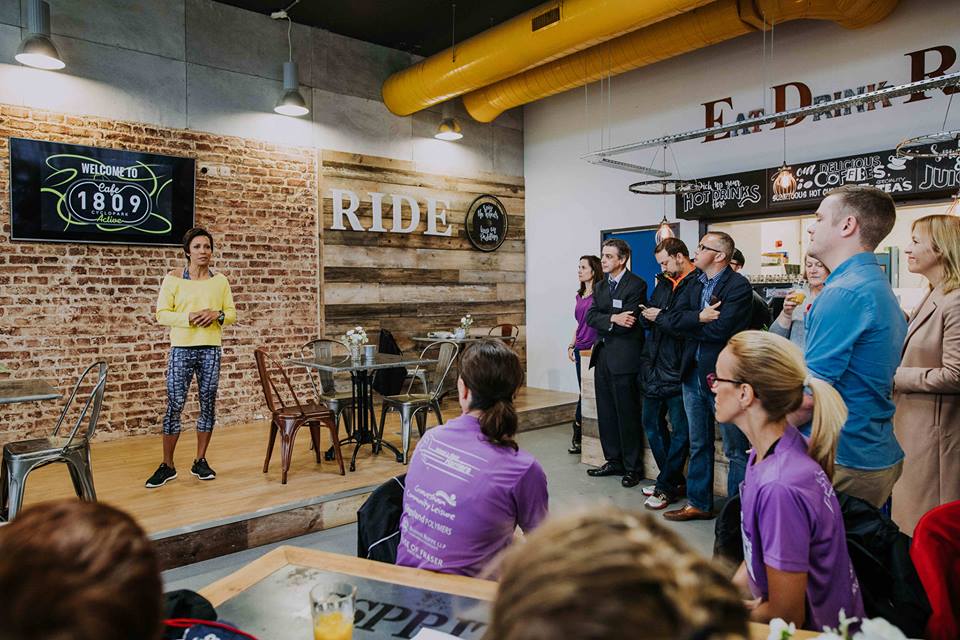
We launched Dame Kelly Holmes’ second café

Dame Kelly Holmes cafe

We attended the Allegra Health and Wellness Summit


Our client Hammersmith Health Books won the People’s Choice Book Award for Best Publisher


June

We attended the ukactive Flame Awards

July

We took our clients to a night at the opera at Glyndebourne


August

Our team tackled a couple of difficult challenges – Marathon in a Day and cycling from Gibraltar to London

Marathon in a day


September

We took on the Shine Walk for Cancer Research with Everyone Active and team of amazing bloggers

Shine Walk

October

We shot this awesome photo shoot for our client Point Blank

Point Blank Cold Brew Point Blank Cold Brew


November

We got to work with the talented Diane Youdale (aka Jet from Gladiators) on a shoot for Everyone Active


December

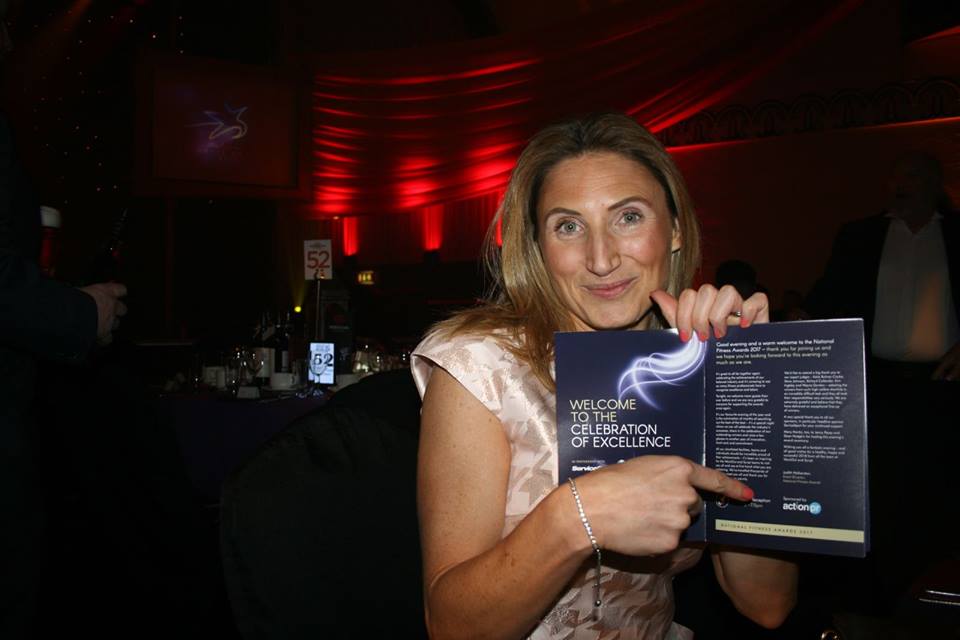
We sponsored the National Fitness Awards and scooped two awards for our client Everyone Active


We threw a brilliant Christmas bash for our team and our clients to round off an excellent year

Action PR Christmas Party 2017


Live streamed classes – the intersection of fitness and technology

With ClassPass launching its latest offering of interactive at-home workouts, we took a look at how technology has become the mainstay of many fitness offerings. As consumers, we’re hungry for data and increasingly reliant on wearables and apps. Technology has become so integrated into our lives, we’re barely even aware of it. If it’s not on Strava, did it even happen? Gone are the days of heading out for a run without your phone. Or rather, gone are the days of going anywhere without your phone.

Operators are now (or they should be) using technology to offer members an experience that has been personalised to the nth degree, adding huge value to an existing package. Tracking, detailed body composition assessments are now more accessible to the average gym goer. Again, the added value aids retention, while the data collected allows operators to better assess their members’ needs and upgrade their programming and facilities accordingly. Capitalising on the growing popularity of tracking in the fitness industry is FitQuest. The machine uses cutting-edge technology to measure a person’s physical capacity over eight parameters in just four minutes. It also measures body composition through bio electrical impedance analysis. It offers a wider range of data and feedback to users than other devices available, as well as a more accurate analysis.

Providing members with a detailed breakdown of stats after a class offers added value, crucial within the saturated boutique industry, where price points and competition are eye-wateringly high. This is particularly prevalent among indoor cycling studios such as Digme, Ride Republic and Psycle, simply because to incorporate that level of tracking into an indoor bike is very easy to do. Paying £20 a class, consumers now expect these extras as standard, as they do fluffy towels and freshly blended shakes. Technology is the final piece of the puzzle, allowing brands to offer a totally exhaustive package, leaving the member wanting for nothing.

ClassPass is far from the first to stream fitness classes. The offering is slightly different (at home vs in club), but David Lloyd Clubs already holds virtual classes in over half of its clubs, using virtual programming to support existing programming without incurring further costs. Subsidising instructor-led classes further increases retention by offering members far more flexibility. Over the past few years, ClassPass has reworked its model to focus on profitability (cue outrage at higher fees and the cessation of the unlimited class option). Presumably Lanman hopes that added extras such as online classes, which he called ‘the beginning of our digital ambitions’, are a step towards profitability for ClassPass.

We provide the full range of marketing services for the health and fitness industry. Get in touch for more information.