Is the Calendar Hook for PR dead?

As the start of the year is here, agency teams everywhere will be hard at work planning for the year, trying to map out key campaign moments. During these planning periods, one of the questions clients often ask is, “shouldn’t we do something for ‘insert calendar moment here’?”

Calendar hooks include well-known dates in the calendar, such as Valentine’s day, or the first day of summer, but there are also days created specifically for marketing purposes, such as Blue Monday. They have long been a staple of PR teams, giving us a moment to hook an activity to and make it newsworthy for press. But is it time to put your typical date-based approach to bed?

Burn Off Your Bills – Campaign by Action Group for Fitness First

Key points in the calendar can give PR teams an answer to the question of ‘why now?’, providing a universally understood moment that can make a campaign activation relevant. If done correctly it can lead to some incredible coverage and social chatter, everything PR dreams are made of.

A good PR calendar hook would include an activation that will naturally feel authentic to the brand, driven by insights, and be creative enough to capture attention in a busy media landscape. A perfect example would be Mars announcing it would be trialling ‘Bounty-free’ Celebrations tubs just before Christmas – a simple and fun activation at a time already associated with the Celebrations brand, and consequently set up their #BringBackBounty campaign. This proved hugely successful across the media landscape, spreading across print and online publications. and widely on social media.
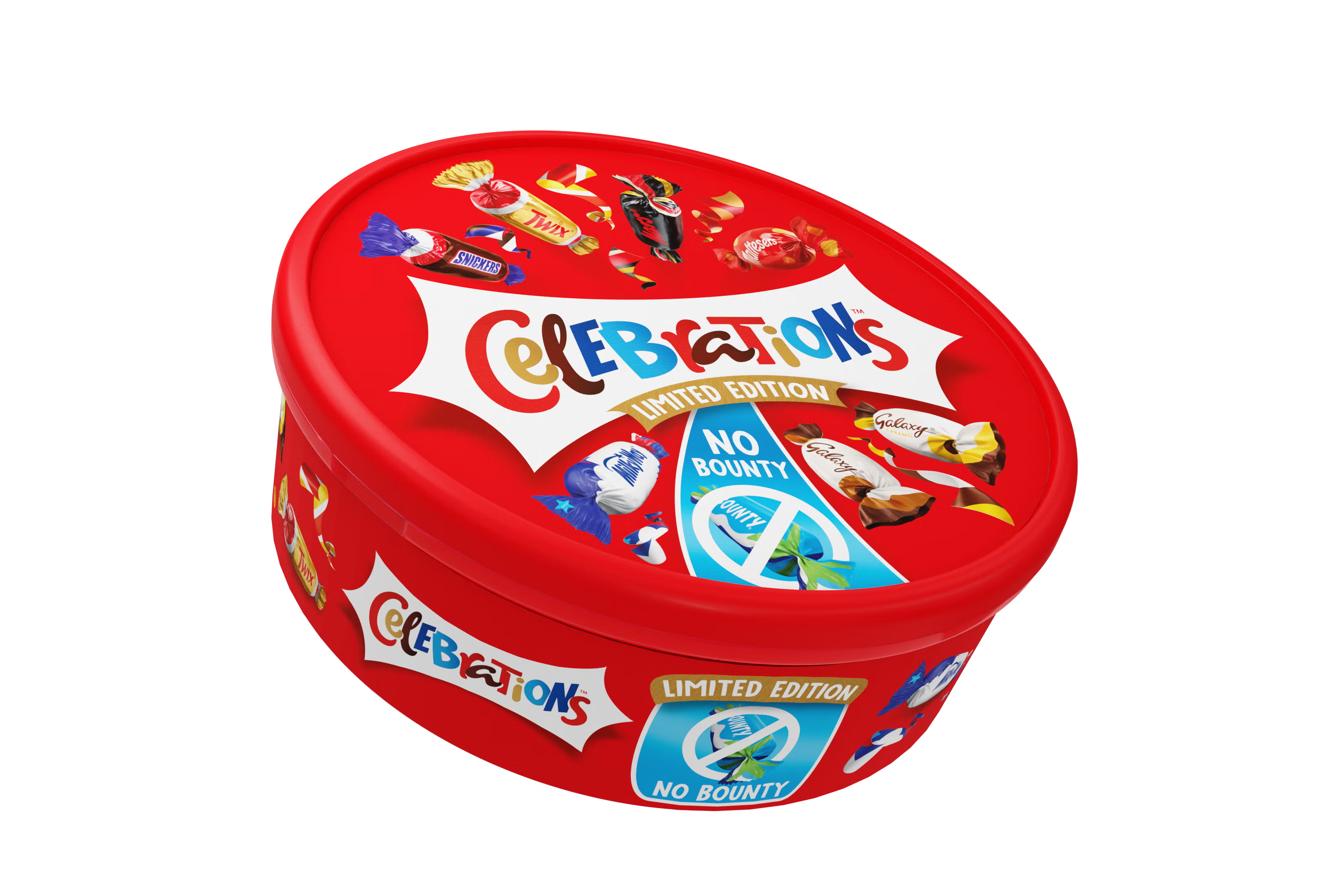
Credit: Mars

However, major moments in the calendar are becoming increasingly crowded with brands looking to get their piece of the pie. This means it’s becoming more and more difficult to gain cut through with media and ensure your brand stands out.

Part of the reason for this is brands feeling they have to do something to mark a calendar moment, believing that if a journalist is going to be writing about Valentine’s Day anyway, then why shouldn’t their brand be part of it?

On top of the overcrowding, some of the days created for marketing purposes have long lost their resonance with consumers and are now largely seen as nakedly self-serving or pointless; there’s even an ‘International Awareness Day’ awareness day…

The reality is you don’t have to be involved with every calendar moment. Yes, PR calendar hooks definitely still have their place in a comms plan, but it’s vital to ensure your activations make sense for the brand and are bold enough to stand out from the crowd. Trotting out a half-hearted creative activation on Valentine’s day is likely to see it lost in amongst a crowd of brands and see minimal return on investment.

If you’re interested in hearing how Action Group can help you with your PR strategy then get in touch at: info@action-group.co.uk

How to Nail an Awareness Day-Themed Campaign

Awareness days can be an amazing way of promoting your client or their work. By jumping on the back of an awareness day, week or month you can successfully push your client’s name into regional or even national press. However, campaigns are hit or miss by nature, so here are some recommendations to make sure you nail that awareness day campaign.

First, it is important to choose a well-known awareness day.

An obscure day like April 25th ‘Denim Day’ is not really a celebrated day, as much as Jean manufacturers may wish it to be. Informing the press that your clothing client has unveiled a Denim jacket in support of Denim Day is probably not going to get coverage. Let’s face it, Denim has enough fans, go home and look at your selection of jeans; and on your way home look at the number of people wearing jeans. You’ll notice that everyone is aware of Denim.

 Make sure the chosen day is relevant to your client; and make sure your offering is newsworthy.

If the link is tenuous, and there are weak ties between what your client is doing and the day, then it is unlikely to work. Journalists need to clearly, obviously see the connection between what the awareness day is trying to do and what your client is doing.

We organised a very successful event for our clients Everyone Active and MoreYoga for Mental Health Awareness Week. We put on ‘Ascent and Asana’ a free Climbing and Yoga event at Westway Sports and Fitness Centre. Attendees were treated to the two mindful activities, and a talk by Bonita Norris the youngest British woman to climb Everest. She spoke about the importance of mindful activities and how both Climbing and Yoga have been excellent for her mental health.


Not only was the awareness day, or week in this case, relevant and suitable for the event, but it was also newsworthy with an excellent guest speaker and free entry.

Do more than just link the awareness day and your client – go bigger.

To gain press success, go deeper than just: ‘here’s a release about my food client on ‘healthy eating day’. Instead do a talk or seminar with an expert, invite journalists or the public to it to understand a bit more. Put on an event to celebrate the day and the healthy credentials of your client. The bigger you make it, the more success you will have. Inevitably cost becomes a factor, so do them big and infrequently to maximise your chance of success.

Journalists are much more likely to remember your client if you have put on a nice event for them, rather than just send them a press release with an uninspiring subject line. This also helps massively in the future when re-contacting them.

Regional vs National Awareness

An idea might be perfect for regional coverage, but if you pitch it to nationals you may not have any success. If your client is a small collection of gyms in the south-east, you may put on a free partner workout for Valentines. This is very unlikely to get coverage in the Times or Telegraph, but the Eastbourne Herald may well love the story. If your aim is to increase awareness and memberships for those gyms, then Regional coverage in the surrounding area is exactly what you want.

If those gyms are dotted around the UK, then this is more likely to increase your chances of National coverage. However the main focus should still be on the local, surrounding newspapers and online publications.

We have organised many successful events and campaigns for our clients for a variety of awareness days. If you would like our help, please contact us: mailto:info@actionpr.co.uk

The art of newsjacking, piggybacking and news hacking

Breaking news and high-profile stories can provide great opportunities to smart businesses who are brave enough – and quick enough – to jump on the back of the headlines and land their brand in the limelight.

‘Newsjacking’ is not for the faint-hearted or risk-averse. Requiring more speed and less haste, it can only work if you move fast. Timing is everything – firstly, to ride the crest of the news wave and secondly to beat your competitors to it.

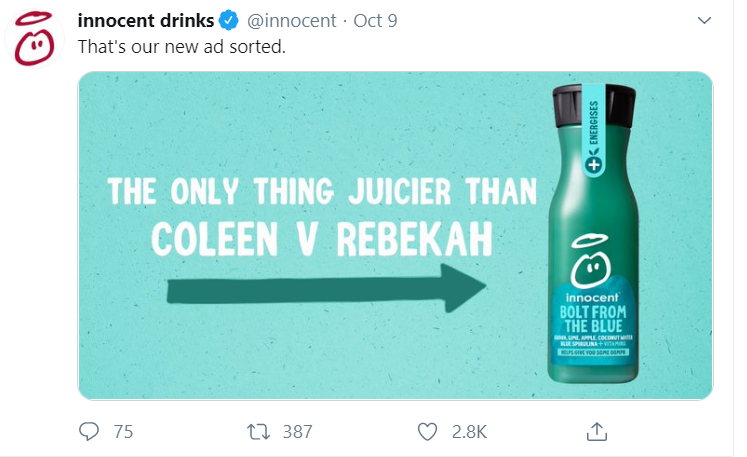
Humour and poking fun at others are the most common newsjacking tactics and therein lies the risk with humour being both personal (and cultural). One person’s joke could be another person’s insult.   Did you see the Innocent Smoothie newsjacking of Coleen Rooney and Rebekah Vardy? Course you did!

rebekah vardy and coleen rooney innocent

They were really quick off the mark and what made this even smarter was the breaking news itself was all about social media. It wasn’t universally popular – some people ticked them off for being insensitive.  But it got noticed, shared and liked 2.8K times so not a bad result.

If newsjacking isn’t for you, don’t worry.  There are two other great ways to amplify your brand or business.

Piggy Backing

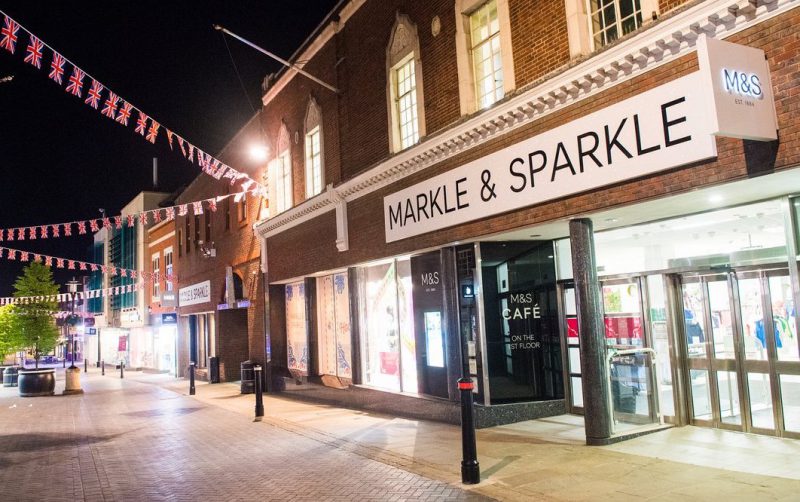
This is the art of tagging your brand or business to a popular story, event or trend. The difference between this and newsjacking is you can plan ahead a bit more – thus giving you thinking time and your client/boss approval time.  An example was M&S rebranding as Markle and Sparkle for three days to celebrate Harry and Meghan’s wedding.  The timing for this was precise and designed to dovetail with all the wedding build-up news, but it would have been planned in and approved.

Essentially a success – it got coverage and plenty of chatter online – it wasn’t perfect as Meghan’s nephew also piggy-backed on the wedding frenzy and developed a blend of cannabis called Markle Sparkle which came to light shortly afterwards.  Squeaky clean M&S got a bit more than they bargained for.  But they got more chatter too if you want to look at it that way (and with newsjacking and piggybacking you have to look at it that way).

Markle and Sparkle

Prepping for piggy backing is important – and the best way is to look ahead to big events such as a Royal Wedding, the Olympic games, general election, Brexit…. you get the idea.  Looking ahead gives you time to plan ahead – but keep alert to changes and updates in the run-up to such events to ensure your piggy backing message and activity remains aligned.

News Agenda Hacking

A third option for amplifying your brand to a like-minded audience is that favourite PR tactic of linking to awareness days, weeks and months.  There does seem to be a day for everything but let’s not throw the baby out with the bathwater – there are some excellent awareness days and weeks that can be tagged. This month alone we have World Mental Health Day, World Osteoporosis Day and Breast Cancer Awareness Month.   The organisations behind these welcome – and anticipate – brands piggy backing on their campaigns to boost the awareness and bring wider audience engagement as a result.

A word of warning: be sensitive to what the awareness campaign is aiming to do and be supportive.  Share their links and messages and keep yours carefully in line.  Charities and important causes use their awareness days to drive home serious messages: this is NOT the time or place to poke fun.

Check out http://www.national-awareness-days.com/awareness-days-events-britain/for inspiration.  Coming up in November you have International Stress Awareness Day (7.11)

World Kindness Day (13/11) and Road Safety Week (19-25/11). And, hey, it’s National Blog Posting month too.

Feeling inspired?

If you’re inspired to try newsjacking, piggy backing or news agenda hacking here are some things to think about:

  • Keep on top of breaking news and headlines – watch news alerts, keep track of threads and topics trending on Twitter and Facebook
  • Be quick and be creative
  • If you can’t be funny, be smart – but don’t try to be ‘too clever’. If people ‘just don’t get it’, you’ll miss the mark and confuse them too.
  • Use social media to host/share your newsjacking
  • Avoid all negative connotations to avoid it backfiring
  • Share your idea with others to get their views before sending it live

How to create news when there is no news

Action Therapy Dog

When creating ‘buzz’ around a brand, one of the key aspects is ensuring that brand is mentioned in the media as much as possible. Not only this, but that it is reaching lots of different ‘pockets’ of media too. Coverage isn’t just limited to national newspapers (although those do tend to be the favourites). Sometimes it’s important for a brand to be featured in particular types of press which reach different audiences. But what do you do if your brand doesn’t have any news to share? Can you still get those much-coveted column inches month after month?

Yes! But it requires a little outside-the-box thinking. That’s where a PR agency starts to get creative with interesting angles and collaboration ideas.

Here are three examples of these angles and ideas that PR professionals use to get brands into the media spotlight:

Hook onto Awareness Days

Things like Veganuary, Movember – even World Compliment Day! These are all awareness campaigns created by PR’s to get people talking about a certain topic. Other brands and PR agencies are now learning how to align with awareness days to continue the conversation.

For example, an obvious one is a plant-based brand collaborating with a famous vegan chef for Veganuary. It works because it’s a great way to show synergy between the brand, the chef’s creative direction and what both can offer audiences during this key calendar date. Not to mention this has both advertising, event and PR capabilities.

However, there is also the opportunity to think outside the box using awareness days. A past event of ours (and one of our all-time favourite PR campaigns) was the collaboration between leisure operator Everyone Active and Therapy Dogs Nationwide to provide stress-relief to Londoners during Stress Awareness Week. Not only did both brands become newsworthy during this week, (check out the coverage on The Metro) it also provided a (fluffy and friendly) service to Londoners in need of a pick-me-up! We’ve done many collaborations in the past based on awareness days as they receive great feedback and press.

PR professionals will continue to use them to showcase a brands’ fluidity and ability to keep surprising audiences.

Introduce Statistics and Research

The British media is notoriously cynical and reserved about sensational stories and claims. It’s one of the differentiators between UK and US press – our journalists are not bought easily by dazzling brand stories and unsolicited claims. What the UK press love, is research and studies. If your brand has got statistics and scientific research to support key ideas within your industry and / or brand, you’ll have a shoe in the door.

For example, we work closely with global group exercise provider, Les Mills. As juggernauts in the fitness industry, Les Mills knows a thing or two about what makes a group exercise class successful. Instead of launching new (and perhaps novelty) classes to the world, Les Mills puts its energy into scientific research that backs their existing classes. For example, a recent study by Les Mills in collaboration with a University, showed that doing more than 30-40mins of peak heartrate HIIT training per week, can be detrimental to health. (Further details on the study here, if you’re interested).

This information shared with media on behalf of Les Mills shows that the brand is serious about giving audiences and customers information that can be backed by experts and officials, not just fancy new classes for commercial profit.

Align a Brand in Classic Round Ups

Notably for lifestyle and consumer press, doing softer articles with product, service and / or event round ups is a good way to give audiences options across a variety of brands. For example, the Evening Standard has its ‘LIST’ in every lifestyle section of the newspaper. In this, the journalists will pick themes and their favourite brands of the moment to be included. For example, checkout Time Out’s Yoga Classes in London roundup, where our client MoreYoga is mentioned.

From a PR perspective, it’s a clever way to include your client’s brand whilst aligning it with other like-minded or respectable competitors. Some other examples of including your brand in a round up is to align it with others during awareness weeks. For example, ‘The best free meditation events for Stress Awareness Month’ may be an article press write during April’s annual event – and a great way for brands to host these sorts of events and be included in this round up.

In a day and age where the number of journalists is decreasing, it works in a PR agency’s favour to help them by creating content they can share with audiences in next to no time. Making it topical helps.

Do you need help getting your brand noticed? Get in touch, we can help!