
Here’s how we produced a beautiful 6-page feature in Women’s Fitness Magazine, hitting on all the key messages Les Mills wanted to see.
Continue reading
Here’s how we produced a beautiful 6-page feature in Women’s Fitness Magazine, hitting on all the key messages Les Mills wanted to see.
Continue reading
Those who work in PR love a bit of research. When there’s no news to share for a client, a great research study can create a compelling news hook that’s highly likely to generate media coverage.
While research can make a great headline, it’s sometimes difficult for the average reader to see how that data relates to their real life. Even if your research contains major breakthroughs, many readers will completely miss it.
So how can you effectively bring research data to life? Is there a way to get people to engage with research in a way that actually makes them take action?
Recently, we had just the opportunity with our client Les Mills, the global group exercise provider. Its latest research, which was published in The Journal of Sports Medicine and Physical Fitness, showed that incorporating a core-workout programme into your running regime can improve your overall 5k time by as much as 66 seconds! The six-week Les Mills Running & Core Training Study, led by Jinger Gottschall, Associate Professor at Penn State University, revealed:
Within the Action PR team, we found this research particularly interesting, but would our media coverage alone be enough to encourage other runners to actually try the workout?

We decided to host an event, in collaboration with the London City Runners, to showcase the research results, and have people try the Les Mills CXWORX™ workout for themselves.
London City Runners is the largest running club in London. The award-winning club attracts a loyal following of new and experienced runners each week at their regular run clubs. Not only is January a time when many people kick off a new workout routine, it’s also the start of training season for many runners planning a Spring marathon. It proved to be the perfect time of year for our Les Mills CXWORX™ and London City Runners event.
We used the event to showcase the research results, narrowing in on topics we knew runners would care about: injury prevention, increasing endurance and getting faster. Steve Tansey, Head of Research at Les Mills, took the group through a short, sharp presentation so they had context about the workout they were about to do.
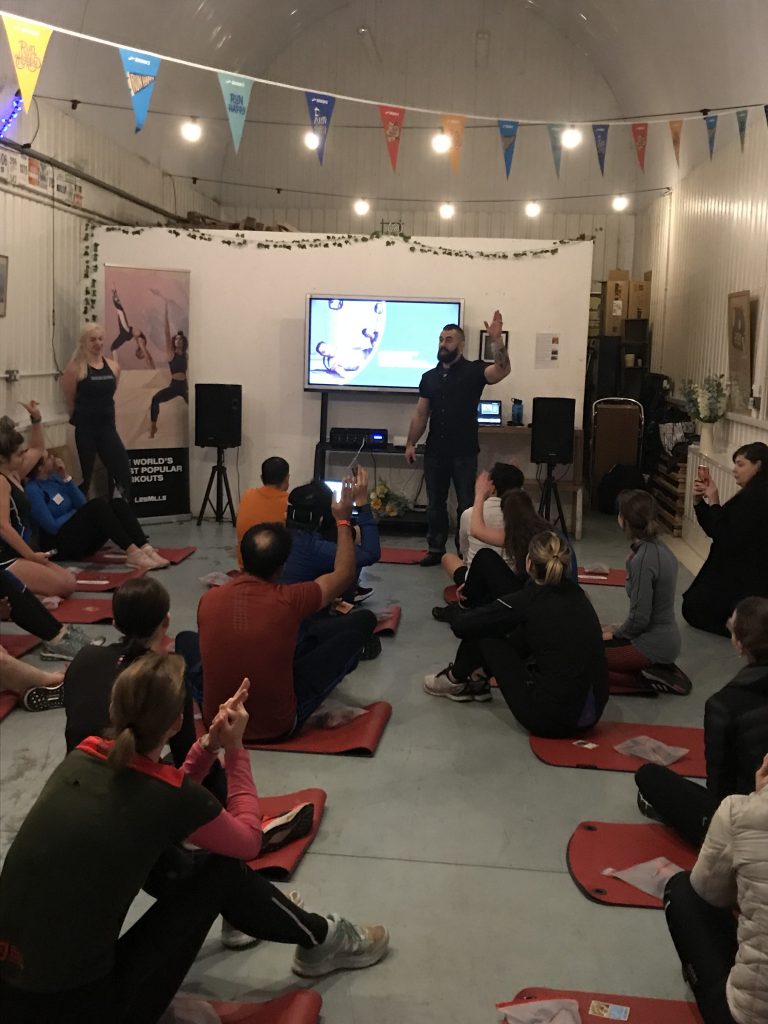
Then, the group went out for a short 3km run, led by the volunteers from London City Runners.
Once they were sufficiently warmed up, a Les Mills master trainer took two groups through a CXWORX™ class, the hugely effective integrated core training workout from Les Mills.

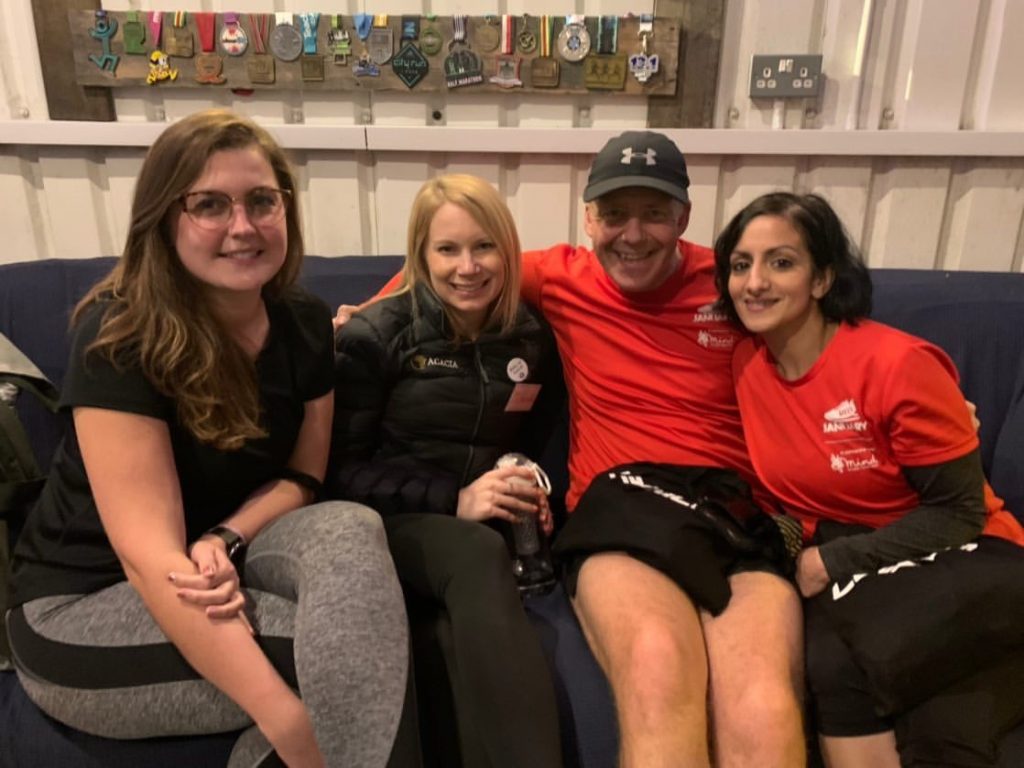
After the workout, attendees enjoyed some healthy snacks, networking with other runners, and had the opportunity to talk to the Les Mills team about the workout and the research.
All attendees took home a goody bag stuffed full of healthy products, a LES MILLS SMARTBAND™, a special resistance band engineered for CXWORX™ and a code for free 21-day trial to LES MILLS™ On Demand so they can keep doing CXWORX™ from home.

Science sometimes has a PR problem. The data, while interesting, can sometimes be so removed from real life that readers won’t relate to it. By incorporating it into a relevant event, it helps bring it to life in a way that can actually convince people to take action.
We love organizing events for our clients! If you have an event idea for your brand and need help to make it a reality, get in touch. We can help.

When creating ‘buzz’ around a brand, one of the key aspects is ensuring that brand is mentioned in the media as much as possible. Not only this, but that it is reaching lots of different ‘pockets’ of media too. Coverage isn’t just limited to national newspapers (although those do tend to be the favourites). Sometimes it’s important for a brand to be featured in particular types of press which reach different audiences. But what do you do if your brand doesn’t have any news to share? Can you still get those much-coveted column inches month after month?
Yes! But it requires a little outside-the-box thinking. That’s where a PR agency starts to get creative with interesting angles and collaboration ideas.
Here are three examples of these angles and ideas that PR professionals use to get brands into the media spotlight:
Things like Veganuary, Movember – even World Compliment Day! These are all awareness campaigns created by PR’s to get people talking about a certain topic. Other brands and PR agencies are now learning how to align with awareness days to continue the conversation.
For example, an obvious one is a plant-based brand collaborating with a famous vegan chef for Veganuary. It works because it’s a great way to show synergy between the brand, the chef’s creative direction and what both can offer audiences during this key calendar date. Not to mention this has both advertising, event and PR capabilities.
However, there is also the opportunity to think outside the box using awareness days. A past event of ours (and one of our all-time favourite PR campaigns) was the collaboration between leisure operator Everyone Active and Therapy Dogs Nationwide to provide stress-relief to Londoners during Stress Awareness Week. Not only did both brands become newsworthy during this week, (check out the coverage on The Metro) it also provided a (fluffy and friendly) service to Londoners in need of a pick-me-up! We’ve done many collaborations in the past based on awareness days as they receive great feedback and press.
PR professionals will continue to use them to showcase a brands’ fluidity and ability to keep surprising audiences.
The British media is notoriously cynical and reserved about sensational stories and claims. It’s one of the differentiators between UK and US press – our journalists are not bought easily by dazzling brand stories and unsolicited claims. What the UK press love, is research and studies. If your brand has got statistics and scientific research to support key ideas within your industry and / or brand, you’ll have a shoe in the door.
For example, we work closely with global group exercise provider, Les Mills. As juggernauts in the fitness industry, Les Mills knows a thing or two about what makes a group exercise class successful. Instead of launching new (and perhaps novelty) classes to the world, Les Mills puts its energy into scientific research that backs their existing classes. For example, a recent study by Les Mills in collaboration with a University, showed that doing more than 30-40mins of peak heartrate HIIT training per week, can be detrimental to health. (Further details on the study here, if you’re interested).
This information shared with media on behalf of Les Mills shows that the brand is serious about giving audiences and customers information that can be backed by experts and officials, not just fancy new classes for commercial profit.
Notably for lifestyle and consumer press, doing softer articles with product, service and / or event round ups is a good way to give audiences options across a variety of brands. For example, the Evening Standard has its ‘LIST’ in every lifestyle section of the newspaper. In this, the journalists will pick themes and their favourite brands of the moment to be included. For example, checkout Time Out’s Yoga Classes in London roundup, where our client MoreYoga is mentioned.
From a PR perspective, it’s a clever way to include your client’s brand whilst aligning it with other like-minded or respectable competitors. Some other examples of including your brand in a round up is to align it with others during awareness weeks. For example, ‘The best free meditation events for Stress Awareness Month’ may be an article press write during April’s annual event – and a great way for brands to host these sorts of events and be included in this round up.
In a day and age where the number of journalists is decreasing, it works in a PR agency’s favour to help them by creating content they can share with audiences in next to no time. Making it topical helps.
Do you need help getting your brand noticed? Get in touch, we can help!