How to succeed with an email pitch to journalists

“I think you are the first PR person ever to acknowledge the criteria and break it down for me to show me that the case study you are suggesting truly ticks every box. Thank you! I wish every PR person did that. How very refreshing you are!”

I received this message in response to a recent email pitch.  Initially delighted to have hit the proverbial nail on the head (and secured the client in the forthcoming feature), I then felt rather sad for our industry.  A good email pitch should be part of our skillset: not a cause for such praise and delight. 

Email pitching is a core PR skill and never more important than during the pandemic.  Most journalists are working from home, (rightly) guarding their personal phone numbers and, therefore, requiring PRs to send ‘cold’ email pitches where, previously, a ‘warm up’ phone call might have helped to pave the way. You can contact journalists on social media, but we recommend emails as the first port of call.

So, in a bid to help more PRs get effusive thanks for a well-pitched story, here are a few rules of thumb we follow here at Action Group:

What makes a great email pitch?

Be personable

Never, EVER, send a mass email in the vain hope that if you send enough one will work.  Make each approach personal and tailor your pitch carefully to the journalist you’re emailing.  If they have given a ‘shout out’ for a piece, make sure you can answer their brief completely.  They know what they want: don’t try and turn it your way. 

If you’re sending a pre-emptive pitch, do your homework on their style, recent stories, opinions and views. Aim to match your pitch to these: if it doesn’t match well, you’re emailing the wrong person!

Use their name – of course at the start of your pitch, but also at the end to acknowledge them and show this is not a mass email.

Intrigue them

Take time to create an eye-catching subject line.  It’s what they’ll see first.  Keep it under 10 words and interesting enough so they’ll want to open your email and read more. If you’re offering something genuinely ‘exclusive’ or ‘brand new’, stating that will catch their attention. We have had incredible success reaching out to journalists when we launched an emergency charity appeal during a global pandemic.

Get to the point of your pitch

Journalists will scan the first few sentences before deciding whether to read on.  Don’t waste time asking how their week is going or what the weather is like.  Also, don’t take their valuable time explaining yourself or your company.  Get straight to the point.  Grab their attention and show why your story is relevant to them and their audience. 

Keep to the point

The ‘Five Ws’ that act as guiding principles in a press release apply to email pitches too.  Remember to cover off: Who, What, When, Where & Why.  (If you don’t, you’re simply creating work for the journalist to ask the question/s not answered).

Don’t rely on an attachment to ‘sell’ your pitch: journalists rarely have time to open unsolicited email attachments and are understandably wary too. 

Leave the kitchen sink where it is

Don’t be tempted to throw a load of other things into your email.  The ‘while I’ve got you, let me pitch five more random ideas’ tactic isn’t a good one.

Nudge – but don’t nag

If you don’t get a reply to your carefully pitched email, you can send a polite follow-up to check if they’d had a moment to read your email pitch and if it’s of interest.  Ensure the original email is in the body of the follow-up: asking a journalist to check back through their inbox (which most likely sees 100s of new emails drop in each day) will not go well.

And finally…

On those occasions when your email pitch doesn’t go your way, accept that the journalist wasn’t interested this time.  Be gracious in defeat and don’t be put off trying another way another day.

When the pitch does go your way and you successfully land your story, remember to say thank you (you’d be surprised how many journalists are surprised – and delighted – to be thanked!) And don’t be complacent about coverage: each new email pitch needs to be equally targeted and convincing.

If you have a story that needs to be carefully pitched to the media, contact us: info@action-group.co.uk

Landing amazing media reviews for Firstbeat

Firstbeat are leaders in Heart Rate Variability (HRV) monitoring and analysis. Their technology underpins hundreds of smart watches and devices, including Suunto, Garmin, Huawei, Samsung, Sony etc. Firstbeat technology is used by over 1,000 elite sports teams worldwide and over 7,000 corporate clients.

How did we achieve amazing media reviews for Firstbeat?

The first task was to educate journalists on exactly what HRV is, and why it is important. The time difference between two consecutive heartbeats changes from beat to beat. This variation is called Heart Rate Variability.

What exactly is HRV?

A research breakthrough by Firstbeat’s founders realised it is possible to use HRV to map stress, recovery and exercise performance. HRV is affected by factors such as stress, sleep quality, hormones, physical activity, food intake, and alcohol. The lower your HRV, the more effect stress has on your body, negatively impacting your wellbeing. A high HRV is when your heart rate changes drastically, and quickly, upon varying stimulus like stress or adrenaline. This means you can return from these states faster too, your body is responding and recovering quickly from ‘stressing’ stimuli.

A high HRV is associated with better quality sleep, quicker recovery times, lower stress levels and a general better wellbeing.

Education is key

We crafted a press release to explain exactly what HRV is. This included how it was founded, and how monitoring/analysis can help improve wellbeing, reduce stress and improve sleep quality.

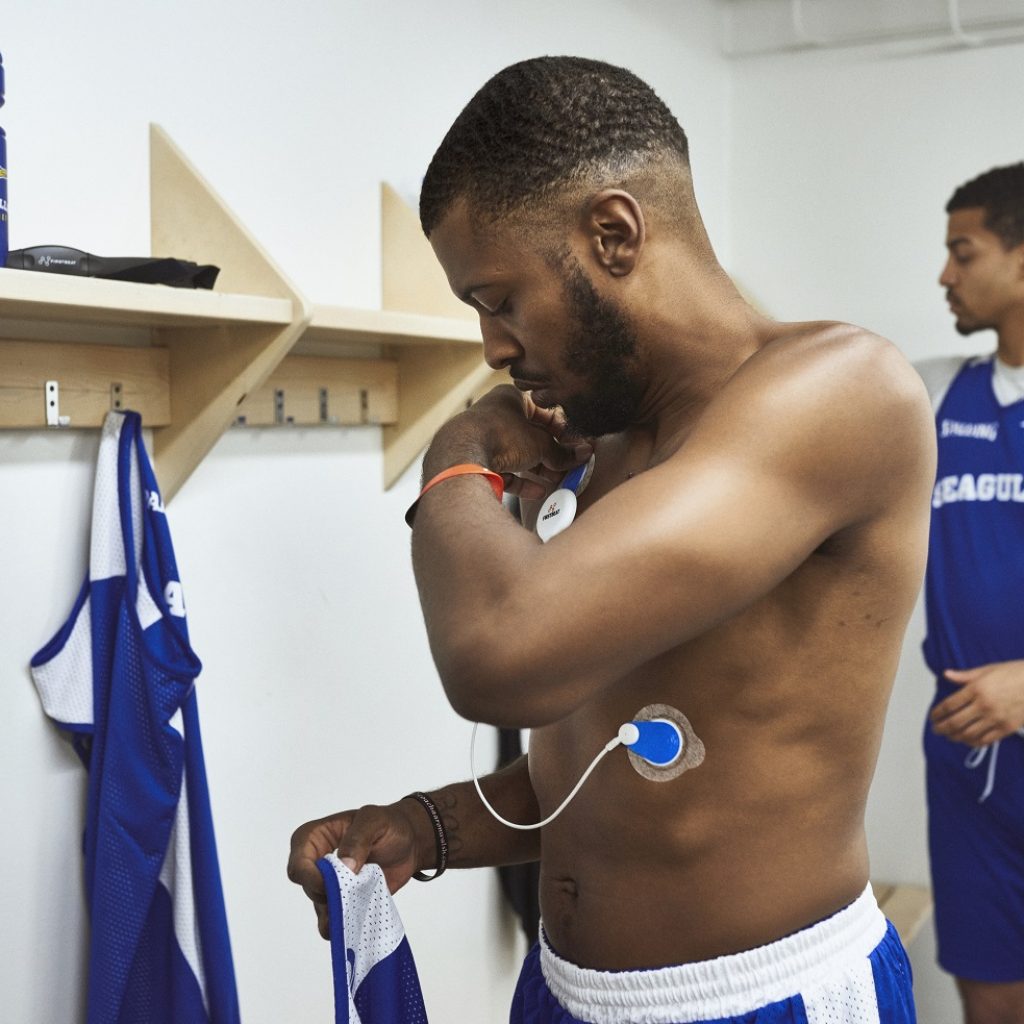
Then we invited journalists to trial the Lifestyle Assessment. This is provided by Firstbeat and their corporate partners. It includes a 3-5 day assessment in which you wear their HRV monitoring device for 24 hours a day. We offered journalists the option of a face-to-face, or over the phone review.

Results

The review sessions are where the journalist’s lives are changed. It gives insight into exactly the effect their work, lifestyle, late nights and drinking behaviour has on their body.

The Telegraph journalist Jack Rear said: “And that’s the reason my lifestyle assessment has been stuck in my head for weeks… seeing it all laid bare in my own life gave me the motivation to take control of what’s going on in my body and work to improve it.”

He also found when he was late to a meeting and had to power walk to get there, he actually got a moderate effect on his heart. “A nice reminder that not all exercise has to take place in a gym”. The final revelation came about alcohol, when on a pub crawl with his father. “On the preceding two days I’d shown a strong ability to recover and relax even while working, drinking ensured my body was unable to relax or recover at all. Even asleep in bed, I didn’t recover. Over the course of the day, my heart rate was on average 14 beats per minute more than the previous day.”

Outcome

Everyone who has a Lifestyle Assessment learns something new about themselves. Some people may require drastic lifestyle changes to improve their health, others only minor. When I did my Lifestyle Assessment, I learned that I am in a stressed state during my 2-3 hours of Sunday evening weekly meal prep. If I did this too close to bedtime, my body would remain in the stressed state during the initial phase of my sleep. I never knew I was ‘stressed’ I thought I was relaxed, but I wasn’t. My personal take-away was that if I simply did my meal prep earlier in the day, my body would have sufficient time to unwind before I went to sleep.

We achieved over 53 articles for Firstbeat, and over 20 recorded journalist trials in the sports, tech, trade and consumer press. We successfully educated journalists on what HRV is, and why Firstbeat are the leaders in the field.

If you want help raising awareness of your brand, product or service, no matter how technical or niche, then get in contact: info@action-group.co.uk