Launching an emergency charity appeal during a global pandemic

When coronavirus struck it was a worry for everyone, no matter what their age, race or gender. But most of all it hit the most vulnerable in society. With big races and events cancelled, the charity sector was hit particularly hard. A recent study by Pro Bono Economics has revealed that one in 10 UK charities is facing bankruptcy by the end of the year as they struggle to cope with a £10bn shortfall caused by soaring demand for their services compounded by losing fundraising income due to the coronavirus pandemic.

When our client Neurokinex, a spinal cord injury rehabilitation charity, came to us seeking our support to raise funds to protect its Newly Injured Scheme, we seized upon the chance to help. And the Step Up Appeal was born! We named the appeal and created its logo and identity.

The Step Up Appeal aimed to raise vital funds to safeguard the Neurokinex Newly Injured Scheme, which awards six free sessions to newly injured or diagnosed clients. A lifeline for many, it gives them access to the unique Neurokinex services that can have life-changing results.  However, it costs the Neurokinex Charitable Trust £420 per person to fulfil and loss of income during lockdown put the scheme at serious risk of closure.

We supported Neurokinex to launch a two-month Step Up Appeal on June 1, 2020 with the aim to raise £25,000. A set of Neurokinex client challenges formed the basis of the fundraising which culminated in a silent Auction. We were delighted to see that Neurokinex doubled its original target and ultimately raised £52,850.49.

A mighty £28,322.56 was raised by the six Neurokinex clients aged two to 49 who set themselves a range of personal challenges to help protect the service that helped them:   

  • Ralph, 2, completed 100 leg presses on a contraption built by his grandfather
  • Rob, 26, rowed 16.25 miles on a customized rowing machine devised from an upside down bicycle, curtain pole and pulley despite being paralysed from the neck down and dependent on a ventilator to breathe.
  • Laura walked 10km using her crutches which inspired her friend Wendy to then run 68km to boost the fund raising. 
  • Damian completed a ‘sprint triathlon’ by lifting weights to ‘swim’, cycling on an exercise bike and walking laps of his local park on the one-year anniversary of his cycling accident.
  • Alfie, 5, dressed as a superhero to cover over 30km self-propelling his wheelchair round (and round!) his garden and along nearby country lanes (ably supported by his 2-year-old brother Freddie running alongside).
  • Finally, another plucky youngster Oscar, 6, covered a similar distance by pushing his wheelchair, using his walking frame and cycling on his trike.

Our role was to use craft their stories and challenges into media-worthy case studies. This resulted in 16 pieces of local coverage, two national articles appearing in The Sun and on ITV’s website, three TV news features across BBC Meridian, BBC Points West and ITV West Country and five local BBC radio interviews. We were able to reach an audience of over 1.5 million people.

Not only was the fundraising appeal was a resounding success, but awareness of Neurokinex and its life-changing work soared in those eight weeks. It brought newly injured people to their door and, having secured the scheme, as soon as lockdown ended, Neurokinex got straight back to work supporting people living with a spinal cord injury. All at a time in a very different and difficult media landscape!

If you require any PR support with a charity campaign please get in touch with us by contacting: info@action-group.co.uk

Fundraising for charitable trust Neurokinex

This pandemic has tested every business and sadly, charities have also suffered immeasurably with regular donations dropping away as everyone has to tighten their purse strings.

Our client Neurokinex is a spinal cord injury rehabilitation charitable trust. It offers vital services to children and adults living with paralysis sustained through accident or illness including Stroke and Cerebral Palsy. Part of its life-changing services is its Newly Injured Scheme which awards six free sessions to those newly injured or diagnosed and referred by the NHS. 

The service is a lifeline for many, giving them access to the unique Neurokinex services that can have life-changing results.  It costs Neurokinex £420 per person but, sadly, following lost income over the lockdown, without additional fundraising it is now under serious threat of being withdrawn.

In order to save these vital services, we launched the Step Up Appeal, which set a target of £25,000 to safeguard its amazing work.

WORKING WITH OUR NETWORK

Throughout June and July, several Neurokinex clients, who have themselves benefitted from the Newly Injured Scheme, have undertaken incredible challenges to raise funds for their clients.

These challenges have captured the hearts of the nation and generated coverage in national and regional broadcast media.

Check out five year old Alfie and his brother on ITV news here. Young Alfie, nearly 5, set himself a challenge to travel 20km over the course of one month, independently pushing his wheelchair round and round the garden.  Sporting a superhero cape and mask, Alfie has been out in all weathers to hit his daily target – accompanied by younger brother Freddie running along beside him.

THE AUCTION

The final element of the Step Up Appeal is an online auction that launched on on Friday July 17th and runs until noon on Friday 31st July.

The auction includes a wide choice of lots including sports and popular culture memorabilia, iconic art, UK experiences and short breaks at home and abroad. 

Particular highlights include:

  • Beatles display signed by all four members of the band
  • Jonny Wilkinson signed England rugby shirt
  • Limited edition David Bowie portrait
  • Raymond Blanc cookery lesson for two
  • Anthony Joshua signed boxing glove
  • Ascot and Lord’s Pavilion experiences
  • Rafael Nadal signed tennis racket
  • Andy Warhol’s famous Marilyn Monroe portrait

Other lots including a champagne tea in London, a hand-drawn pet portrait, a Lake District break, a castle stay in Bordeaux and a Gin Club membership ensuring there really is something for all tastes and budgets.  

Please take a look at the auction lots

If you know of colleagues, friends or family members who may also be interested in this Auction, please do forward them the link too!

If you need help with fundraising for charity or corporate projects, read more about our consultancy service or get in touch at info@action-group.co.uk

Is sport the ultimate charity support tool?

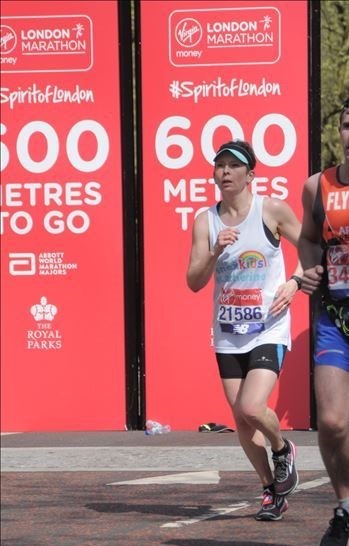
Katherine Selby - London MarathonAs fundraising sports events go, you won’t find much bigger than the London Marathon.  The elite runners and wheelchair athletes competing to break records as they break the tape is exciting to watch but the real spectacle is the 40,000 runners who follow in their wake. These days it’s pretty much expected that if you run London, you’re running for charity. Out on the course, club or plain t-shirts were few and far between: the overriding feeling as we sweated out 26.2 miles in the hottest London Marathon on record was that of people pushing their physical limits for good causes.

The power of sport to drive participants and sponsors rests on two key ingredients: emotion and effort.  The emotion is shared by all – participants, charities, sponsors and spectators – and is VITAL. I ran for Neurokinex Kids – a new charity that brings rehabilitation and hope to children with paralysis. The rehab is what they do but the emotion of HOPE is what I shared with my sponsors.

Emotion alone isn’t enough, however: your effort is crucial.  As a club runner and Run Leader I can knock out 5K, 10K or 10-miles relatively easily.  So that’s not enough to drive up sponsorship. The London Marathon is another thing altogether – the training and race day took me way out of my comfort zone so people took notice.

Everyone’s effort limit is different: the huge success of Race 4 Life proves that.  Although ‘just’ 5K, for a beginner, someone who does no other exercise, someone with cancer or in remission, it will feel like the marathon did to me.  That effort, combined with emotion, turns this annual sporting event into a formidable fundraiser.

Philanthropy is a force for good: many people won’t take on a sporting event without raising money for good causes.  Some people CAN’T take on a sporting event without a charity place as high profile running event places sell out fast and your only way in is to run for charity.  Be that right or wrong, it’s the reality.  Does that then make the London Marathon less of a sporting event? At the front of the race, this year’s winners, Eliud Kipchoge, Vivian Cheruiyot, and David Weir – not to mention Mo Farah breaking the British record – proved the London Marathon to be World Class.  But the crowds are out for the other runners, make no mistake.

My experience was one of mild disappointment and sheer joy.  Disappointment because the hot weather poleaxed my target time (remember I’m a club runner under that charity vest!). And sheer joy because I smashed my fundraising target, I was the first person to wear a Neurokinex Kids T-shirt in a race and I have put NK Kids firmly on the fundraising map.  My overriding emotion and drive on Sunday to keep going in those debilitating conditions was as a fundraiser, not a runner. I set out to do the charity proud and fulfil the expectation of my sponsors, dedicating the last few gruelling miles to the Neurokinex kids and staff and smashing the target to raise £1180 (£45.38 per mile). Philanthropy drove my sporting performance in London and I was far from alone with that mindset.

All charities are deserving, but it’s those who find people to engage in sport to literally go the extra mile for them that who will ultimately win the race for funds.